English
 italiano



Designing a door handle is a packaging problem before it becomes a styling exercise. The most common reason a new lever or knob fails at the first sample stage is not the finish or the shape of the grip, it is a mismatch between the handle and the geometry already cut into the door: a 45 mm backset latch that no longer lines up, a 38 mm rose that leaves the old 54 mm bore exposed, or a 5/16 in spindle that will not enter an 8 mm follower. Fix the interface first, then spend the design budget on the hand, the material and the surface.
The order of work below is the one we use when a customer brief arrives: door interface, ergonomics, material and finish, manufacturing tolerance, range matching, then procurement. Each part gives the numbers that decide whether a drawing survives a specification review and a two-year warranty period.
Content
- Define the Door Interface Before You Draw Anything
- Ergonomics Decides Whether the Handle Feels Expensive
- Match the Material and Finish to the Environment
- Tolerances Are Where a Good Drawing Meets a Real Factory
- Match One Design Language Across the Whole Project
- Samples, Batch Consistency and Order Quantities
- Frequently Asked Questions
Define the Door Interface Before You Draw Anything
A handle that does not fit the lock is not a design, it is a drawing. Lock bodies, latches and mortise cases are made to regional conventions, and the handle has to adapt to them, not the other way round. If you do not know the backset, spindle size, door thickness and fixing centres of the door you are designing for, stop and get them in writing before the first sketch.
| Parameter | Metric (EN / DIN) typical | North American typical | Why it decides the design |
|---|---|---|---|
| Latch backset | 45 mm, 50 mm, 55 mm | 60 mm (2-3/8 in) or 70 mm (2-3/4 in) | Sets where the handle sits relative to the door edge and the strike plate |
| Spindle | 8 × 8 mm square | 7.94 mm (5/16 in) square, with splined variants | A 5/16 in spindle will not enter an 8 mm follower without a bush, and a loose spindle causes handle wobble within weeks |
| Door thickness | 35-44 mm standard, 44-54 mm heavy | 35-45 mm standard, 45-60 mm heavy | Determines bolt-through sleeve length and screw length; an over-long screw will dimple the outer face of a hollow door |
| Fixing centres | 38 mm on most roses and plates | About 57 mm (2-1/4 in) on many rosettes | Wrong centres mean new holes in a finished door, and a repair that shows |
| Lever-to-door gap | 35 mm minimum finger clearance | Same principle | Below 30 mm, users trap fingers, paint gets chipped and return springs take lateral load |
A quick sanity check before tooling: place the intended lock body, latch and handle on a bench and operate them together. Then measure the backset with a steel rule, not a tape. A 2 mm error at the latch is a 2 mm error at the strike, and on a fire-rated assembly that is a re-inspection, not a warranty claim.
Ergonomics Decides Whether the Handle Feels Expensive
Ergonomics, not shape language, is what makes a handle feel expensive in the hand. A handle that looks sharp in a render but demands a tight pinch grip will feel cheap on day one and painful on day three hundred. A comfortable lever needs a grip length of roughly 100 to 135 mm, a grip diameter of 19 to 25 mm, and enough projection to clear the knuckles.
Three numbers are worth writing into the brief:
- Latch release force. Aim for well under 30 N at the far end of the lever, and comfortably below 20 N on accessible routes. Test it with a spring gauge, not by feel.
- Return spring life. European lever specifications commonly require 100,000 to 200,000 operating cycles (EN 1906 use grades 2 and 3). A spring that sags before 50,000 cycles turns a lever into a droopy handle, and that is a visual failure long before it becomes a functional one.
- Knuckle and finger clearance. Keep at least 35 mm between the lever and the door face. On a 44 mm door with a deep moulding, this is the detail that decides whether the rose needs a spacer.
Texture belongs here as well. A knurled or lined grip gives tactile feedback about where the hand is, which matters on a handle used without looking, such as a hospital door or a door at the bottom of a dark stair. A restrained knurl also hides fingerprints better than a mirror polish, which is why it has stayed in specification for commercial interiors long after the fashion cycle moved on.
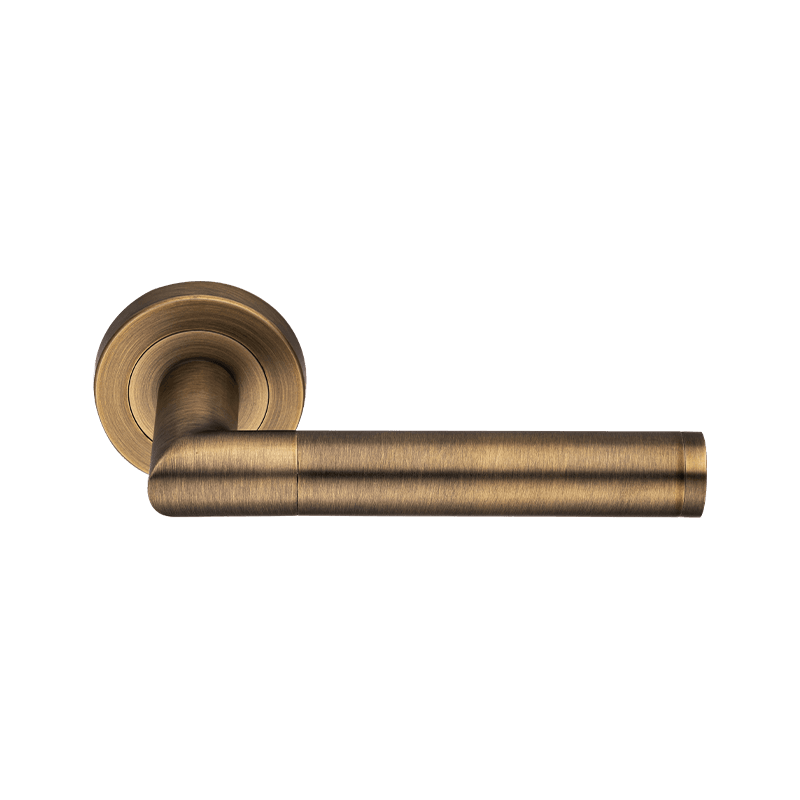
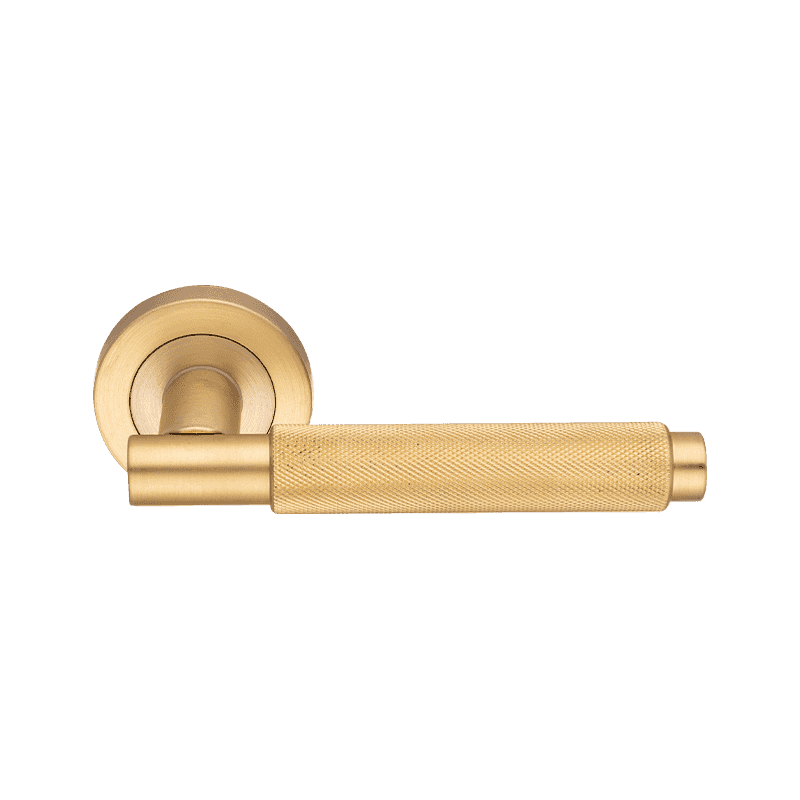
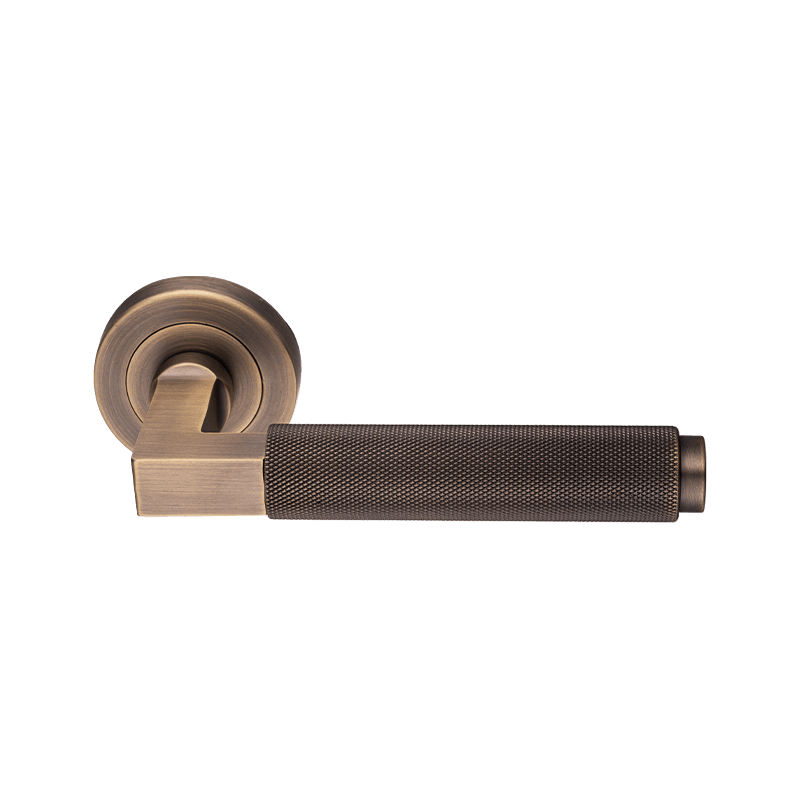
 Aluminium Knurled Lever Door Handle on Rose, Antique BrassKnurled lever-on-rose door handle with a square silhouette, plain round rose, aluminium lever and zinc rose in antique brass.View Product →
If accessibility is a formal requirement, compare the operation of a knob against a lever early. A round knob asks for a tight wrist grip; a lever allows an elbow or a closed fist to operate the latch. That single choice can remove a whole category of complaint from a hotel or care-home handover list. More detail on grip geometry and spring choice sits in this guide to ergonomic door handles.
Match the Material and Finish to the Environment
The environment, not the showroom, should pick the material. A polished chrome zinc lever is a sensible choice for an interior office door and a poor choice for a coastal hotel entrance, where the same profile in 304 stainless steel will still look intact after two winters. Decide the exposure first, then choose the substrate and the coating.
| Material | Best suited to | Practical limits | Common finishes | Relative cost |
|---|---|---|---|---|
| Zinc alloy (die-cast) | Interior doors, cabinet knobs, decorative rosettes, complex shapes | Moderate impact strength; a long lever on a heavy-traffic door can crack at the neck if the section is thin | Polished chrome, satin chrome, matt black, antique brass, PVD | Low to medium |
| Aluminium | High-volume lever sets, interior and light commercial doors, anodised architectural ranges | Lower density, so sections must be thicker to match zinc stiffness; threads need inserts or steel screws | Satin brass, antique brass, matt black, bright nickel, polished chrome | Low to medium |
| Stainless steel 304 / 316 | Exterior doors, coastal projects, healthcare, heavy commercial and industrial doors | Harder to machine and polish; higher tool wear and longer cycle times | Brushed, satin, mirror, PVD black | Medium to high |
| Brass | Heritage and hospitality work, where depth of finish matters | Unlacquered brass tarnishes and needs a maintenance plan; lacquer can chip at the fixing points | Polished brass, antique brass, satin brass | High |
Corrosion performance is easier to specify than to argue about. EN 1670 grades are widely used as shorthand: grade 3 is commonly tested at 96 hours of neutral salt spray, grade 4 at 240 hours and grade 5 at 480 hours. Interior doors are usually fine at grade 3; exterior and coastal work should be specified at grade 4 or above, with the test report supplied per batch rather than once per product family.
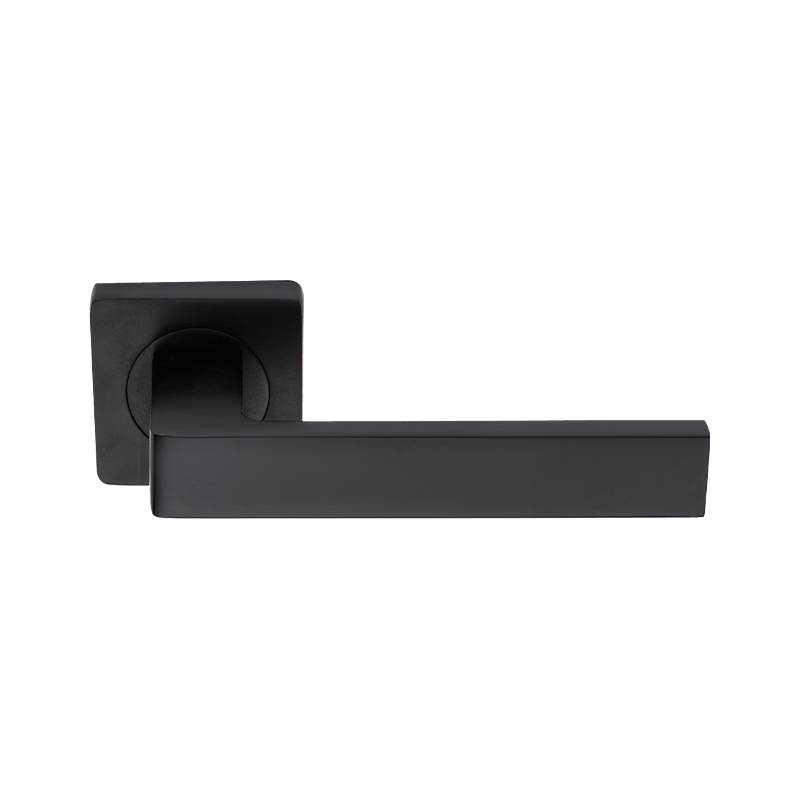
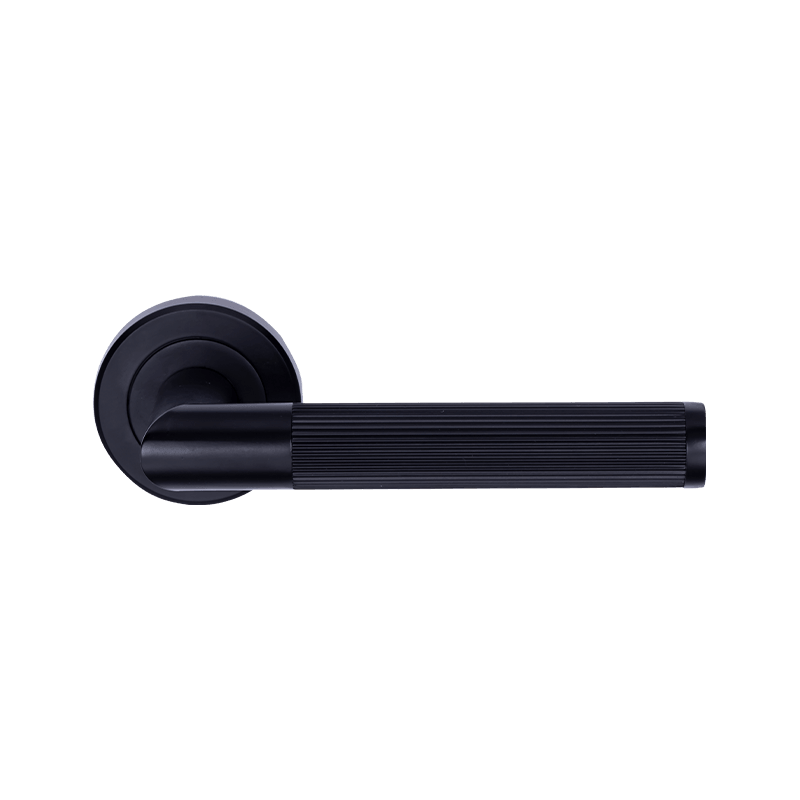
 DH17086B Lined Lever Door Handle on Plate, Matt BlackLined lever handle on square backplate in matt black, with zinc lever, 129 mm lever, and Lock, Latch, Euro or Bathroom versions.View Product →
Finish consistency is a separate risk from finish durability. Matt black is the least forgiving coating in a catalogue: a small change in gloss level between two batches reads as two different products on the same corridor. Agree on a gloss and colour tolerance before the order, and keep a signed physical sample as the reference, not a photograph.
Tolerances Are Where a Good Drawing Meets a Real Factory
A handle design is only manufacturable if the tolerance stack is honest. Die-casting needs draft of about 1 to 2 degrees and a wall thickness that will not sink or blister; thin decorative details often need a separate pressed or machined component rather than a casting. For zinc, a minimum wall of roughly 1.2 mm is a practical starting point, and aluminium generally wants more.
The interfaces that fail most often in production are small and unglamorous:
- Spindle hole and follower. If the square hole is cast at nominal and the spindle is drawn at nominal, the handle will wobble when the two tolerances run in opposite directions. Specify the hole with a controlled clearance rather than a nominal size.
- Rose or plate thickness. A 1 mm thinner rose changes the screw engagement and the visual stand-off from the door face at the same time.
- Spring and cam geometry. Test the assembly at temperature extremes if the door is in a stairwell, conservatory or unheated warehouse.
- Screw packs. An over-long screw is the fastest way to damage a veneer, so specify sleeve bolts and wood screws by door thickness, and bag them accordingly.
For fire-rated doors, the handle is part of a tested assembly. The spring or cam that gives a soft return on a domestic lever can hold the latch fractionally off the strike on a fire door, so the hardware schedule should be signed off against the door manufacturer's certificate rather than assembled from parts that each look correct on their own.
Match One Design Language Across the Whole Project
One design language across every opening is what separates a specification from a shopping list. A project with 400 doors usually needs a hinged-door lever on a rose for the majority of rooms, a lever on a plate or a back-to-back pair for the glazed partitions, knobs or pulls on the joinery, sliding sets on wardrobe and pocket doors, and stair rods that echo the same finish. If the family does not share a finish and a visual weight, no amount of matching part numbers will make it look deliberate.
The practical test is a sample board. Mount one of each item on a board next to the door veneer and the floor finish, and look at it under the actual lighting, not in an office. Check three things:
- Does the rose diameter read correctly against the door stile width? A 52 mm rose on a narrow stile can look crowded; a 38 mm rose on a wide door can look mean.
- Do the finishes sit on the same gloss level? Matt black and satin black next to each other are visibly different, even to a non-specialist.
- Does the sliding hardware echo the hinged door? A sliding door set that shares the rose profile and the lever shape of the hinged range keeps a room feeling coherent when the door is open.
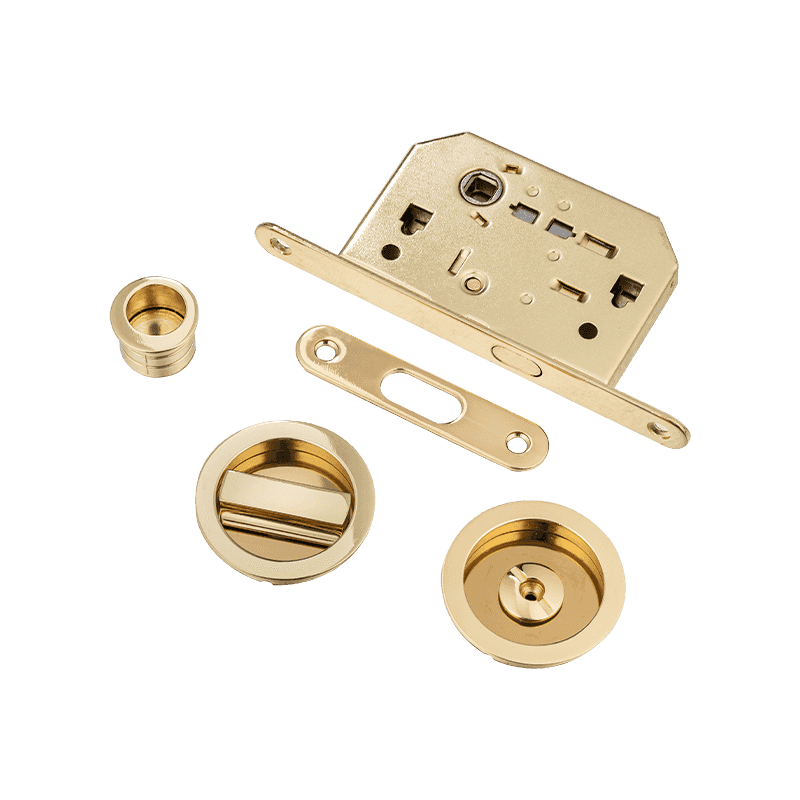 SD55 Sliding Door Set on Round RoseSliding door set with turn and release, finger pull and lock on round rose; thumb turn operates lock, zinc, for domestic and commercial use.View Product →
Consistency also has a procurement benefit. One family means one spindle size, one screw pack and one set of spares, which cuts installation errors and makes a three-year maintenance contract realistic to price. Mixed families multiply the number of small parts that must be stocked and understood by the site team.
Samples, Batch Consistency and Order Quantities
Order a pre-production sample in the exact finish before committing to tooling or a container. A catalogue image or an early prototype in a different coating will not show the two failures that stop a handover: colour shift between batches and a mechanism that loosens after a few thousand cycles. Sample approval should be signed against a physical standard that both the factory and the buyer hold.
On the commercial side, a few figures are worth agreeing before the purchase order:
- Colour tolerance. Define a measurable limit for colour difference between batches, and state which finish it applies to. Matt black and antique brass deserve tighter limits than satin chrome.
- Cycle and salt spray test reports. Ask for them per production batch, or at least per shipment, rather than once at sample stage.
- Minimum order quantity. A new die-cast lever commonly starts around 500 to 1,000 sets per finish, while stock or standard profiles can often be mixed at lower volumes.
- Lead time. Around 30 to 45 days after deposit is typical for a bulk order, plus transit; allow extra for a new die and first-article approval.
- Packaging. Handles scuff in transit far more often than they fail in service. A polybag, a correctly sized screw pack and a carton drop test protect the finish that the buyer is paying for.
For OEM and private-label work, the earlier the finish, packaging and branding requirements are agreed, the fewer late changes land on the tooling. Established suppliers can usually handle this through custom hardware solutions, including bespoke finishes, engraved or laser-marked parts and project-specific screw packs.
Frequently Asked Questions
What is the most common mistake when designing a door handle?
Designing the lever before the lock. Backset, spindle size and fixing centres decide whether the handle fits at all, so they belong in the first sketch, not in the final check. A beautiful handle that needs the door re-drilled is an expensive handle.
Is zinc alloy strong enough for a lever handle?
Yes, for interior doors and light commercial use, provided the neck section is thick enough and the rose supports the load. For exterior doors, industrial traffic or long levers, specify stainless Steel or brass instead of relying on a thicker casting.
How do I reduce the number of SKUs in a range?
Design out handedness. A symmetric lever with a reversible latch follower lets one handle serve a left or right door, which typically halves the stock a distributor has to hold. Keep the rose and plate sizes common across the family for the same reason.
Which corrosion test should I ask for?
For interior doors, EN 1670 grade 3 (96 hours neutral salt spray) is normally adequate. For exterior, coastal or wash-down environments, specify grade 4 (240 hours) or grade 5 (480 hours), and confirm that the report covers the finished part, not only the raw substrate.
Does a heavier handle always mean a better one?
No. Weight usually signals a thicker substrate, which helps rigidity, but a heavy handle with a weak spring and a loose spindle will still fail first. Cycle test results and spindle clearance tell you more about service life than a set of scales.
Designing door handles comes down to a short, practical sequence: fix the interface to the door and the lock, make the grip comfortable for a real hand, choose the material and coating for the environment the door actually lives in, hold the tolerances that keep the part consistent, and carry one design language across every opening in the project. Do that, and the handle stops being a detail at the end of the schedule and becomes one of the few parts of a building that users touch every day and remember.