English
 italiano


Locking a door handle is straightforward once you know the mechanism. Most interior door handles lock by pressing a push-button, turning a thumb-turn, or rotating a privacy pin. Exterior and entry handles typically use a keyed cylinder or a smart lock. Sliding doors use a separate latch or hook. The exact method depends on the handle type, but the goal is always to engage a locking bolt or latch that prevents the handle from turning.
This guide explains how to lock each common door handle type, what to do when the lock fails, and how to choose hardware that locks reliably. You will also find practical checks for alignment, tolerances, and wear that affect locking performance.
Content
Identify Your Door Handle Locking Mechanism
The locking method is determined by the handle's internal mechanism, not the shape of the lever or knob. Door handles fall into five main locking categories.
- Passage handles: No locking function. They only latch the door closed.
- Privacy handles: Locked from the inside with a button, thumb-turn, or pin. Often unlocked from the outside with a small tool or coin.
- Keyed entry handles: Locked or unlocked from the outside with a key. Inside, a thumb-turn or button locks the door.
- Smart or electronic handles: Locked via keypad, app, fingerprint, or auto-lock timer.
- Sliding door handles: Use a separate latch, hook, or privacy bolt mounted on the door edge or face.
Check the rosette or plate around the handle. A small hole, slot, or button usually indicates a privacy lock. A keyhole indicates a keyed lock. If you see none of these, the handle is likely a passage model.
How to Lock Common Door Handles
Each locking mechanism has a specific action that engages the bolt. Follow the steps below for your handle type.
Button or Turn-Button Privacy Locks
Press the button on the inside rosette or turn the small knob until it clicks. The handle will no longer turn the latch, and the door stays locked. To unlock, turn the handle or press the release button and pull the door shut.
If the button feels mushy or does not click, the internal spring may be worn. A replacement privacy latch solves the problem. For example, a tubular mortice privacy latch with a 57 mm backset provides a reliable click and smooth operation.
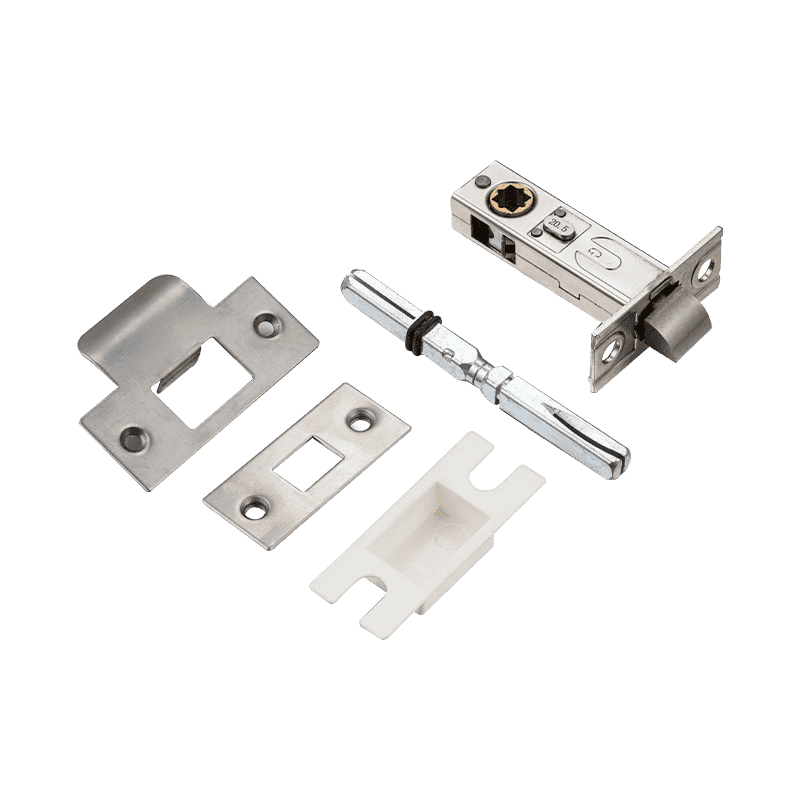 Tubular Mortice Privacy Latch 3 Inch Bolt Through57 mm backset tubular privacy latch for lever handles or knobs, with multiple finishes and reliable thumb-turn and emergency release operation.View Product →
Thumb-Turn Privacy Locks
Rotate the thumb-turn on the inside plate clockwise or counterclockwise until it stops. You will feel the bolt extend into the strike plate. Test by pushing the door; it should not move. From the outside, insert a flathead screwdriver or coin into the emergency slot and turn to release.
Keyed Entry Locks
Insert the key into the outside cylinder and turn it toward the door frame. The deadbolt or latch will extend. Remove the key and test the door. From the inside, use the thumb-turn or button to lock without a key. Never rely on the key alone if the door has glass within 40 cm of the lock; breakage could allow someone to reach the thumb-turn.
Sliding Door Locks
Slide the door closed, then flip the privacy latch or hook into the strike. Some sliding doors use a mortise lock with a flip lever. For a more secure hold, install a sliding door set that includes an integrated privacy bolt. A round-rose sliding door set with a flush pull offers both locking and a clean look.
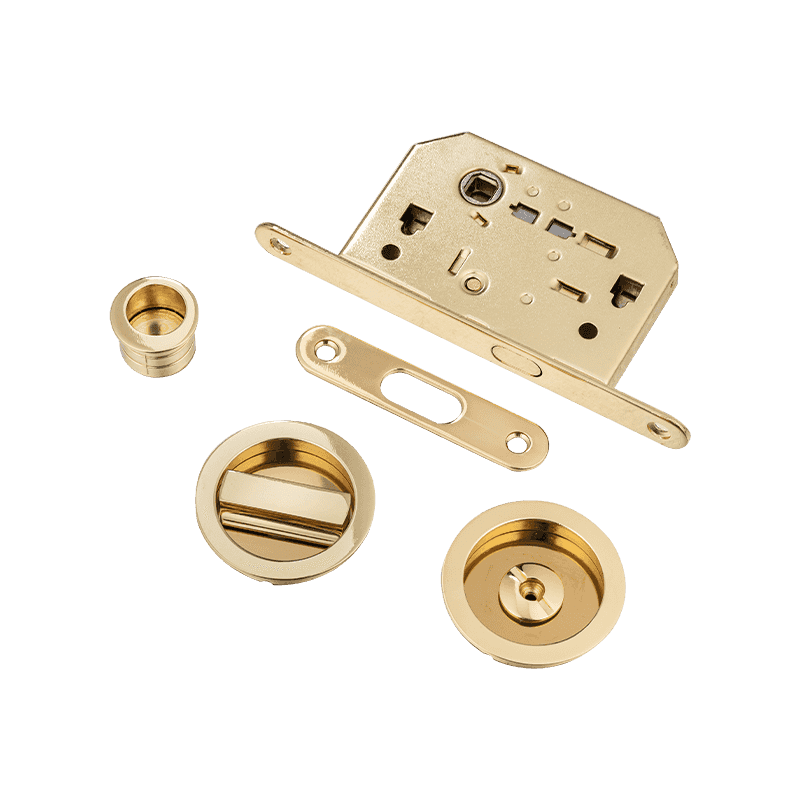 SD55 Round Rose Sliding Door Set with LockRound-rose sliding door set with turn and release, finger pull and lock; zinc construction, 70 x 161 mm lock, chrome, satin chrome or brass finishes.View Product →
Smart or Electronic Locks
Enter your code, use the app, or press the lock button. Most smart locks auto-lock after a set delay. Check that the bolt extends fully; a misaligned strike plate will cause the motor to stall. For retrofit options, a smart door latch replaces the existing latch and adds electronic locking without changing the handle.
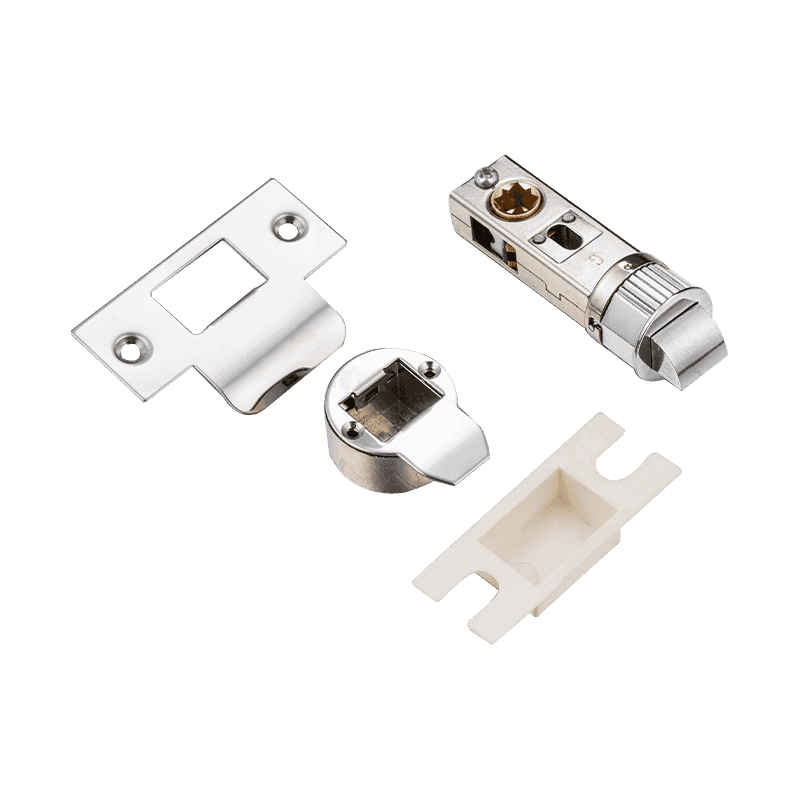 Quick-Fit Smart Door Latch 57 mm BacksetQuick-fit smart door latch with 57 mm backset and finish options including polished chrome, satin nickel, satin chrome, matt black, antique brass and satin brass.View Product →
Temporary and Emergency Locking Methods
If a door has no built-in lock, you can still secure it with portable or improvised methods. These are temporary solutions, not replacements for proper hardware.
- Door wedges: Push a rubber wedge under the door on the inside. It resists opening but does not stop someone from turning the handle.
- Portable travel locks: These metal brackets fit into the strike plate and block the door from opening, even if the latch is retracted.
- Scissors and padlock: For double-lever handles without a lock, place a pair of scissors through both handles and secure the loops with a small padlock. This prevents the handles from turning.
- Door barricades: A chair under the handle or a security bar across the door adds resistance. Use only as a short-term measure.
None of these methods provide real security. They buy time or privacy. If you need reliable locking, install a privacy or keyed handle set that matches your door thickness and backset.
Troubleshooting: Why Your Door Handle Won't Lock
Most locking failures come from misalignment, worn springs, or incorrect installation. Work through the checks below before replacing the handle.
- Check strike plate alignment: The bolt must enter the strike hole without rubbing. If the door sags, tighten the hinge screws or adjust the strike plate. A gap larger than 3 mm often prevents locking.
- Test the latch retraction: Turn the handle slowly. The latch should retract fully and snap back. If it sticks, lubricate the latch with graphite powder, not oil.
- Inspect the privacy button: A button that does not stay pressed means a broken internal spring. Replace the latch mechanism.
- Verify backset and door thickness: Standard backsets are 60 mm or 70 mm. A latch for a 35–45 mm door will not fit a 50 mm door. Forcing it causes binding.
- Tighten loose handles: A wobbly rose or plate can prevent the spindle from engaging the latch. Tighten the screws or use a thread-locking compound. This guide on fixing loose door knobs explains the process step by step.
If the lock still fails, the issue may be the lock body itself. Heavy-duty door locks with reinforced bolts are less likely to bind under load. Choose hardware rated for the door weight and usage frequency.
Choosing Door Hardware That Locks Reliably
Reliable locking starts with material and construction, not the finish. Look for solid zinc alloy or stainless steel components, a minimum 60 mm backset, and a latch bolt that throws at least 12 mm into the strike.
| Lock Type | Best Use | Locking Action | Durability Notes |
|---|---|---|---|
| Privacy button | Bedrooms, bathrooms | Press button inside; emergency release outside | Zinc alloy spring; replace if mushy after 2–3 years of heavy use |
| Thumb-turn | Interior doors, offices | Rotate thumb-turn 90 degrees | Solid brass or stainless steel lasts longer than plated zinc |
| Keyed entry | Exterior doors, storage rooms | Key outside, thumb-turn inside | Check cylinder grade; look for anti-pick pins |
| Sliding latch | Patio doors, wardrobes | Flip hook or lever into strike | Stainless steel hook resists bending; lubricate monthly |
| Smart lock | Main entry, rental units | Code, app, or auto-lock | Motor and battery depend on alignment; keep strike plate clean |
For heavy doors or commercial use, choose heavy-duty lever handles and lock bodies with reinforced spindles. A 1.5 mm thick steel latch is less likely to deform than a 1.0 mm latch. Also consider the finish: brushed nickel and matte black hide scratches better than polished chrome, but all finishes need periodic cleaning to prevent binding.
If you are replacing multiple handles, standardize on one backset and spindle size. Mixing brands often leads to alignment problems. Browse lever door handles that share consistent dimensions and locking mechanisms.
Frequently Asked Questions
Can I lock a door handle without a key?
Yes, if it is a privacy handle. Press the button or turn the thumb-turn on the inside. From the outside, use the emergency release tool. If the handle is a passage model, you cannot lock it without adding a separate lock or using a temporary method.
How do I lock a sliding door from the outside?
Most sliding doors cannot be locked from the outside unless they have a keyed cylinder. Install a keyed sliding door lock or a patio door bolt. For interior sliding doors, a privacy latch is usually sufficient.
Why does my door handle spin without locking?
The spindle may be too short, stripped, or disconnected from the latch. Remove the handle and check the spindle length. If the spindle is fine, the latch mechanism is likely broken. Replace the latch or the entire handle set.
What is the difference between privacy and keyed locks?
Privacy locks provide convenience and emergency access from the outside. Keyed locks provide security and require a key for outside entry. Use privacy locks for bedrooms and bathrooms, and keyed locks for exterior doors.
How often should I maintain door locks?
Clean and lubricate locks every six months. Check strike plate alignment and tighten screws annually. In high-traffic commercial settings, inspect monthly.
Locking a door handle comes down to matching the action to the mechanism: press, turn, key, or flip. If the lock does not engage, check alignment, backset, and spring condition before replacing parts. For any door that needs dependable security, invest in quality hardware with solid materials and consistent dimensions. That approach prevents the most common locking failures and keeps your doors secure for years.