English
 italiano


You have just painted a door white, the old handle is back on, and the door still looks unfinished. Here is the direct answer: on a white door, matte black gives the sharpest contrast, brushed or satin nickel is the safest neutral, and satin or antique brass adds warmth that reads as deliberate rather than accidental. White and light grey handles are the right choice only when you want the hardware to disappear into the door completely.
By "white doors" I mean painted timber, primed MDF and factory-finished interior doors in white or off-white. They are the most light-reflective panel in a room, so a handle on them reads as a silhouette instead of blending in — and that single fact drives everything below. I work on the manufacturing side of door hardware, making interior door handles in zinc alloy, aluminium and stainless steel, and the questions buyers send us about white doors are remarkably consistent.
Content
- Which handle colours work best on white doors? The three that always work
- Why white doors are more forgiving than coloured doors
- Room by room: where each finish earns its place
- Finish matters more than the colour name
- The checks that matter more than colour
- A five-step way to choose
- Mistakes that keep a white door looking unfinished
- Frequently asked questions
Which handle colours work best on white doors? The three that always work
Matte black, brushed nickel and satin brass cover almost every white door, because each creates a different but deliberate level of contrast; the colour name matters far less than how much light the finish bounces back.
A white door has no colour of its own to argue with, so what you are really choosing is contrast. High contrast, such as a black lever on a white door, pulls the eye and reads as a designed detail. Medium contrast, such as brushed nickel, reads as quiet and tidy. Low contrast, such as an off-white handle, makes the door surface look continuous, which can appear calm or unfinished depending on the rest of the room.
| Finish | Look on a white door | Best suited to | Practical notes |
|---|---|---|---|
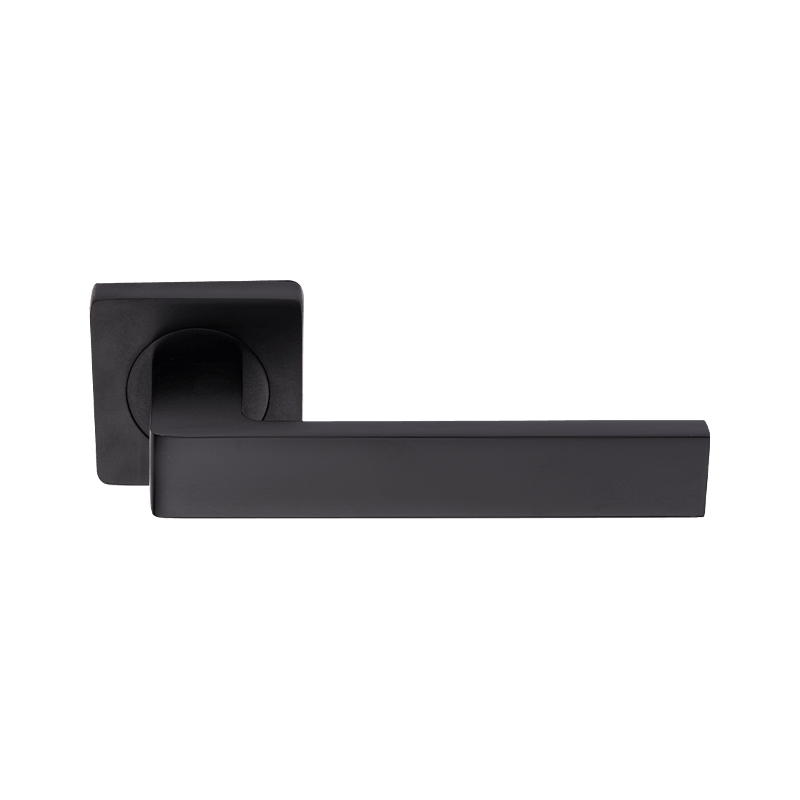
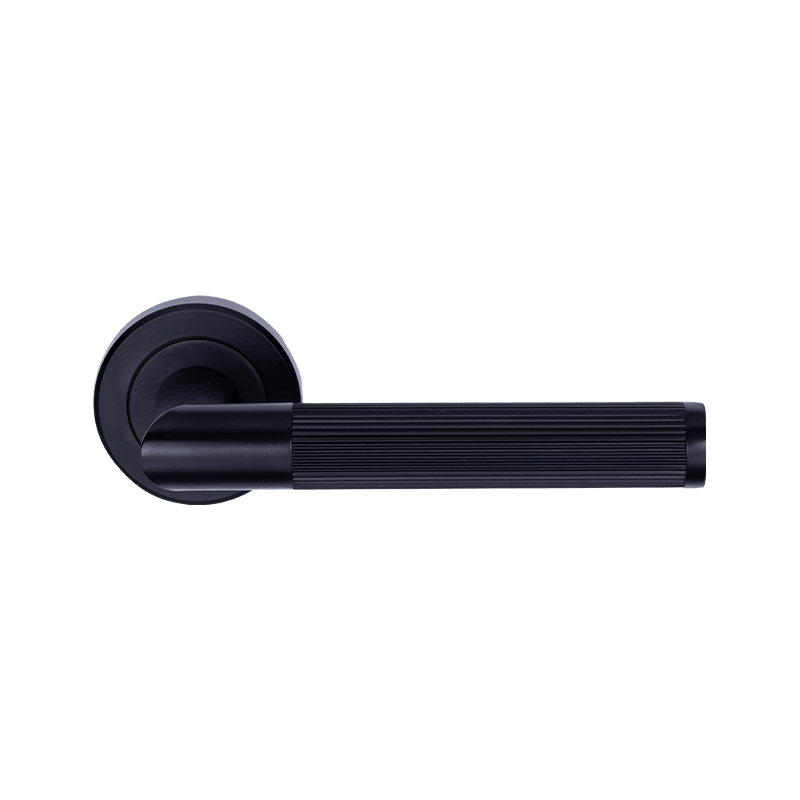
| Matte black | Strong graphic contrast, crisp outline | Minimalist, modern and Scandi interiors | Hides fingerprints well; check the coating is even at the edges |
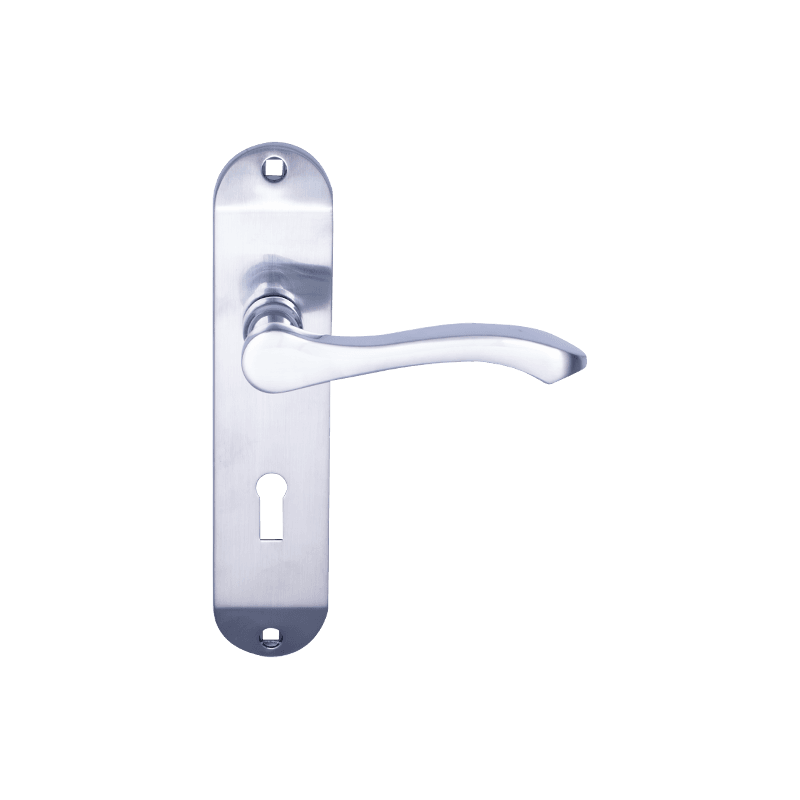
| Brushed or satin nickel | Soft grey-silver, medium contrast, low glare | Contemporary and transitional homes | The most forgiving finish for daily use |
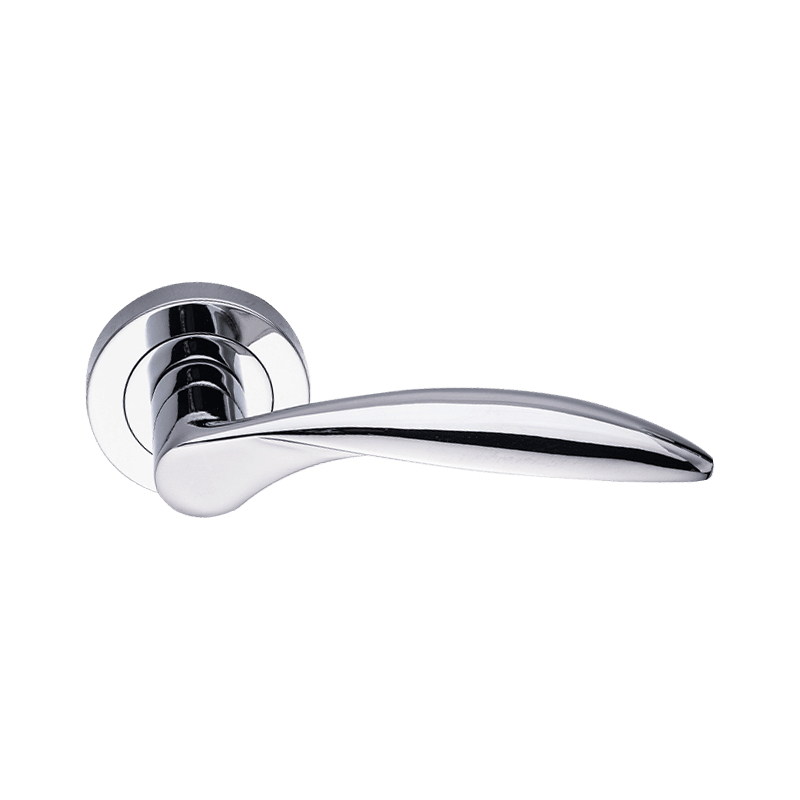
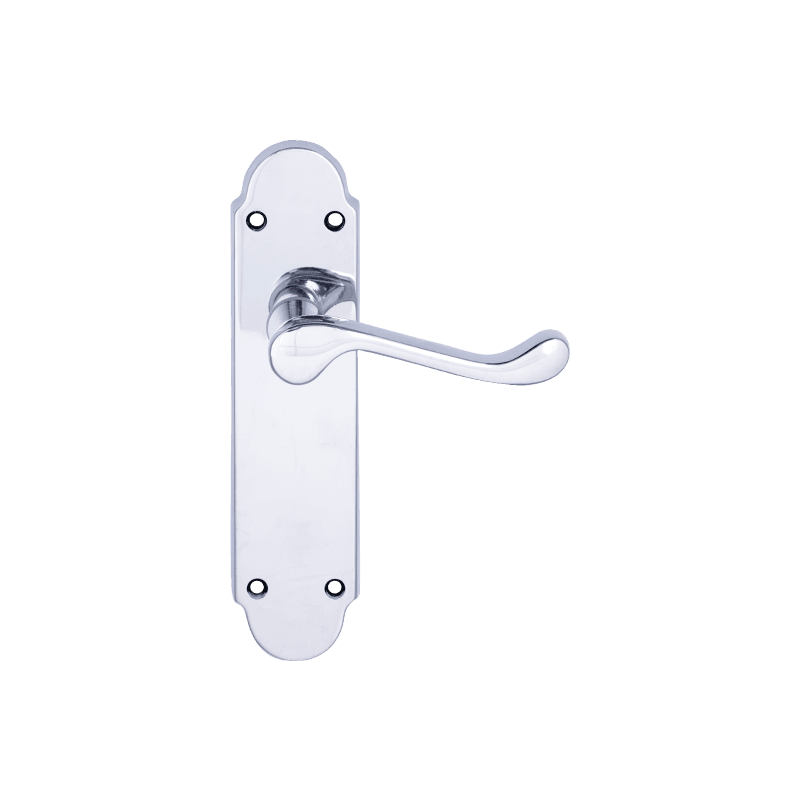
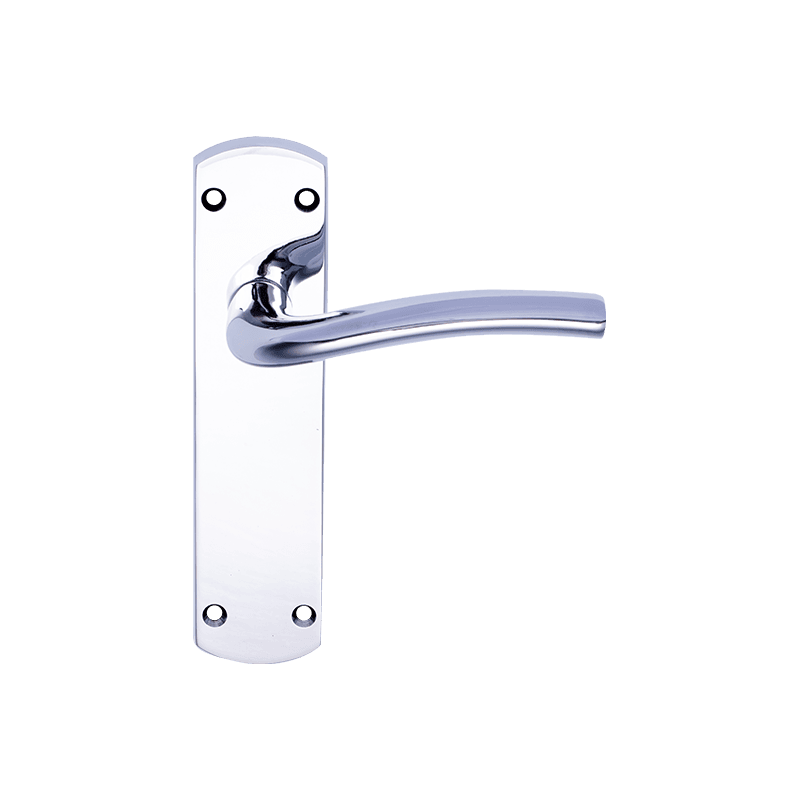
| Polished chrome | Mirror-bright, high reflection | Modern bathrooms and period renovations | Shows water spots and fingerprints, needs wiping |
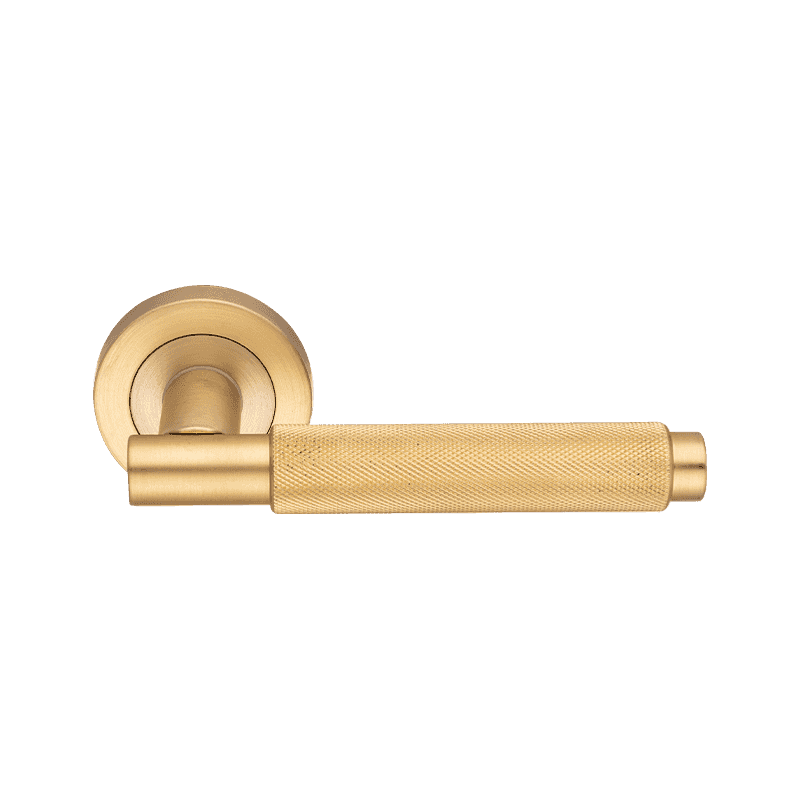
| Satin brass | Warm gold with a soft sheen | Heritage, hotel and warm traditional schemes | Lacquered versions keep their colour for years |
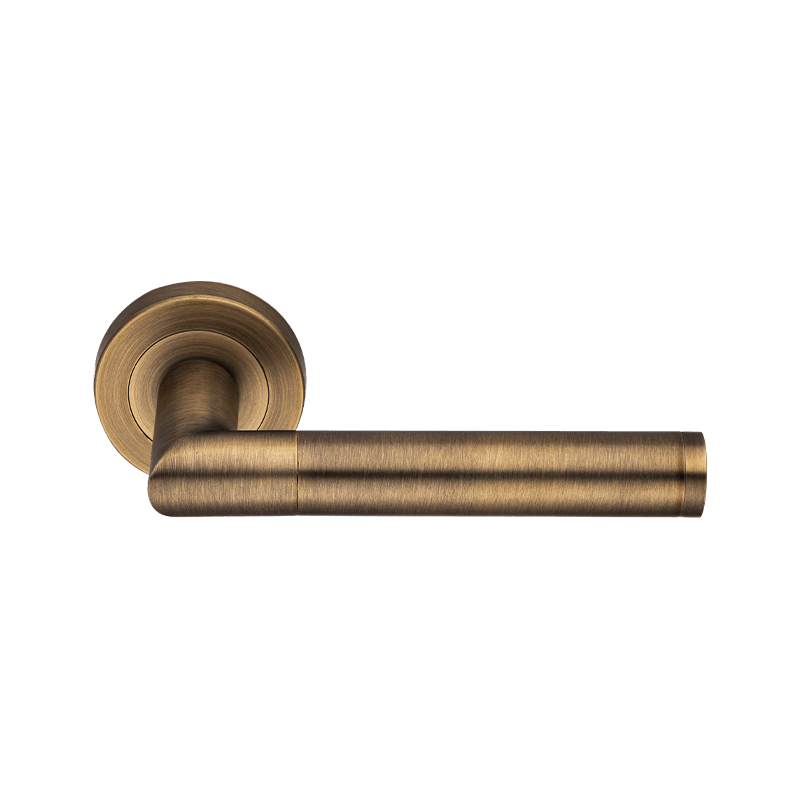
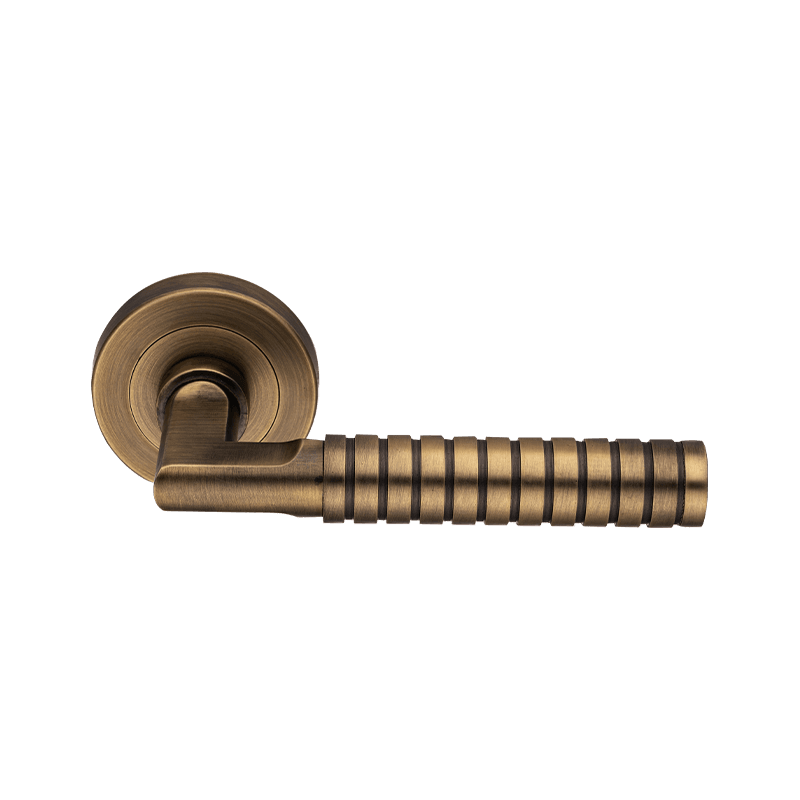
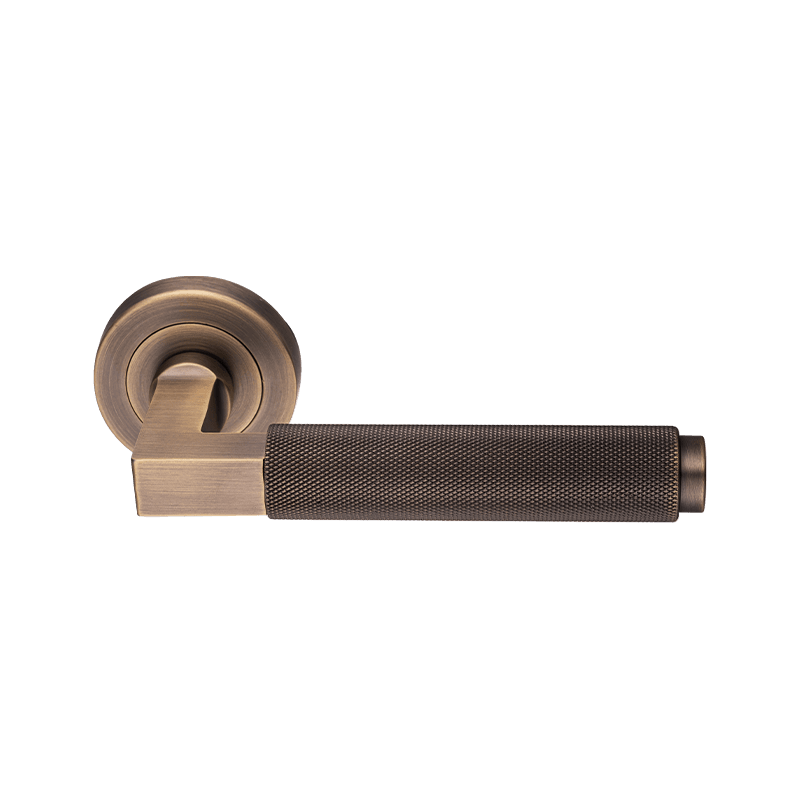
| Antique brass or bronze | Deep warm brown, very low reflection | Country, rustic and Victorian interiors | Forgiving of marks; can look heavy on a very modern door |
| White or off-white | Almost invisible; the door reads as one plane | Ultra-minimal and coastal interiors | Shows handling marks and has to match the door's exact white |
If the high-contrast look appeals to you, our matt black lever on rose shows how a low-sheen black behaves against a bright white door panel.
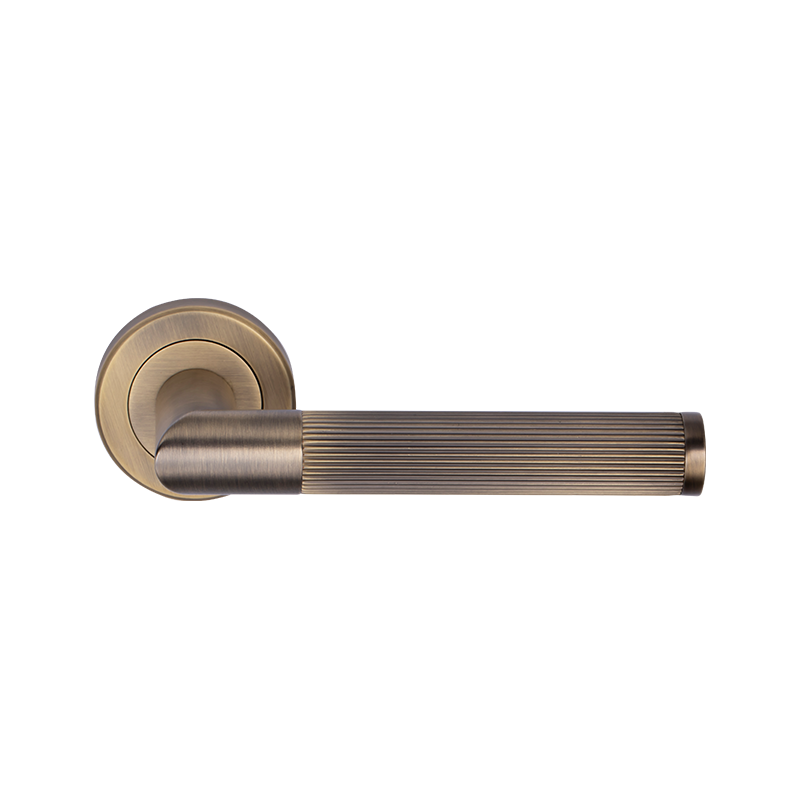 Matt Black Aluminium L-Shape Knurled Lever On Rose Door HandleHigh-contrast matt black interior handle with knurled aluminium lever and zinc rose; 130mm lever, 52mm rose, separate latch required for non-locking doors.View Product →
Why white doors are more forgiving than coloured doors
White doors are the easiest surface to dress because they bounce light around the handle instead of competing with it, so the finish does most of the visual work.
On navy, walnut or dark grey doors, the handle has to negotiate with the door colour and any mismatch is obvious. A white door stays neutral: the same brushed nickel lever can look crisp in a bright south-facing hallway and soft in a north-facing bedroom, purely because of the light. That freedom is useful, but it also causes the most common renovation mistake — choosing hardware door by door until one corridor holds three different metals. Pick one finish family and vary the handle style instead.
Room by room: where each finish earns its place
Match the handle to the largest fixed element the room already has, and the scheme will look considered rather than random.
- Hallways and living areas: matte black handles on white doors, especially where black window frames, picture frames or sockets already appear.
- Bedrooms: brushed or satin nickel, because it stays low-glare in early morning light.
- Bathrooms and kitchens: brushed nickel or satin stainless steel; humidity and cleaning sprays dull bare brass and untreated steel quickly.
- Period and heritage homes: antique brass, antique bronze or satin brass, which sit naturally against white panelled doors and mouldings.
- Coastal homes: brushed stainless steel, ideally 304 grade or better, since salt air attacks plated finishes first.
- Children's rooms and rentals: satin finishes that hide scuffs; glossy black and polished chrome show every mark.
Finish matters more than the colour name
Two handles that look identical on a shop display can age completely differently, because the coating and the base metal — not the colour — decide how the hardware looks two years later.
Matte black is produced at least three ways: painted, powder coated and PVD. Paint wears at the grip point where fingers rest; powder coating is tougher; PVD is the most abrasion-resistant of the three. On a white door, wear is doubly visible, because a chip of silver-grey base metal on black shows up against white paint. The same logic applies elsewhere. Lacquered brass keeps its colour, while unlacquered brass develops a patina that some people love and others replace. Cheap chrome over zinc can pit in a bathroom, and white-painted handles can yellow under strong sunlight. If the door sits in a wet room or a busy corridor, pay for the coating rather than the trend.
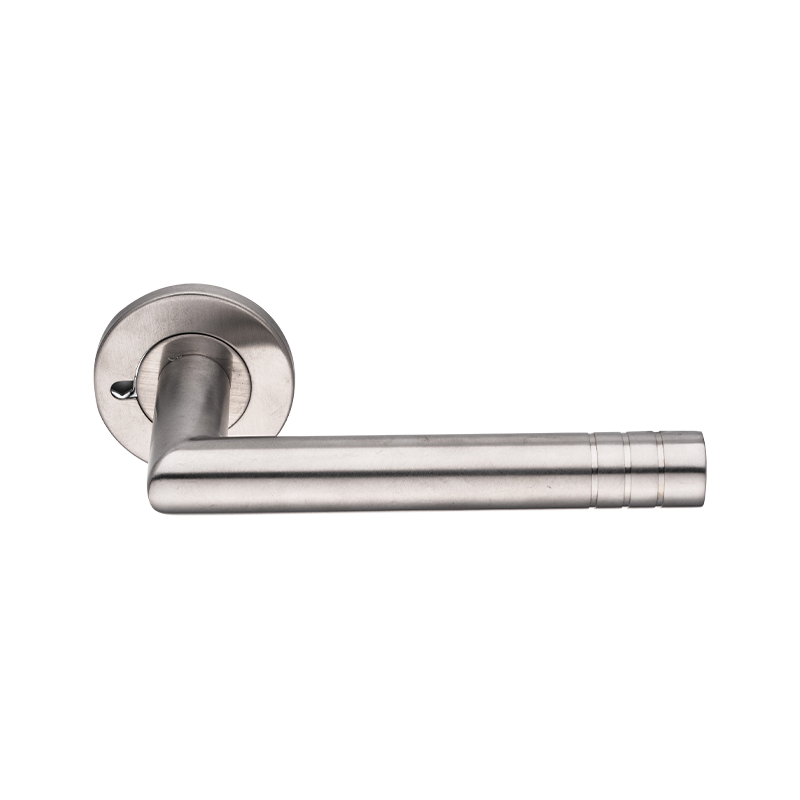 Brushed Stainless Steel Hollow Lever On Rose Door Handle 35-44mmModern stainless steel lever-on-rose for 35–44mm doors, with smooth curved hollow 130mm lever; brushed finish suits interiors where thickness and finish are checked first.View Product →
The checks that matter more than colour
Colour is the decision people agonise over, but door thickness, backset and latch function are the ones that cause returns, so confirm them before you commit to a finish.
- Door thickness: most interior doors run 35–44 mm; handle sets are usually supplied for one thickness range, with a longer spindle or screw pack for thicker doors.
- Backset: measure from the door edge to the centre of the spindle — 45 mm and 57 mm are the common sizes — and match the latch to it.
- Function: passage for hallways, privacy with a turn-and-release for bathrooms and bedrooms, keyed or smart latches for exterior doors.
- Rose or plate: a backplate can cover marks left by the old handle; a rose is smaller and looks more contemporary.
- Fixings: bolt-through fixings grip solid doors and heavier levers better than wood screws alone.
- Hinges and latches: order them with the handles so the visible metals agree; hinges are the mismatch people notice most.
A five-step way to choose
Working through these five steps takes a few minutes and prevents most wrong purchases.
- Note the room's existing metals: taps, light switches, picture frames and cabinet pulls.
- Decide the contrast level — high, medium or low — against the white door.
- Choose a finish family such as brushed nickel or matte brass and repeat it through the house.
- Check thickness, backset and latch function on every door you are changing.
- Buy one handle first, hold it against the painted door in daylight and evening light, then order the rest.
Mistakes that keep a white door looking unfinished
Most disappointing white doors fail for one of five predictable reasons.
- Buying hardware before the wall and floor colours are fixed, then re-buying it later.
- Mixing three metals in one sight line, such as brass handles, chrome hinges and black sockets.
- Choosing gloss black or polished chrome where fingerprints will be wiped daily.
- Matching the handle to the door instead of to the room's accents.
- Assuming every "brushed nickel" looks the same — warmth and grain vary noticeably between suppliers.
Frequently asked questions
Are black handles too harsh on white doors?
No. Black on white is one of the most common interior combinations; the harshness people dislike usually comes from a glossy finish rather than the colour itself, so choose a matt or satin black.
Do white handles on white doors work?
Yes, if you want the door to read as a single flat plane. Expect to clean them more often, and check the handle colour against the door's exact white, because two whites side by side rarely match.
What handle colour suits white doors with oak floors?
Let the floor lead. Warm oak pairs naturally with satin brass or antique bronze, grey-washed floors suit brushed nickel, and matte black works with almost any floor because it never tries to match the timber.
Will brass handles tarnish on a white door?
Lacquered brass keeps its colour indoors for years. Unlacquered brass develops a darker patina, and it ages faster on bathroom doors where humidity and hand contact are constant.
Should handles match the hinges and the lock?
Not strictly, but the metals visible on one door should agree. If you keep the old hinges, look at them before ordering, since a warm brass handle beside cold chrome hinges is the mismatch most visitors spot.
There is no wrong colour for a white door, only the wrong amount of contrast for the room around it. Decide the contrast level first, settle on one finish family, confirm the thickness, backset and latch, and buy a single handle to test in real light before ordering the set. Our antique brass lever on plate is a useful reference if you are leaning towards the warmer option.
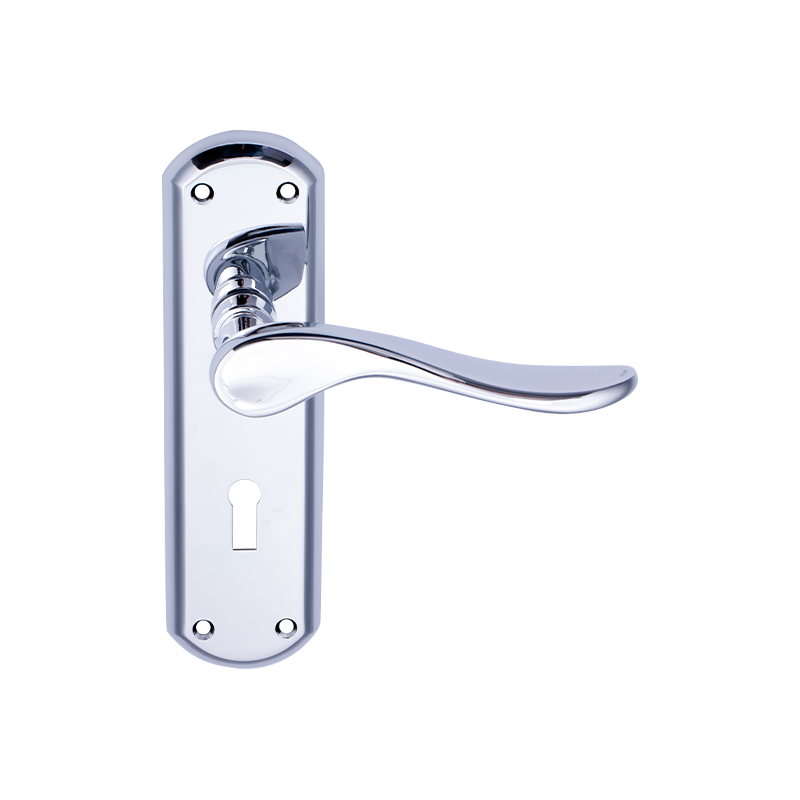 Antique Brass Lever Door Handle On 180mm PlateWarm antique brass lever-on-plate with zinc lever and 50×180mm backplate; 126mm lever, available in lock, latch, Euro or bathroom versions.View Product →