English
 italiano


"Left hand or right hand?" If that question is all that stands between you and a new door handle, here is the direct answer: a door handle does not have a hand of its own. Its required hand is inherited from the door — specifically from two physical facts: which side the hinges are on, and which way the door swings when it opens. A door with the hinges on the left, when you stand facing the outside of the door, is a left-hand door. With the hinges on the right, it is a right-hand door. If the door swings toward you instead of away from you, add the word "reverse." That is the entire system, and it is the same one used in hardware catalogues from local builders' merchants to export manufacturers worldwide.
Content
- What Is Door Handing, and Why Does It Matter?
- How to Determine Left-Hand vs Right-Hand Door Handles
- Left-Hand vs Right-Hand Configurations at a Glance
- Which Door Handles Are Handed, and Which Are Not?
- How to Choose a Lever Handle Once You Know Your Door Hand
- Interior Door Handles: What Changes?
- Common Mistakes When Ordering Handed Hardware
- Frequently Asked Questions
What Is Door Handing, and Why Does It Matter?
Door handing is the standardized description of a door's hinge side and swing direction, and it matters because the internal spring mechanism inside most lever handles is directional: it is factory-set to match one of the four handing configurations. When you order a left-hand lever, the spring is assembled so that the lever returns to the horizontal position by swinging in the correct arc. Fit a right-hand lever on a left-hand door and that spring works against you — the lever may sit at an uncomfortable angle, feel loose, or fail to return cleanly after repeated use.
Door knobs are less affected because they rotate rather than swing, and most cylindrical latch mechanisms can be flipped during installation. But for lever handles, keyed entry sets, and anything with a mortise lock, matching the hand is non-negotiable. The practical cost of getting it wrong is simple: a return shipment, a delay, and a door that stays unusable in the meantime. Understanding handing before you order avoids all three.
How to Determine Left-Hand vs Right-Hand Door Handles
You can determine the hand of any door in three steps that take about thirty seconds: stand at the outside of the door, check the hinge side, and check the swing direction.
- Stand on the outside of the door. For a front door, that is the street-facing side where a visitor stands. For an interior room, stand in the hallway outside the door, just as you would when approaching it.
- Check the hinge side. Hinges on your left mean a left-hand door; hinges on your right mean a right-hand door.
- Open the door and watch the swing. If the door swings away from you, keep the plain hand — left hand (LH) or right hand (RH). If the door swings toward you, add the word "reverse" — left-hand reverse (LHR) or right-hand reverse (RHR).
The third step is where most ordering errors happen. Many buyers only look at the hinges and forget that an outswing door — a storm door, a utility door, or a basement door — changes the handedness even though the hinges stay on the same side.
Left-Hand vs Right-Hand Configurations at a Glance
Every standard hinged door falls into one of four configurations, and once you can name them, you can order any handle, lock, or latch with confidence.
| Configuration | Hinge side (viewed from outside) | Swing direction | Typical location |
|---|---|---|---|
| Left Hand (LH) | Left | Away from you — push to open | Front entry doors, main entrances |
| Left Hand Reverse (LHR) | Left | Toward you — pull to open | Outswing exterior doors, utility doors |
| Right Hand (RH) | Right | Away from you — push to open | Front entry doors, main entrances |
| Right Hand Reverse (RHR) | Right | Toward you — pull to open | Outswing exterior doors, basement doors |
If you are working on a pair of double doors, remember that the two leaves are mirror images: when the active door is left-hand, the inactive door is right-hand reverse, and vice versa. Ordering two handles with the same hand for a double door is one of the most frequent slip-ups in renovation work.
Which Door Handles Are Handed, and Which Are Not?
The quickest way to know whether you need a handed model is to look at the mechanism, not the style: lever handles with a spring-return latch are handed, while fixed dummy levers, pulls, and most sliding-door handles are not.
Hardware that typically requires a specific hand includes:
- Lever handles with a spring-return mechanism — the internal spring must be oriented for the door's hand.
- Mortise lock bodies and tubular latches where the bolt is angled.
- Keyed entry sets and euro-profile cylinder locks where the latch and cam interact.
- Multi-point locking systems and smart latches with directional bolts.
Hardware that is usually non-handed or field-reversible includes passage knobs, dummy levers, pull handles, and many modern cylindrical latches that let you flip the latch bolt with a screwdriver. Always read the specification before ordering: if a listing says "field-reversible," handing does not constrain you.
How to Choose a Lever Handle Once You Know Your Door Hand
Once the hand is confirmed, choosing a lever handle comes down to three practical variables: backset, door thickness, and material or finish.
Measure the backset — the distance from the edge of the door to the center of the bore hole — which for standard residential doors is usually 45 mm or 57 mm. Check the door thickness too; most interior doors sit between 35 mm and 44 mm, but solid-core and fire-rated doors can be thicker. Then choose the material: zinc alloy offers an excellent weight-to-cost balance, aluminium is light and corrosion-resistant, and stainless steel suits high-traffic or coastal environments. Finishes such as polished chrome, satin chrome, matt black, and antique brass change both the look and the maintenance routine, so match the finish to the room and the daily amount of use before you buy.
For a front door with a lock, a lever-on-plate design integrates the handle and escutcheon into one clean assembly, which separates the handing requirement from the cylinder position and simplifies installation. You can browse a wider selection of styles in the door lever handle range to compare profiles, from knurled and lined textures to curved and flat lever arms.
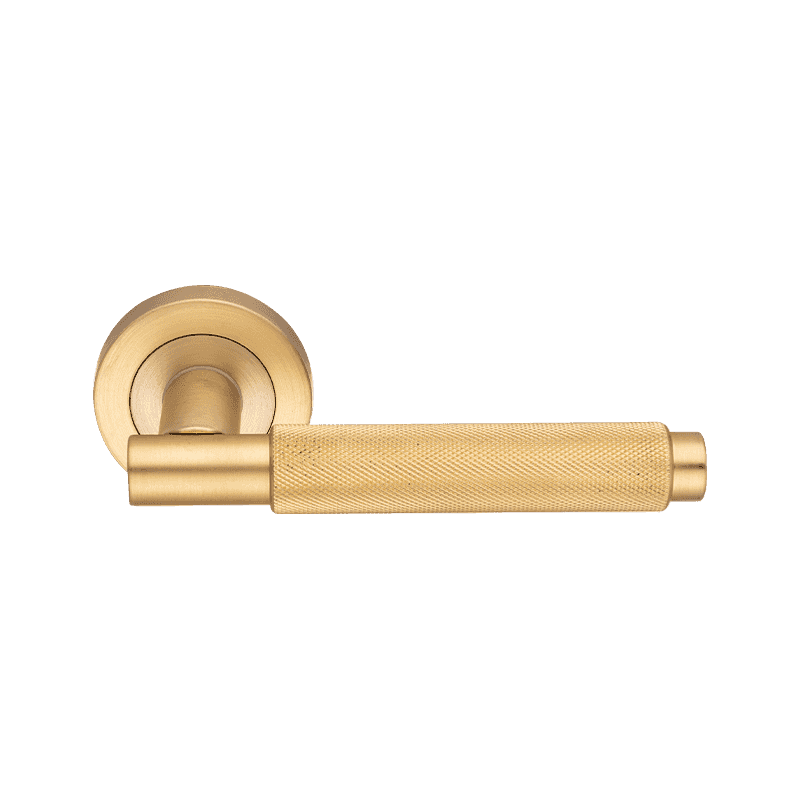
 Knurled Lever Door Handle on Square Plate in Polished ChromeThis new knurled-pattern lever pairs with a square backplate, making it a popular choice for entry doors. It is available in lock, latch, Euro, or bathroom versions, and its plate-mounted design suits the handing rules explained above.View Product →
Interior Door Handles: What Changes?
Interior doors use the same left-hand and right-hand rules as exterior doors; the only real differences are the lighter-duty mechanism, the room function, and the finish you can safely use.
For bedrooms and bathrooms, a privacy lever with a locking function follows the door's hand exactly as described above. For hallways and closets, a passage lever — no locking function — still contains a spring return, so the hand still matters unless the listing states otherwise. In a washroom or a home near the coast, prioritize corrosion-resistant finishes such as matt antique brass or satin chrome, because moisture attacks unprotected metal.
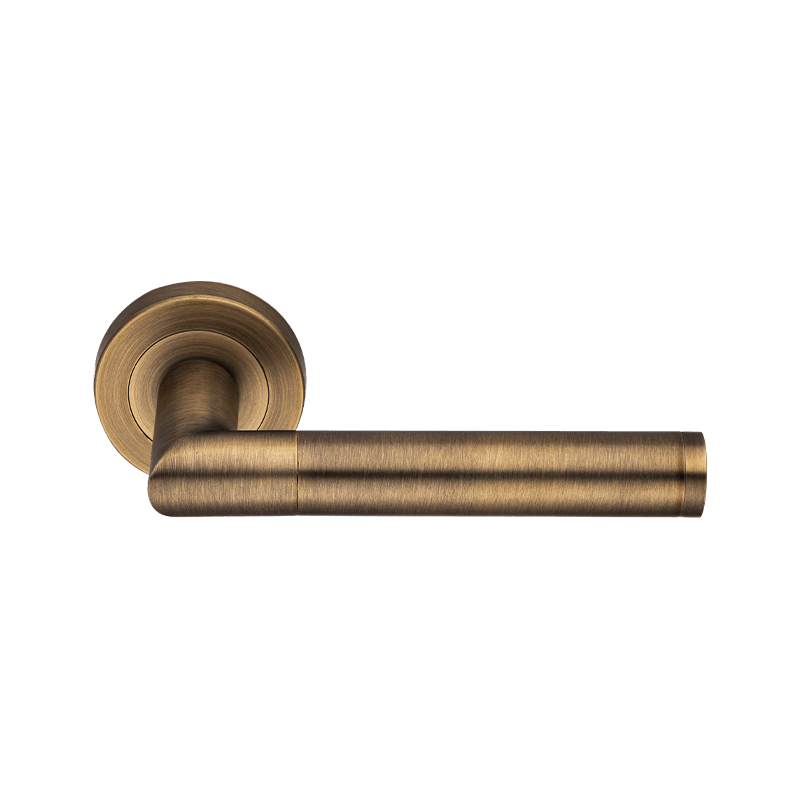
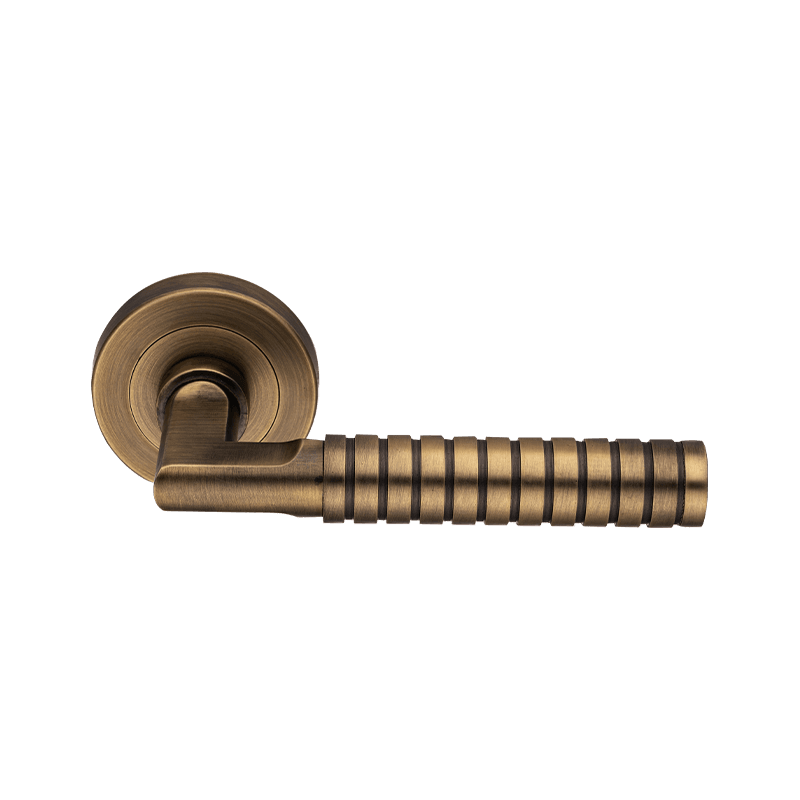
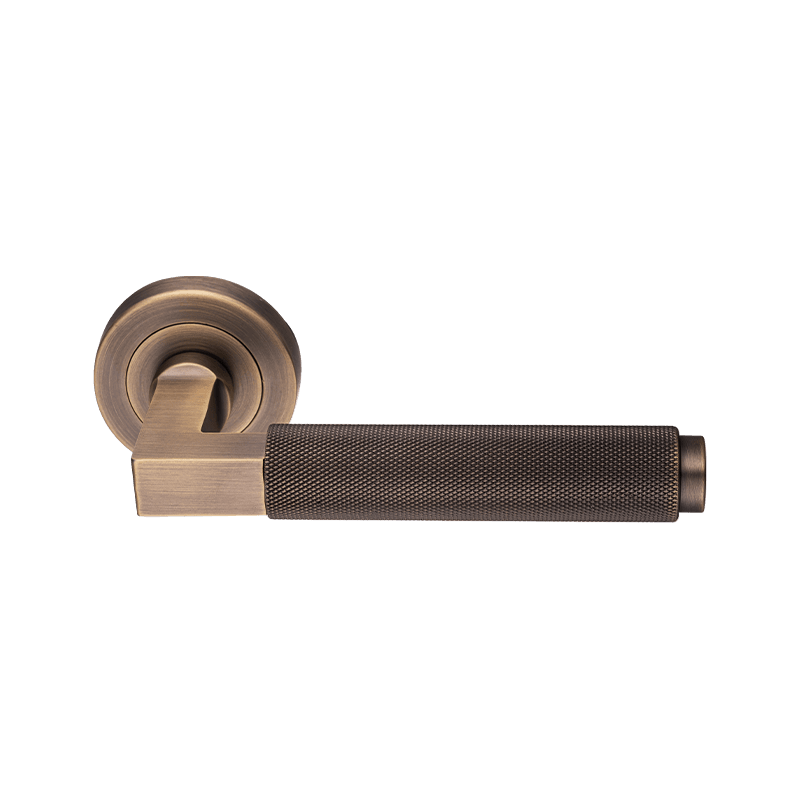
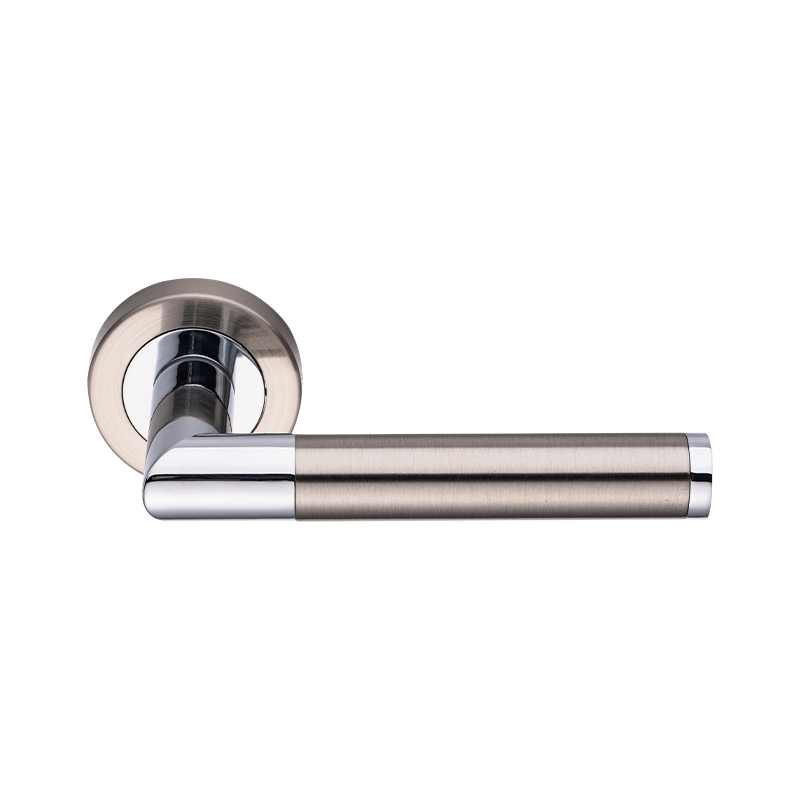 Matt Antique Brass Lever on Rose with Round Rosette for Interior DoorsFeaturing a minimalist round rosette and an L-shaped lever, this zinc handle is a popular choice for living rooms. Its matt antique brass finish offers corrosion resistance, making it suitable for bedrooms, bathrooms, or homes in coastal areas.View Product →
For a corridor that sees constant traffic, choose a heavy-duty passage lever with a solid lever arm; the extra material mass means fewer fatigue failures at the fixing points over time.
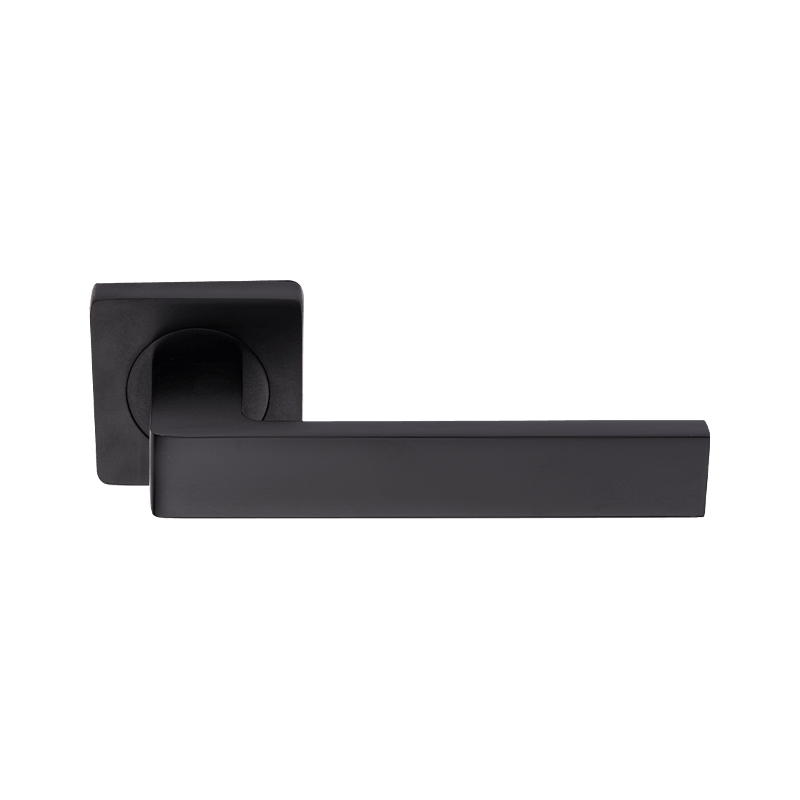
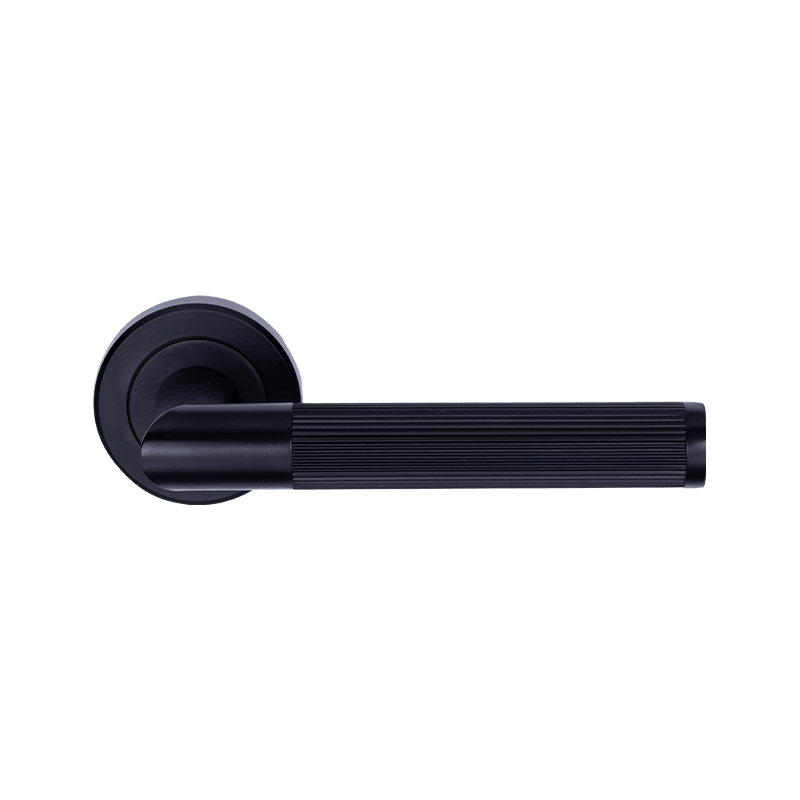
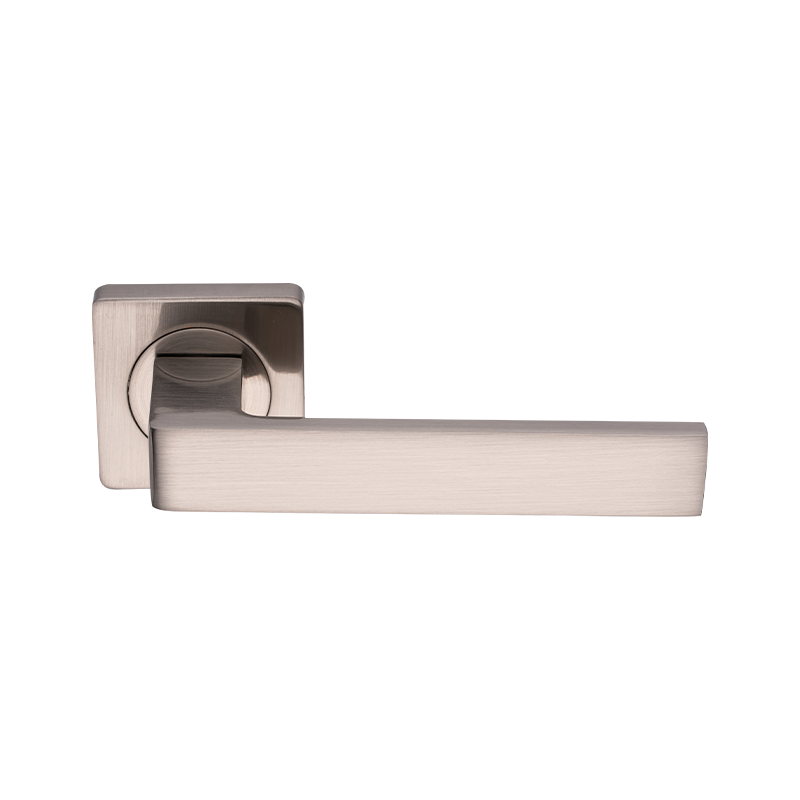 Heavy Duty Passage Door Lever with Square Rosette and Solid LeversCrafted from robust zinc with a tiered angled lever and square rosette, this pair is built for high-traffic corridors. It includes installation hardware and a spindle, designed to withstand constant use with fewer fatigue failures at fixing points.View Product →
The interior door handle collection groups these options by finish and function, so you can compare handing requirements without jumping between pages.
Common Mistakes When Ordering Handed Hardware
The five errors below cause most wrong-hand orders, and none of them are hard to catch once you know what to look for.
- Looking at the handle instead of the hinges. The hinge side is the only reliable reference point for naming the hand.
- Forgetting the reverse on outswing doors. Storm doors, basement doors, and some utility doors swing toward you, turning an LH into an LHR and an RH into an RHR.
- Assuming both leaves of a double door are the same hand. They are mirrors of each other; check each leaf individually.
- Confusing backset with handing. Backset affects whether the latch reaches the strike plate; handing affects the spring direction. You need both to be correct.
- Trusting an old label without re-verifying. Doors get rehung, trimmed, or replaced, so the hand stamped on a previous box may no longer match the current door.
Frequently Asked Questions
How do I know if my door is left-hand or right-hand?
Stand outside the closed door, face it, and look at the hinges: hinges on the left mean left-hand, hinges on the right mean right-hand. Then open the door — if it swings toward you, add "reverse" to the name.
Are most doors left-hand or right-hand?
There is no universal majority. Commercial buildings tend to use right-hand doors more often because of corridor flow and egress codes, but in residential work the split is close to even. Always check the actual door rather than assuming.
Do door knobs need a specific hand?
Most cylindrical door knobs are non-handed or field-reversible, because the latch bolt can be flipped during installation. Lever handles with a spring return are the products most likely to be sold as strictly left-hand or right-hand.
Can I change the hand of a door?
Physically, yes, but it means moving the hinges, patching the old hinge mortises, and repositioning the strike plate. It is usually faster and cheaper to buy hardware that matches the existing hand.
What is the difference between left-hand and left-hand-reverse?
Both have the hinges on the left when viewed from outside. The difference is the swing: a left-hand door swings away from you, while a left-hand-reverse door swings toward you.
What does "field-reversible" mean on a handle listing?
It means the internal spring and latch can be flipped by the installer so the same handle works on either hand. This is a common feature on modern interior lever sets and cylindrical latches.