English
 italiano


A door handle works by converting the force you apply into a rotation that pulls the latch bolt out of the strike plate, freeing the door. Press a lever or twist a knob, and the motion travels through a square spindle into a latch case mounted in the door edge. The moment you let go, springs return the handle and the bolt to their resting positions. It is a simple, reliable system, but behind that simplicity sits a precise arrangement of parts that determines how smooth, quiet and durable the door feels.
Content
What Is Inside a Door Handle Mechanism?
Every door handle mechanism uses the same set of functional parts, whether it is a small knob on an interior door or a heavy lever set on a commercial entrance. Once you can identify these parts, buying, installing and troubleshooting becomes much easier.
| Part | Where it sits | What it does |
|---|---|---|
| Handle or lever | On the door face, one or both sides | Converts hand pressure into spindle rotation |
| Square spindle | Passes through the door between the handles | Carries rotation from one handle to the other and into the latch |
| Rose or backplate | Against the door face beneath the handle | Covers the hole, anchors the handle and houses the return spring |
| Latch case | Drilled pocket in the door edge | Holds the bolt, spring and follower that keep the door closed |
| Latch bolt | Slides inside the latch case | Angled face lets the door close; square face holds it shut |
| Return spring | Inside the rose, handle hub or latch case | Pushes the handle back to its rest position |
| Strike plate | On the door frame | Receives the latch bolt and keeps the door aligned when closed |
The square spindle is the heart of the system. Its square cross-section grips the handle hub on each side, so both handles move together and neither side can slip under repeated use. The latch case translates the spindle's rotation into a straight-line pull on the bolt, and the springs reverse the motion the instant you let go.
In most residential and light commercial doors, this internal assembly is a tubular mortice latch: a compact steel case that combines the bolt, follower and springs in a single pre-assembled unit. It is popular because it installs into a 45 mm or 57 mm backset bore and can be replaced without removing the handles.
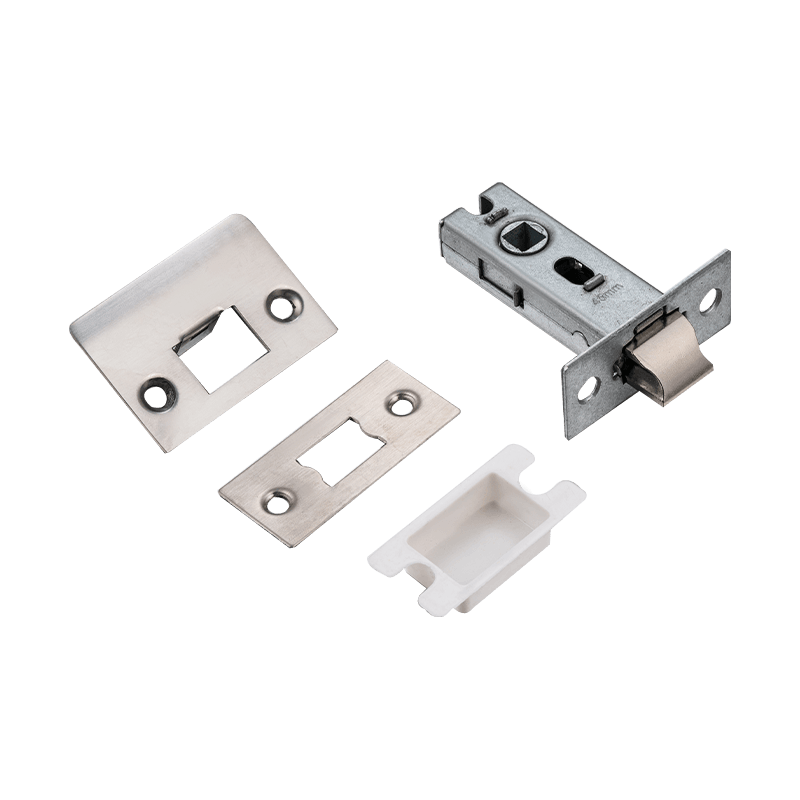 Tubular Mortice Latch for 45mm or 57mm Backset DoorsThis steel latch combines bolt and spring in one case, fitting standard residential bores. Its simple replacement design suits the press, rotate, retract action described here.View Product →
What Happens Step by Step When You Operate a Handle
Operating a door handle is a four-stage sequence: press, rotate, retract and release. Each stage is mechanical and instantaneous, so the whole action takes only a fraction of a second.
- Press or pull the handle. The lever works as a crank, and the distance from your hand to the spindle determines the mechanical advantage.
- The handle hub rotates the square spindle. The hub hole matches the spindle cross-section exactly, so the full travel of your hand is transferred without slippage.
- The spindle turns a cam or follower inside the latch case. The follower's shape pushes the latch bolt backward against its spring.
- The bolt slides clear of the strike plate. The door is now free to swing open.
- Release the handle. The return spring lifts the lever back to horizontal, and the latch spring extends the bolt again, ready to catch the strike plate when the door closes.
Lever Handle vs Door Knob: The Mechanical Difference
Lever handles and door knobs share the same spindle-and-latch architecture. The only real difference is how your hand delivers force and how much effort the action requires.
| Comparison point | Lever handle | Door knob |
|---|---|---|
| Input motion | Push down or lift up | Twisting grip |
| Mechanical advantage | Long lever arm reduces effort | Short radius demands more force |
| Operation with limited hand strength | Easy, can be used with elbow or wrist | Harder, needs a secure grasp |
| Return mechanism | Torsion spring, often inside the rose | Coil spring inside the knob or latch |
| Typical use | High-traffic and accessibility-conscious doors | Traditional interiors and narrow stiles |
Lever handles dominate new commercial and public buildings for one clear reason: they accept a downward push, so people who cannot grip or twist a knob can still operate them easily. In a well-designed lever, the bearing surface sits in the rose rather than in the handle, which keeps the action smooth over many thousands of cycles.
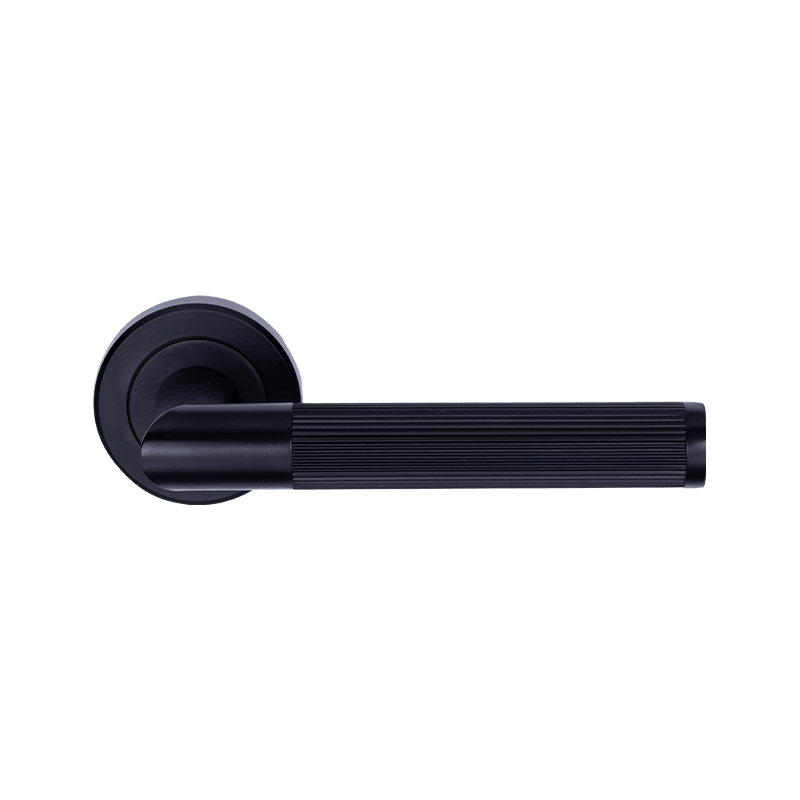
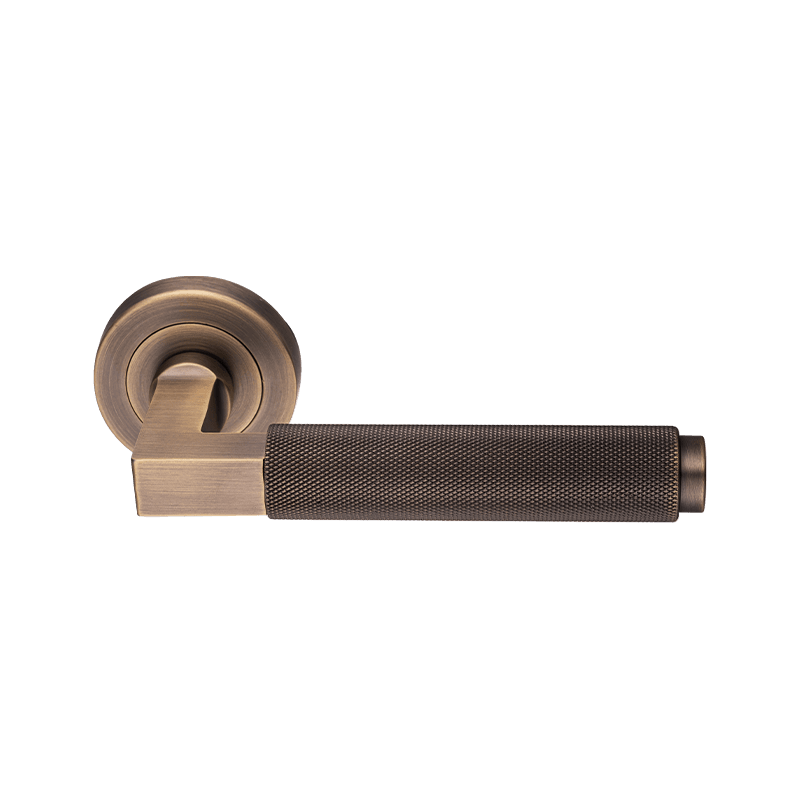
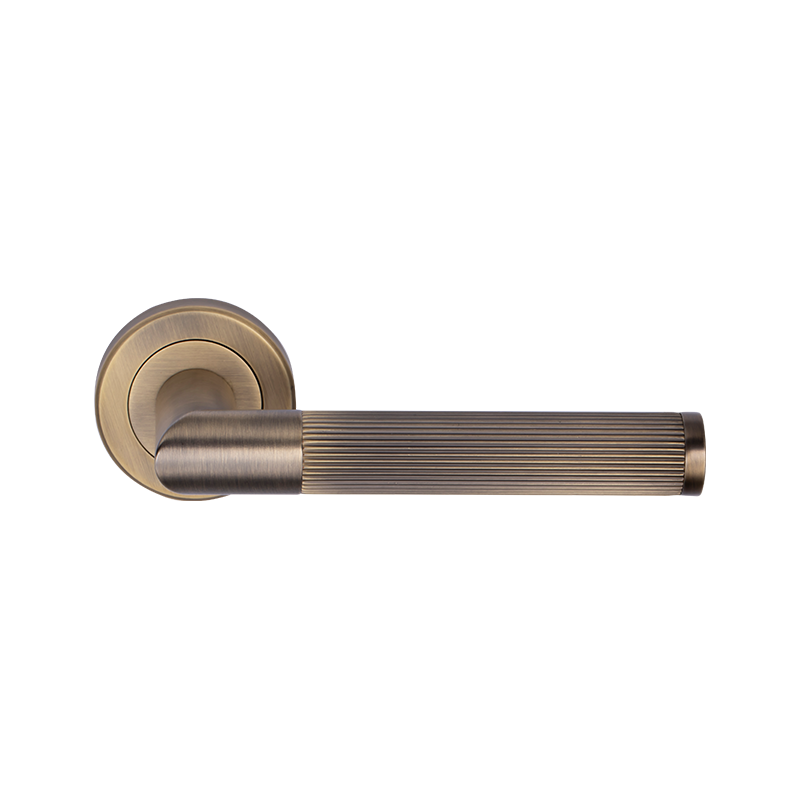 Aluminium L-Shape Knurled Lever on Rose in Matt BlackA lever-on-rose handle that accepts a downward push, making it easy to operate without gripping. The knurled aluminium surface adds durability and a tactile grip for busy interiors.View Product →
A door knob wraps the same mechanism in a smaller radius. The trade-off is ergonomic: more hand strength is needed, but the compact silhouette suits traditional interiors and works well on narrow door stiles. Sprung mortice knobs use the same spring logic as levers, tuned for the shorter travel of a twisting motion.
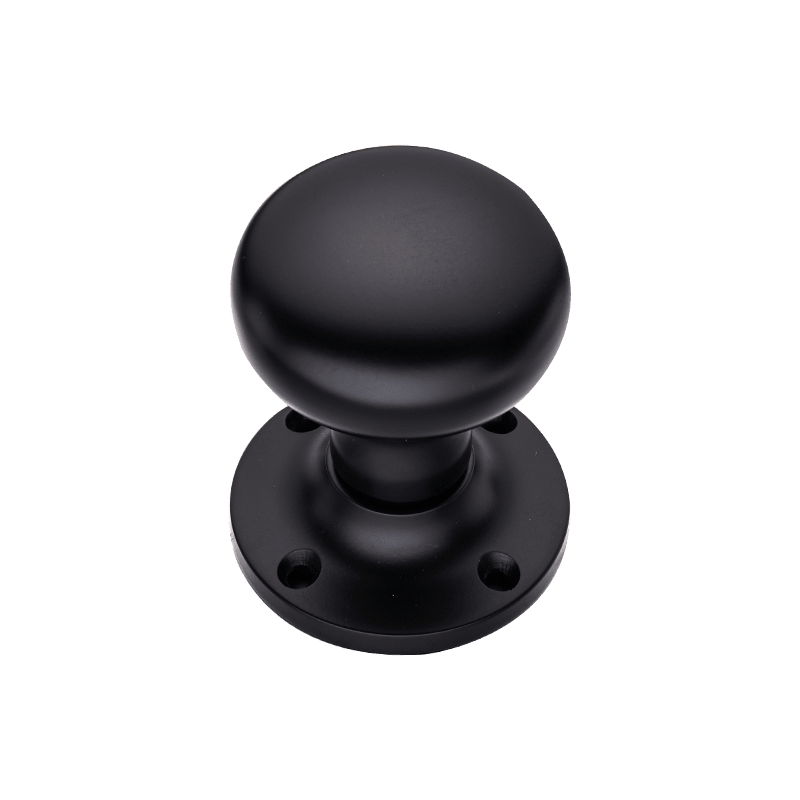 Orion Sprung Mortice Domed Door Knob in Matte BlackA classic mushroom-shaped knob with sprung mechanism tuned for twisting motion. Its compact silhouette fits traditional interiors and narrow stiles, as noted in the surrounding discussion.View Product →
Passage, Privacy and Locking Handles
Door handles are available at three functional levels: passage, privacy and keyed locking. The handle itself is nearly identical in all three; the latch or lock body is what changes the behaviour.
- Passage handles have no locking function. The latch is always active, so the handle operates from both sides at all times. They are used on closets, corridors and doors that only need to stay closed.
- Privacy handles add a push button or thumb turn on the inside that locks the handle from one side, with an emergency release on the outside. They are standard in bathrooms and bedrooms.
- Keyed handles embed a cylinder in the lock body; the key rotates the cylinder to retract the latch or throw a deadbolt. They are used wherever security matters, such as entrance and office doors.
The visible handle is rarely the security element. The lock body is a separate component with its own resistance rating, so buyers should evaluate the handle and the lock body as two independent decisions. A heavy lever on a weak latch will still open under a hard push, while a strong lock body on a poor handle creates a different failure point.
Common Door Handle Failures and What They Mean
Most door handle faults are mechanism faults rather than cosmetic problems. When you know which part causes the symptom, you can make a targeted repair instead of replacing the whole set.
| Symptom | Likely cause | Practical check |
|---|---|---|
| Handle sags or will not return | Fatigued return spring | Lift the handle; if it drops slowly, replace the rose or spring |
| Handle feels loose and rattles | Worn hub or loose grub screw | Remove the handle and inspect the spindle hole for rounding |
| Latch will not retract fully | Dirty bolt or stiff spring | Lubricate the bolt and test the follower by hand |
| Door is hard to close | Bolt misaligned with the strike plate | Check strike plate position and adjust its depth |
| Key turns but the latch stays still | Worn cam or disconnected cylinder | Open the lock body and inspect the cam engagement |
What to Look For in a Well-Built Handle Mechanism
A door handle can look identical from the outside yet fail very differently, because durability is decided by internal parts. Material, spring quality and surface treatment matter more than styling.
- Spindle fit: a snug square spindle with little play gives a crisp, precise feel.
- Spring strength: the handle should snap back to rest rather than droop or bounce.
- Surface treatment: a thick plating or anodised layer resists corrosion in kitchens, bathrooms and coastal environments.
- Latch serviceability: a replaceable latch case beats an integrated mechanism that forces you to replace the entire handle set.
When you are specifying hardware, compare internal quality as carefully as the visible finish. Start with the range of lever door handles on the manufacturer's site, then match the handle to the correct door lock bodies for passage, privacy or keyed use.
For interior doors, zinc alloy and aluminium alloy handles offer the best balance of strength and cost, while stainless steel handles suit heavy-traffic and outdoor doors. Whatever material you choose, check that the mechanism has been tested for cycles and that replacement parts are available, because every handle eventually needs maintenance.
Frequently Asked Questions
Why does my door handle feel loose?
A loose feel almost always comes from a rounded spindle hole in the handle hub or a loose grub screw. If the screw is tight and the handle still wobbles, the hub is worn and the handle needs replacement.
Why will my door handle not return to the horizontal position?
The return spring inside the rose or the latch has lost its tension. In many lever sets the spring lives in the rose, so replacing the rose restores the action without touching the latch.
How much force should a correctly adjusted handle need?
It should move with light, even pressure. If one side is over-tightened, the spindle binds and the movement feels gritty, so installers should balance the two roses rather than crank them down hard.
Which backset do I need for a door handle?
Most lever handles and knobs suit standard 45 mm or 57 mm backsets, and the spindle length must match the door thickness. Always measure the existing bore pattern before buying, because the latch and strike plate must align for smooth operation.