English
 italiano


Content
What Is a Door Handle Diagram and Why You Need One
Before you can fix a wobbly lever, order a replacement latch, or explain to a contractor which handle style your renovation requires, you need to know what you are looking at. A door handle diagram is simply a labeled map of the components hidden behind that piece of metal you grab every day. It turns a confusing assembly of springs, rods, and plates into a list of recognizable parts with clear jobs.
As a door hardware manufacturer, we use exploded-view diagrams for every single product we ship. They are not just for marketing—our installation instructions and after-sales support depend on accurate diagrams. When customers understand the anatomy of the product, they make fewer mistakes during installation and far fewer wrong replacement orders. The same logic applies to you: if you can name the part, you can fix it, measure it, or source it correctly.
This guide gives you four things in one place: a labeled diagram of a standard door handle, a step-by-step explanation of how the mechanism actually works, a side-by-side comparison of the most common handle types, and a simple measuring routine that prevents the #1 cause of returns—buying the wrong size. Whether you are a DIY homeowner, a contractor, or a wholesale buyer, these are the exact details you need.
Door Handle Anatomy: A Labeled Diagram of Key Parts
The drawing below shows a typical lever handle with a rose mounting, which is the most common residential setup. The same core components apply to knobs, though the shape of the grip differs. Refer to this diagram as you read the part-by-part breakdown beneath it.
(Diagram placeholder: an exploded view showing the external lever, rose, internal spindle, latch assembly, and strike plate—with 10 labeled callouts matching the part names in the sections below.)
These are the parts you will see on most residential and light-commercial doors. Each one has a specific job, and understanding that job helps you diagnose problems faster.
Lever and Knob
The lever (or knob) is the only part you touch. A lever is an L-shaped handle that you push down to retract the latch; a knob is a round grip you twist. There is a genuine ergonomic difference, not just a style preference. Latching mechanisms require a turning force, and an entire lever arm gives you mechanical advantage. That is why accessibility guidelines and hotels overwhelmingly use levers—they are easier to operate for children, elderly users, and people with limited grip strength. We manufacture both styles, but for high-traffic interior doors, levers tend to feel more comfortable and last longer because users are less likely to yank them sideways.
Rose and Backplate
The rose (rounded disc) or backplate (long, flat plate) is the mounting surface against the door face. It covers the hole where the spindle passes through and provides the anchor point for the screws that hold everything together. A rose is smaller and minimal, while a backplate covers a taller area and often has screw holes at both ends. The choice between them is not purely cosmetic. If you are replacing old hardware on a door with visible screw holes from a previous plate, a long backplate is your best friend—it hides the old holes. A rose, by contrast, requires the underlying door surface to be in good condition.
Spindle and Set Screws
The spindle is the metal bar—usually square in cross-section—that connects the lever or knob to the latch mechanism. When you turn the handle, you rotate the spindle, and that rotation drives the latch. Set screws are the small fasteners on the side or underside of the lever that lock it firmly onto the spindle. If your handle feels loose or wobbly, the first thing to check is whether the set screw has worked itself loose. Spindle sizes are not universal; common square widths include 5mm, 7mm, 8mm, and 9mm (often expressed as 5/32" or 1/4"). This measurement matters when you buy a replacement handle that is supposed to fit your existing latch.
Latch and Strike Plate
The latch assembly sits inside the edge of the door. Its job is to extend a spring-loaded bolt (the latch bolt) through the faceplate (the metal strip visible on the door edge) and into a hole in the door frame. That hole is reinforced by the strike plate, the metal piece mounted on the door frame. When you close the door, the angled latch bolt automatically presses back, then springs into the strike plate's opening to keep the door closed. The strength and thickness of both the faceplate and strike plate matter for security—a flimsy stamped strike plate can be forced open easily. At our factory, we test these steel parts for durability because they take the brunt of repeated door slams. If you need to replace just the latch, you must match two dimensions: the backset and the faceplate size (see the measuring section below). For a deeper look at matching lock bodies and latch kits, browse latches and lock bodies for your door.
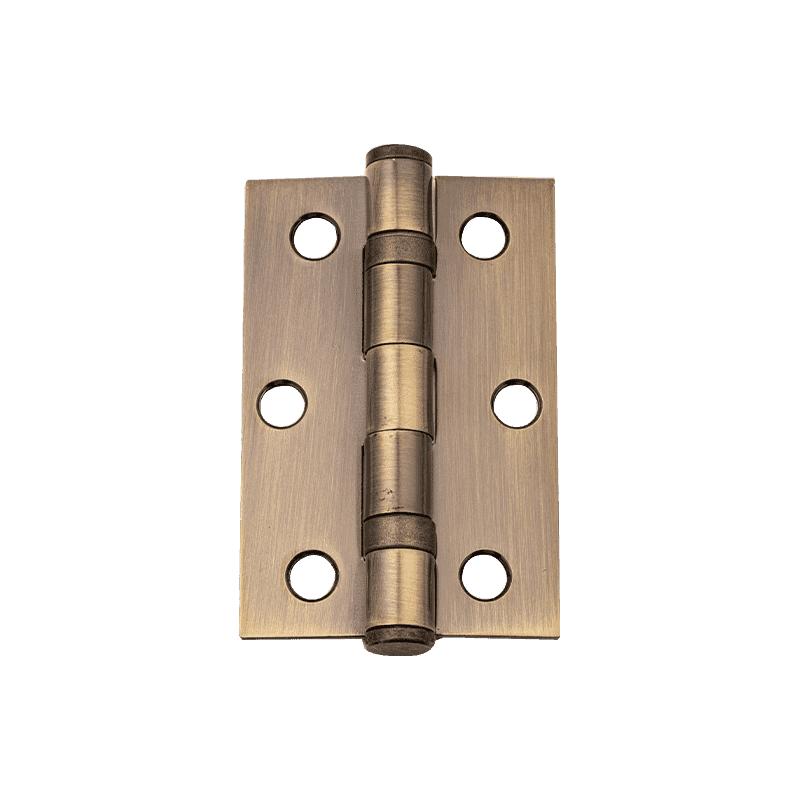 China Tubular Latch Manufacturer, Hinges FactoryAs China tubular latch manufacturers and hinges factory, Xiangshan Victor Hardware Co., Ltd is specialize in wholesale tubular latch sale.View Product →
Lock Cylinder and Key Components
If your door has a key lock, a lock cylinder is mounted through the door and connects to the spindle. The cylinder contains the pin tumblers that match your key. When you insert the key and turn it, the cylinder rotates the spindle, but it also retracts a separate, heavier bolt called a deadbolt in many designs. A basic passage set (no key) only operates the spring latch. A privacy set (for bedrooms or bathrooms) replaces the key cylinder with a thumb-turn or push-button on the inside. Knowing which of these you have tells you what replacement parts are compatible.
How a Door Handle Mechanism Works (Step by Step)
Turning a handle feels simple, but it is a precise chain of mechanical events. Here is exactly what happens, from your hand to the latch bolt:
- You press or turn the lever. This action rotates the lever hub, which has a square hole in its center.
- The lever hub turns the spindle. The square rod is a tight fit, so it rotates with the lever.
- The spindle drives the latch mechanism. Inside the latch body, a cam or gear mechanism converts the spindle's rotation into a linear pull.
- The latch bolt retracts. The spring-loaded bolt is pulled back into the faceplate, clearing the strike plate.
- The door opens. You pull the door while the bolt is held back. When you release the lever, internal springs rotate the spindle back to its neutral position, and the latch bolt snaps forward again.
This explanation also reveals why handles sometimes feel sticky or stiff. Friction is the enemy. If the spindle is slightly too long for the door thickness, it binds against the latch housing. If the lever hub is not perfectly aligned with the latch bore, the mechanism has to fight a bent angle. Even the strength of the return springs inside the latch plays a role—weak springs let the lever sag; overly strong springs make it hard to turn. If your handle is turning stiffly, the issue is rarely the handle itself; it is more often the spindle fit or a dirty internal mechanism. We have covered common causes in a detailed guide on why a door knob may feel stiff.
Door Handle Types Compared: Knob vs Lever, Rose vs Plate
Not all door handles are built the same. The diagram changes depending on the mounting style and whether you are dealing with a latch or a full mortise lock. Here are the four most common structures you will encounter.
Lever Handle on Rose
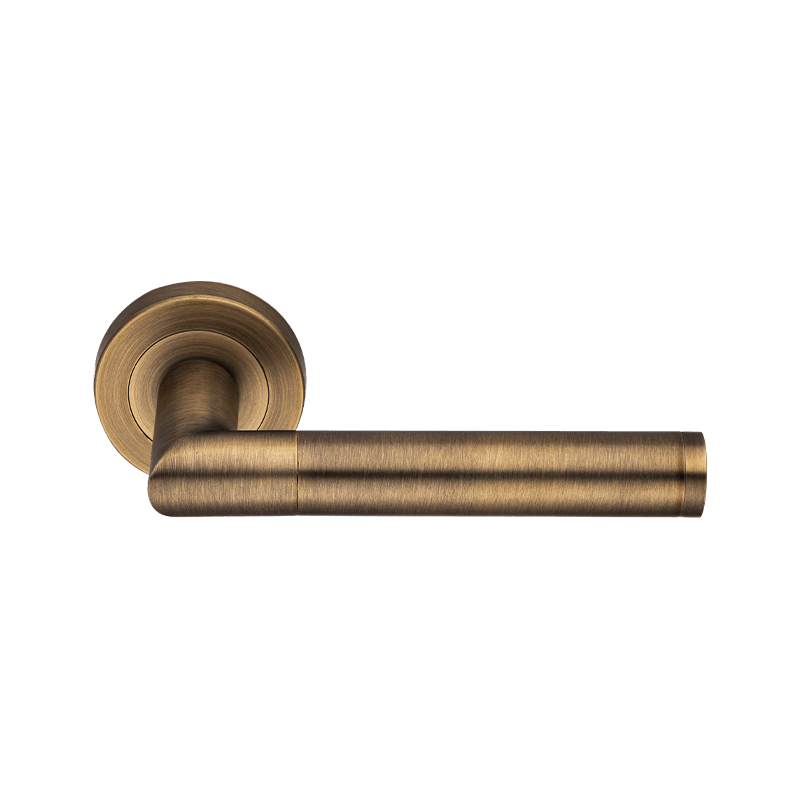
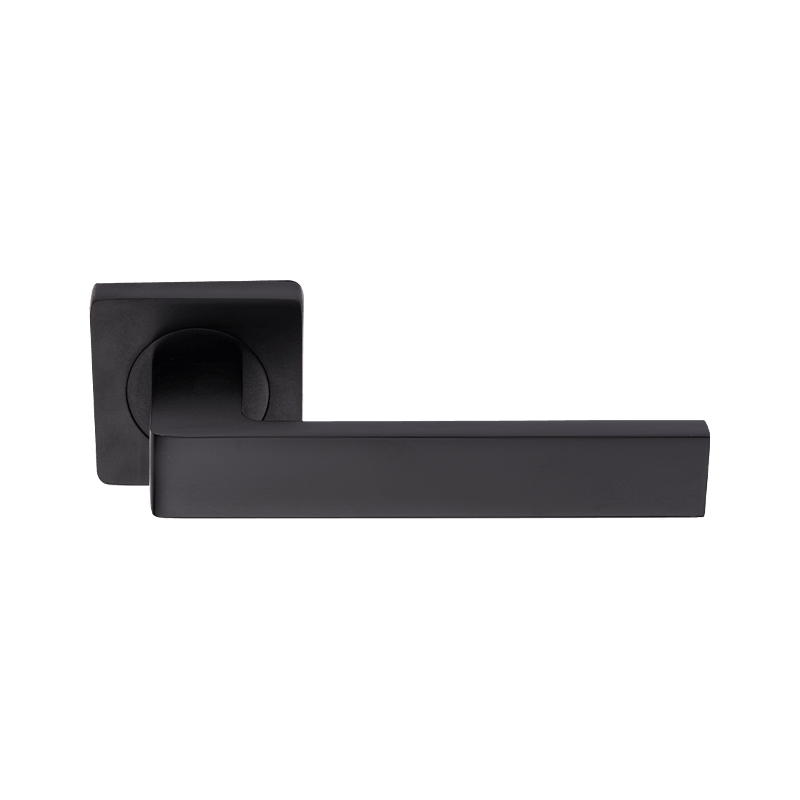
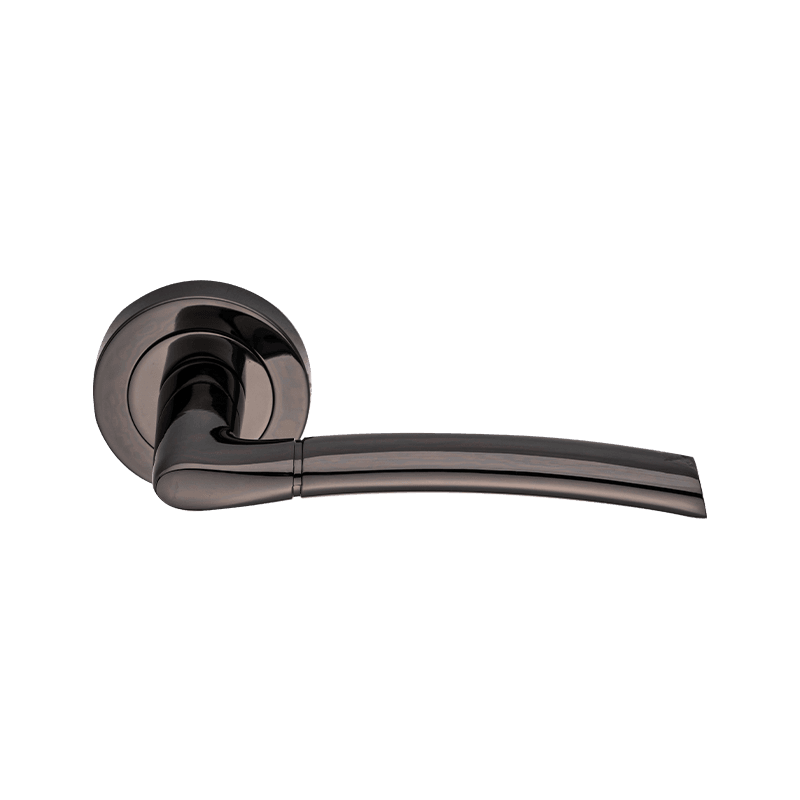
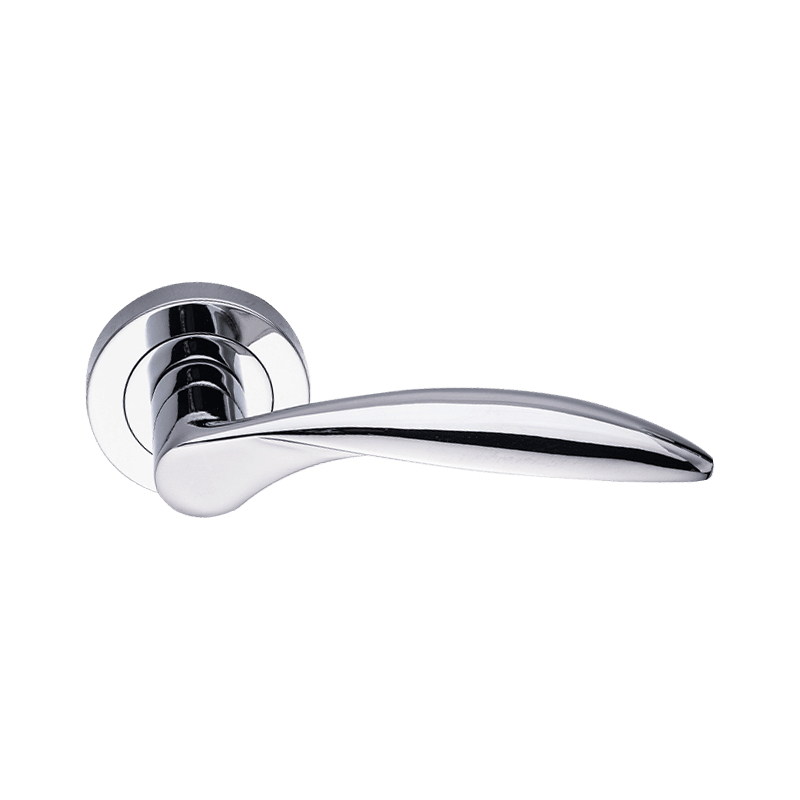
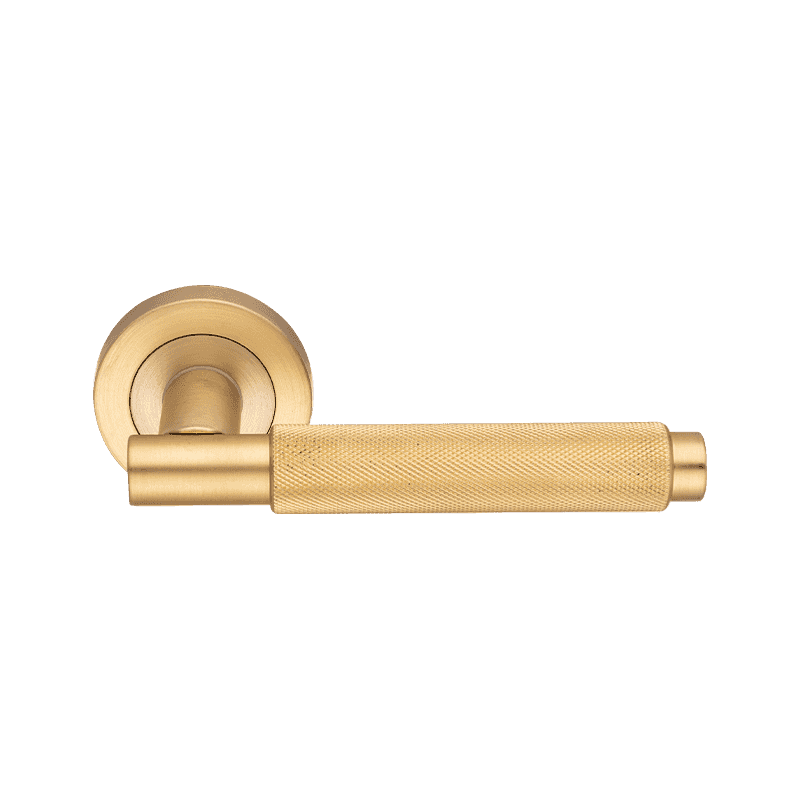
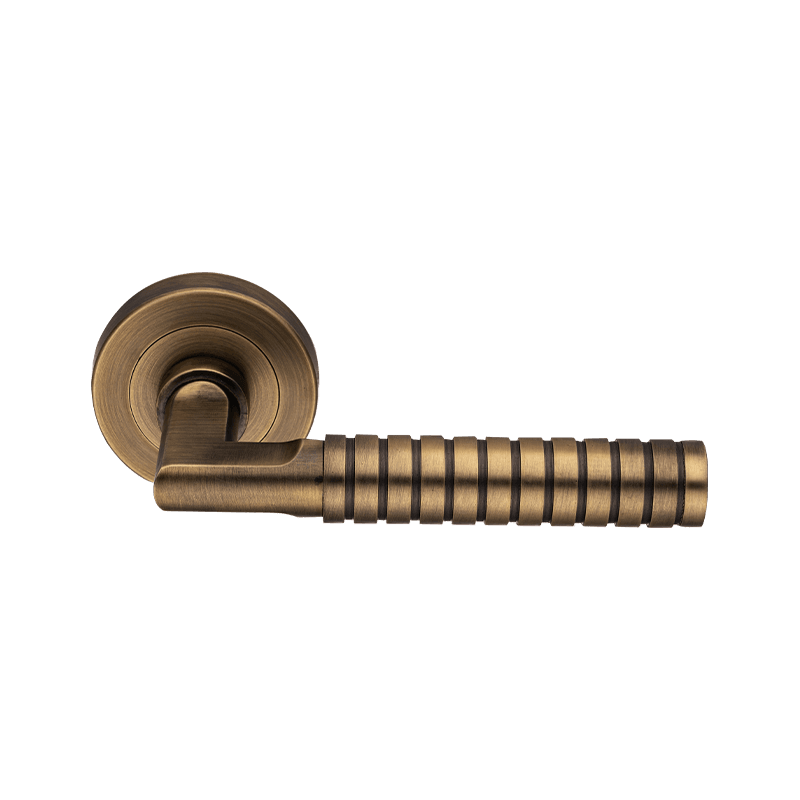
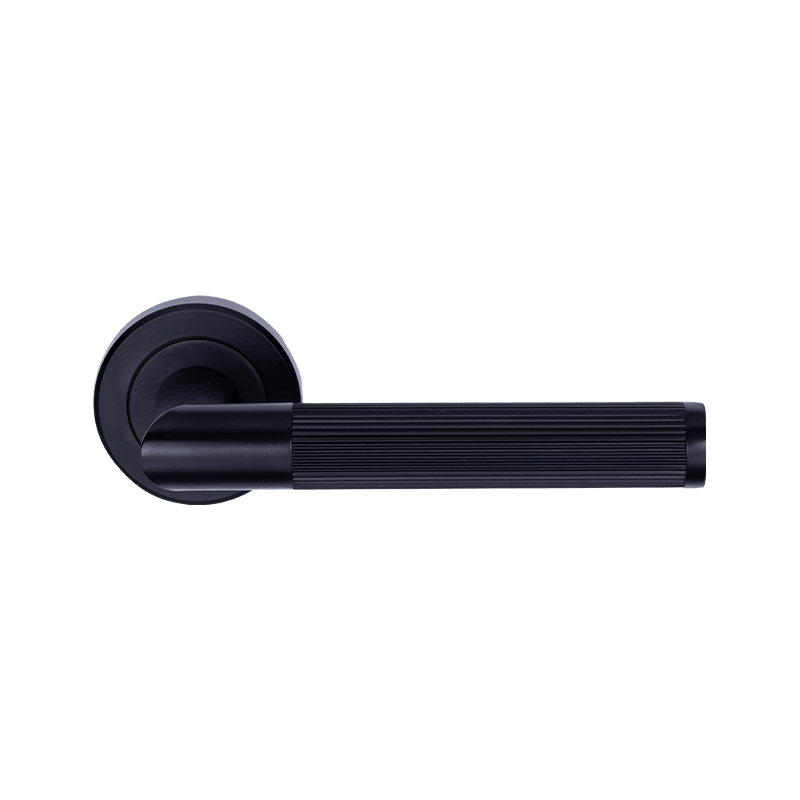
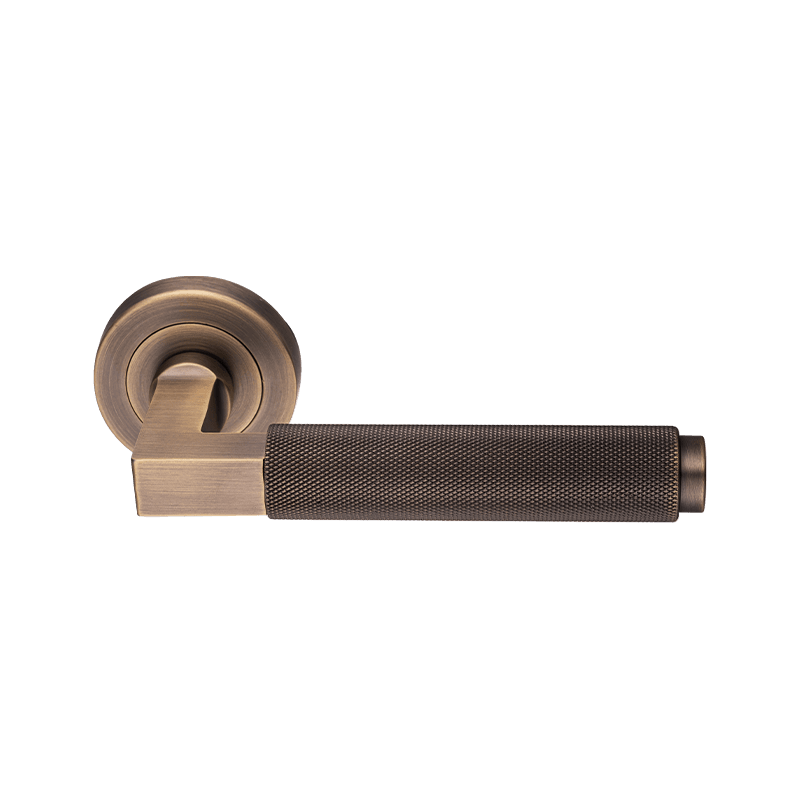
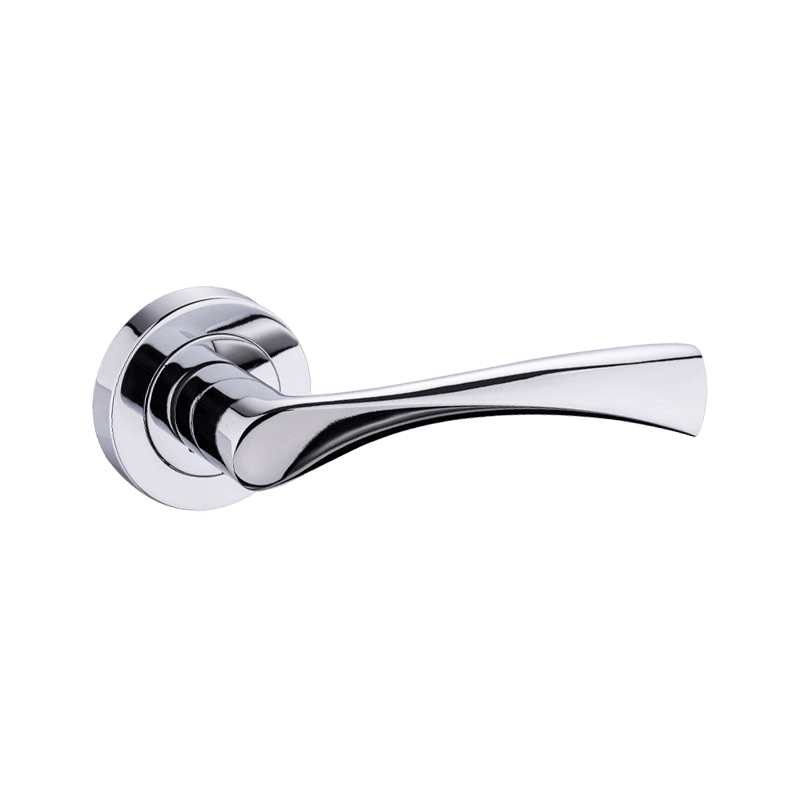
This is the modern standard. A round rose with a small diameter (typically 50mm to 65mm) backs a sleek lever. Because the rose covers a minimal area, it keeps the door looking clean. It requires a single 25mm or 54mm bore hole in the door face. It is the easiest type to retrofit and the most popular choice for hotel rooms and contemporary homes. If you prefer this look, you can browse our lever-on-rose door handles to see standard and heavy-duty options.
 China Handle On Rose Manufacturer, Lever On Rose FactoryXiangshan Victor Hardware Co., Ltd is China handle lever on rose manufacturer and lever on rose factory, we specialize in wholesale produ...View Product →
Lever Handle on Plate
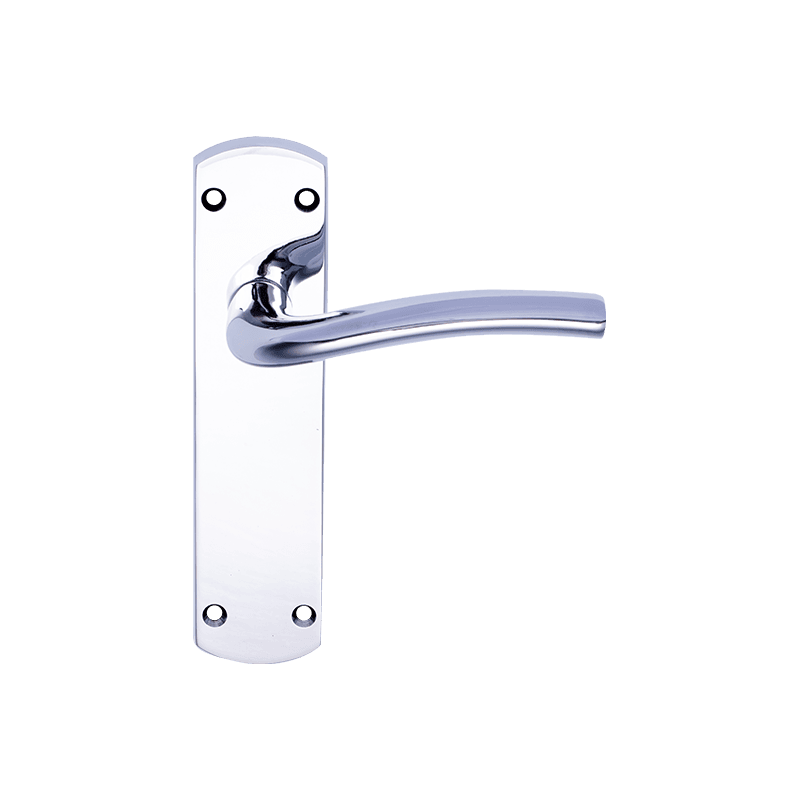
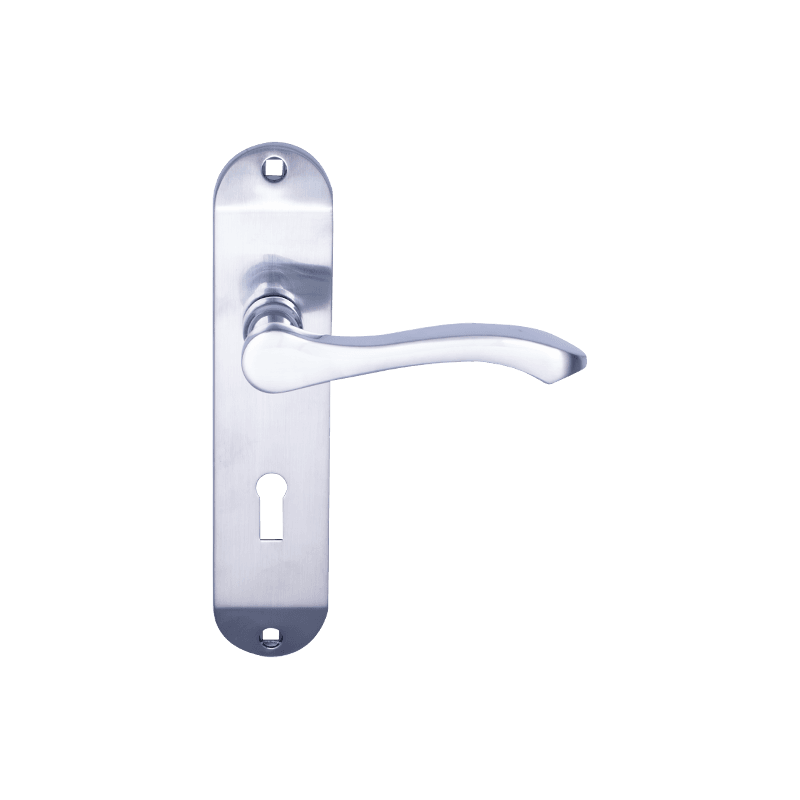
A long backplate (often 150mm to 250mm tall) beneath the lever gives a more substantial, traditional, or stately appearance. It also offers a practical advantage for renovation projects: a long plate covers multiple old holes and hardware marks left by previous locks, so you do not have to patch and repaint. For those working on a classic or period-style interior, explore our lever-on-plate handle collections for consistent aesthetics.
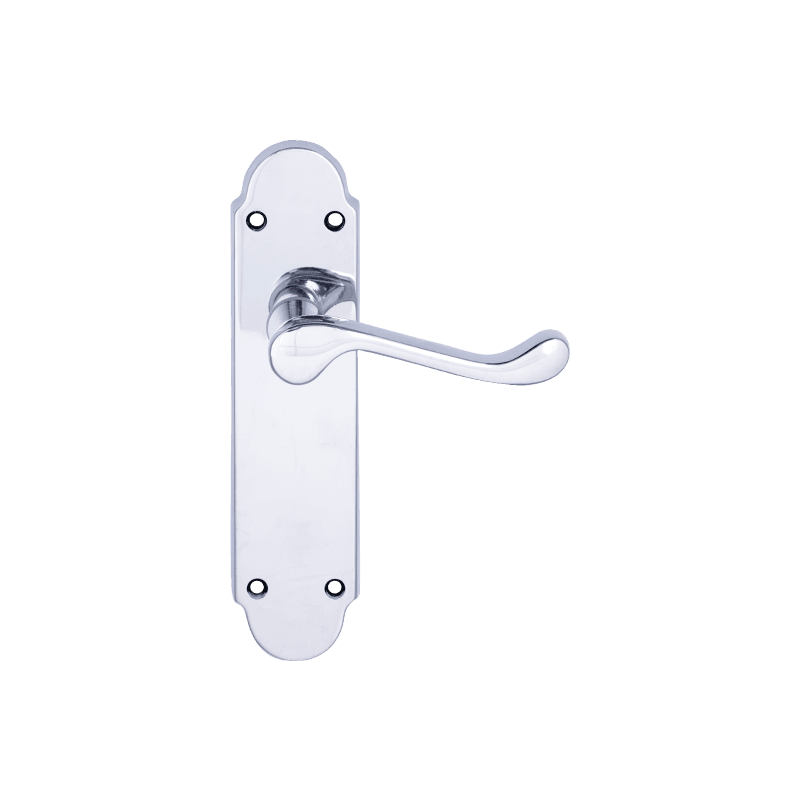 Wholesale Lever Door Handle On Plate Factory, ManufacturersXiangshan Victor Hardware Co., Ltd is a famous lever door handle on plate manufacturers and China lever on plate door handle factory, we ...View Product →
Door Knob
The classic round knob is still widespread in older homes and many interior doors. It functions exactly like a lever—turning it retracts the latch—but requires a twisting motion. The main considerations are ergonomics and child safety. A toddler can sometimes rotate a knob enough to open a door. This is why many parents look into childproofing your door knobs with covers that make them harder to grip. For those who prefer the classic look, we offer door knob sets and pulls.
Mortise Lock Set
A mortise lock is a completely different beast. Instead of a simple cylindrical latch, it uses a rectangular lock body that fits into a large pocket chiseled into the door edge. This body contains the latch, the deadbolt, and the lock cylinder mechanism all in one heavy steel housing. Mortise locks offer superior security and a more premium feel, which is why they are common in high-end residential projects and commercial buildings. Their diagrams look more complex because there are simply more moving parts inside that one box.
Key Differences in the Diagram
- Grip: Knobs and levers change how you apply force; levers win on ergonomics and accessibility.
- Mounting base: A rose covers a small hole; a backplate covers a larger vertical area and hides imperfections.
- Latch body: Cylindrical latches are simpler; mortise bodies are larger, heavier, and offer integrated deadbolts.
- Spindle: All of them use a spindle, but mortise locks often use a larger, square spindle (usually 8mm) and a different cam arrangement.
Which One Should You Choose?
Use this simple decision list as a shortcut:
- Standard interior bedroom or hallway: Choose a lever-on-rose or a knob, depending on your style.
- Renovation covering up old hardware marks: Choose a lever-on-plate.
- External door with high security needs: Choose a mortise lock or add a deadbolt cylinder to your existing setup.
- Hotel or high-traffic commercial space: Look for heavy-duty levers (often with a spring cassette) and consider smart lever door handles for keyless entry and better access control.
How to Measure Your Door Handle Parts for Replacement
Most replacement mistakes happen because of three missing measurements. Before you order anything, spend five minutes with a tape measure and write these down.
- Backset: This is the distance from the edge of the door (where the faceplate sits) to the center of the spindle hole. It is the most critical measurement. Standard backsets are 50mm (a bit under 2 inches) and 60mm (about 2-3/8 inches); 70mm (2-3/4 inches) is also available for heavier doors. Measure it flat against the door edge, not from the door face.
- Spindle length and width: Remove the handle from the door and measure the length of the square bar. Also note if it is a smooth rod or has a spring mechanism. Then measure one side of the square to get its width (e.g., 5mm, 8mm). This confirms whether your new handle will thread through the existing latch.
- Center-to-center distance: For keyed locks, measure the distance between the center of the key cylinder hole and the center of the bottom screw hole or the knob spindle hole. This is often 38mm or similar for residential locks. For a full lockset, you are also measuring the distance between the handle and the keyhole.
If you find these numbers confusing, you are not alone—this is the number one reason for return shipments in our industry. Measure carefully, and if you have a door that is unusually thick or thin (not the standard 35-45mm), double-check the spindle length. When your measurements are ready, comparing them against a manufacturer's specification sheet is easy. And if you are ever in doubt about compatibility between a new handle and your existing latch backset, it is worth sending the numbers directly to a supplier. Getting this right is the single best way to avoid the headache of a half-installed door handle.
Final Thoughts
You now know the essentials: a door handle is a lever, a spindle, a latch, and a strike plate working in sequence. Master these four components and you can diagnose most common problems—a loose handle, a sticky latch, or a misaligned strike plate—without needing a professional. You also know the key to successful replacement is measurement, not guesswork. Match the backset, spindle size, and hole spacing, and the new part will fit. When you are ready to purchase, buying directly from a manufacturer like Victor Hardware can save you money and make it much easier to get a matched set or custom advice. Understand the anatomy, measure twice, and your door hardware project will go far more smoothly.