English
 italiano


The main parts of a door handle are the lever or knob, the rose or backplate, the latch bolt, the spindle, the strike plate, and the escutcheon. Together, these components form a complete door hardware assembly that controls entry, provides security, and contributes to the aesthetic of any interior or exterior door. Whether you are replacing a broken handle, specifying hardware for a new build, or simply troubleshooting a stiff latch, knowing the correct name for each part of a door handle is the essential first step.
Content
- Why Knowing Door Handle Part Names Matters
- What Are All the Parts of a Door Handle? Complete Named List
- What Does Each Part of a Door Handle Do? Detailed Descriptions
- 1. The Lever or Knob — The Gripping Component
- 2. The Rose or Backplate — The Mounting and Cover Plate
- 3. The Spindle — The Connecting Shaft
- 4. The Latch Bolt and Latch Body — The Closing Mechanism
- 5. The Forend / Faceplate — The Edge-Mounted Trim
- 6. The Strike Plate — The Frame-Side Receiver
- 7. The Escutcheon — The Keyhole Cover
- How Do Door Handle Part Names Differ Between Lever, Knob, and Pull Handle Types?
- Which Materials Are Used for Door Handle Parts and How Do They Compare?
- How Do Door Handle Parts Differ Between Tubular Latch and Mortise Lock Assemblies?
- What Measurements Do You Need When Replacing Door Handle Parts?
- FAQ: Door Handle Parts and Terminology
- Q: What is the round plate behind a door handle called?
- Q: What is the metal plate on the door frame called?
- Q: What is the part of a door handle that goes through the door called?
- Q: What is the angled bolt at the edge of a door called?
- Q: What is the small screw under a door lever called?
- Q: What is the difference between an escutcheon and a backplate?
- Conclusion: Using the Right Door Handle Part Names to Buy, Fit, and Maintain Correctly
Why Knowing Door Handle Part Names Matters
Using the correct terminology for door handle parts saves time, avoids costly ordering mistakes, and ensures you communicate clearly with locksmiths, builders, and hardware suppliers. A common source of confusion is ordering a "handle" when what is actually needed is just the rose plate or the latch mechanism — two very different components with very different price points. Industry data from hardware distributors consistently shows that incorrect part identification is the number one reason for returns and re-orders in residential door hardware.
What Are All the Parts of a Door Handle? Complete Named List
A standard door handle assembly consists of between six and twelve named components depending on the handle type — lever, knob, deadbolt, or mortise — and whether it includes a locking mechanism.
| Part Name | Also Known As | Primary Function | Location on Door |
| Lever / Knob | Handle grip, door lever | Gripping surface to operate the latch | Face of door, both sides |
| Rose / Rosette | Round rose, cover plate | Covers the door bore hole; mounts the lever | Door face, behind the lever |
| Backplate / Escutcheon | Long plate, face plate | Rectangular plate housing lever and keyhole | Door face, behind the lever |
| Spindle | Square shaft, spindle bar | Connects both levers through the door; rotates latch | Through the door, inside latch body |
| Latch Bolt | Spring latch, latch tongue | Spring-loaded bolt that holds door closed | Door edge, inside latch body |
| Latch Body / Latch Case | Tubular latch, mortise latch | Housing for the latch bolt mechanism | Mortised into door edge |
| Forend / Faceplate | Latch faceplate, forend plate | Flush-mounted plate on door edge; frames latch bolt | Door edge, over latch body |
| Strike Plate | Striker, keep plate | Receives the latch bolt when door closes | Door frame / jamb |
| Keyhole / Cylinder | Lock cylinder, euro cylinder | Houses the key mechanism for locking | Within the backplate or separate deadbolt |
| Fixing Screws | Machine screws, through-bolts | Secure the rose/backplate to door face | Through door, concealed under cover |
| Grub Screw | Set screw, hex screw | Locks lever onto the spindle | Underside of lever hub |
Table 1: Complete named list of door handle parts, their common alternative names, functions, and locations within the assembly.
What Does Each Part of a Door Handle Do? Detailed Descriptions
Understanding the function of each door handle part helps you diagnose faults, specify replacements correctly, and evaluate quality differences between product ranges.
1. The Lever or Knob — The Gripping Component
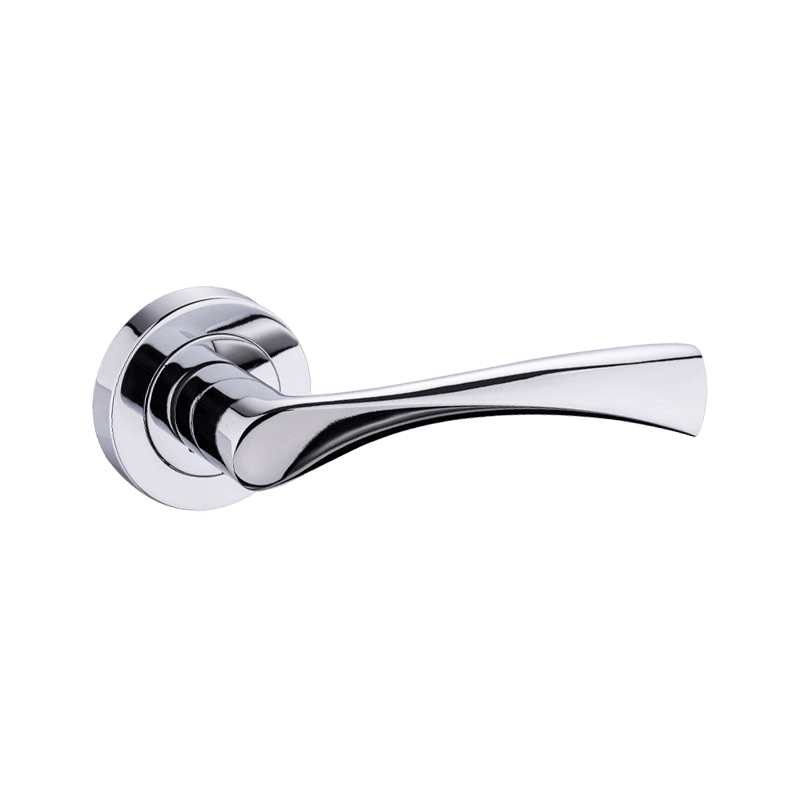
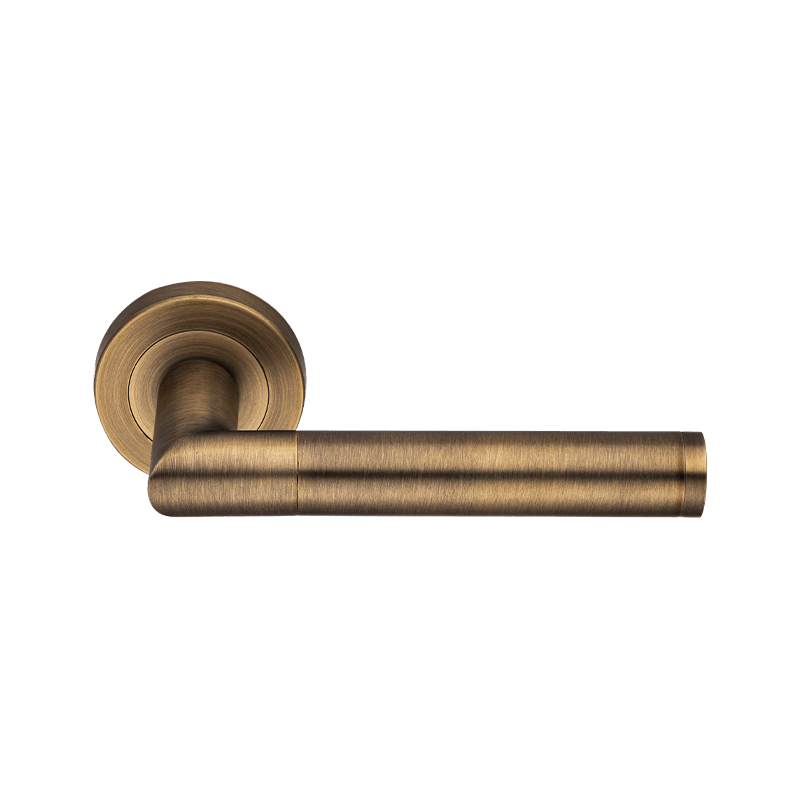
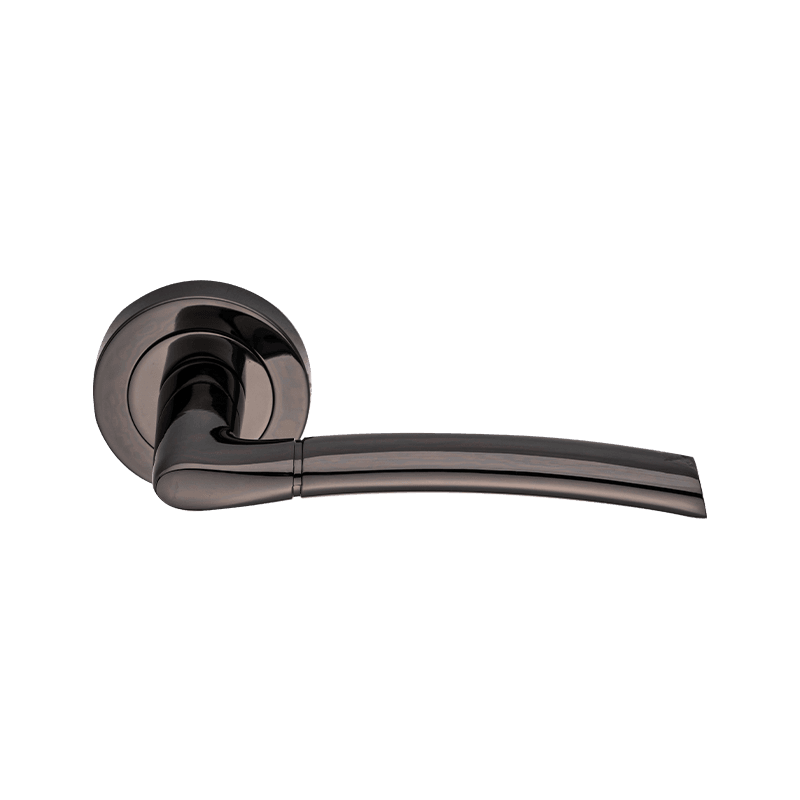
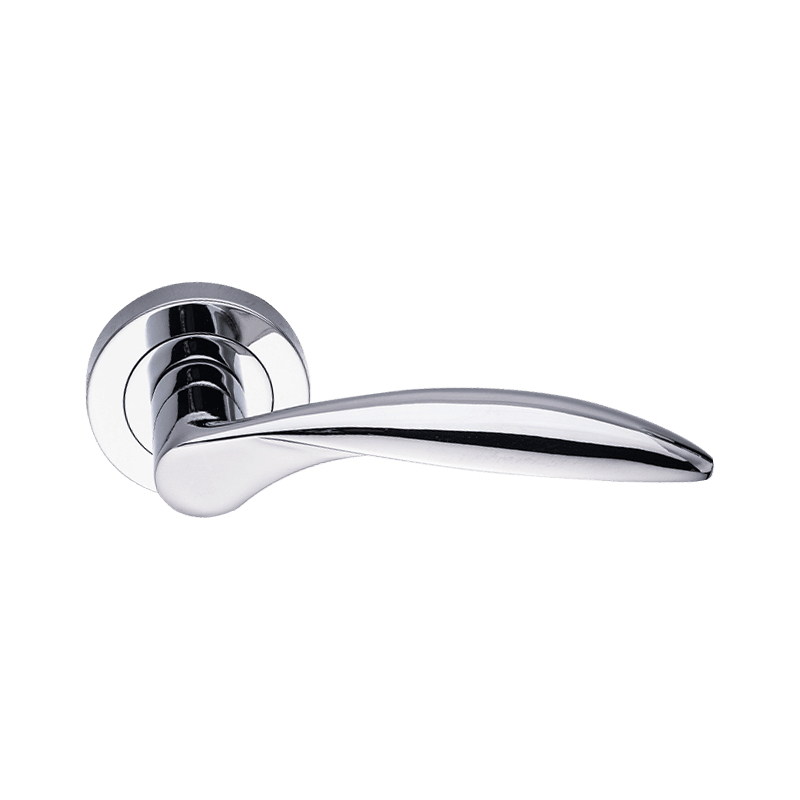
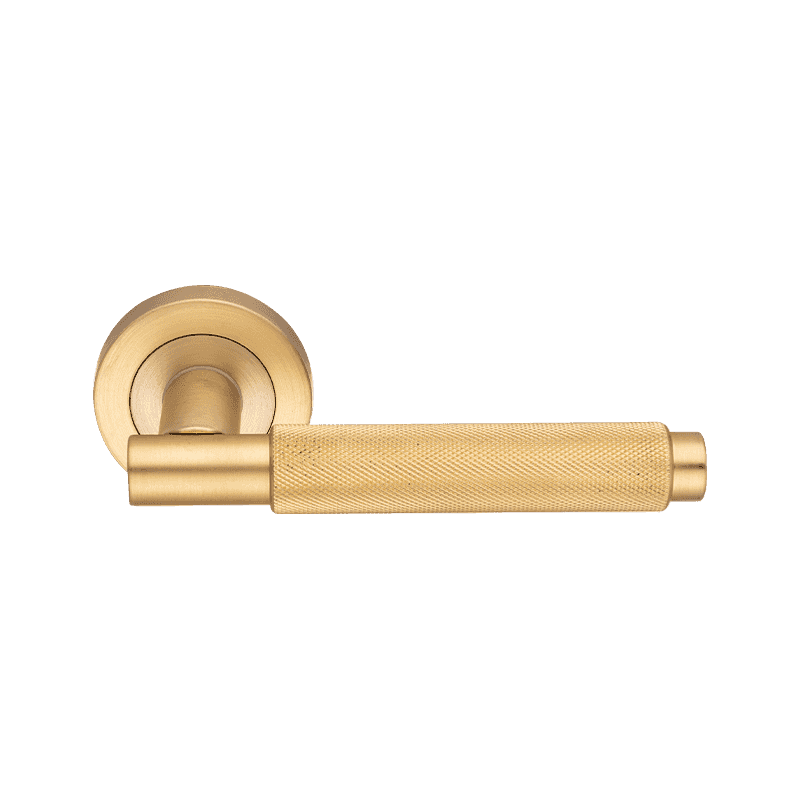
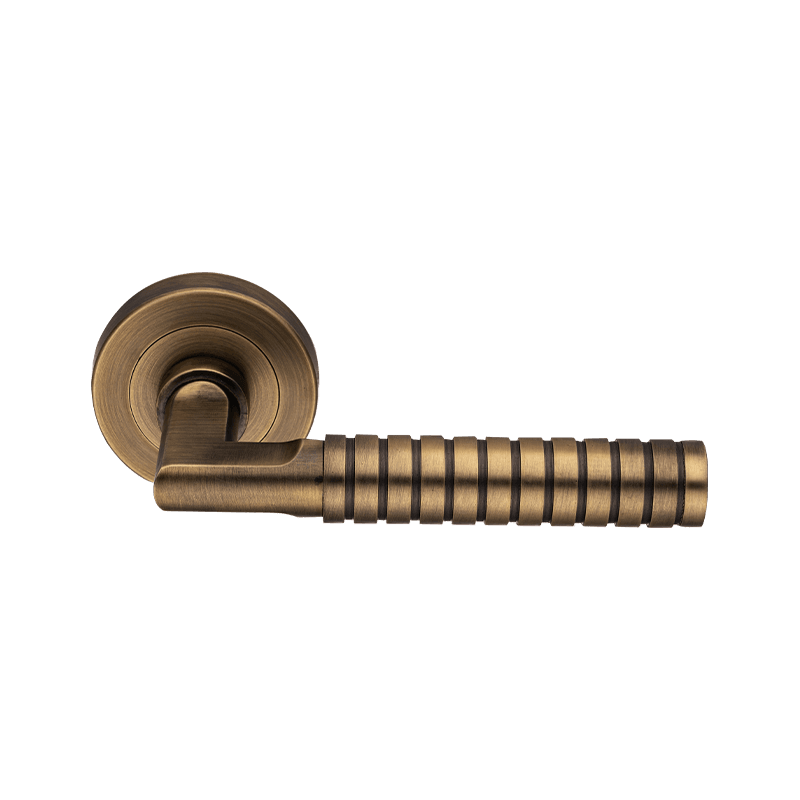
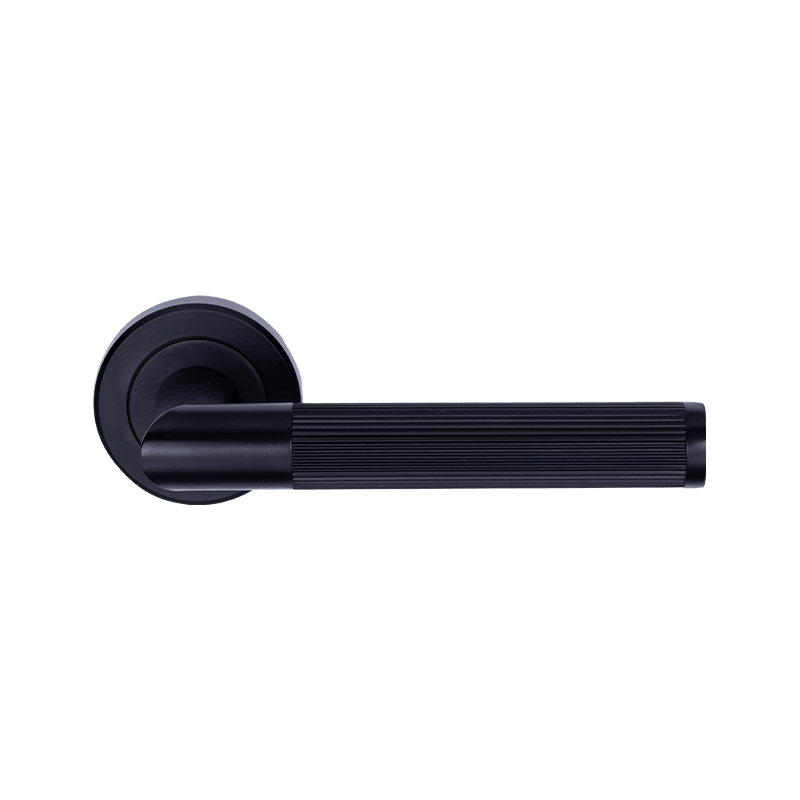
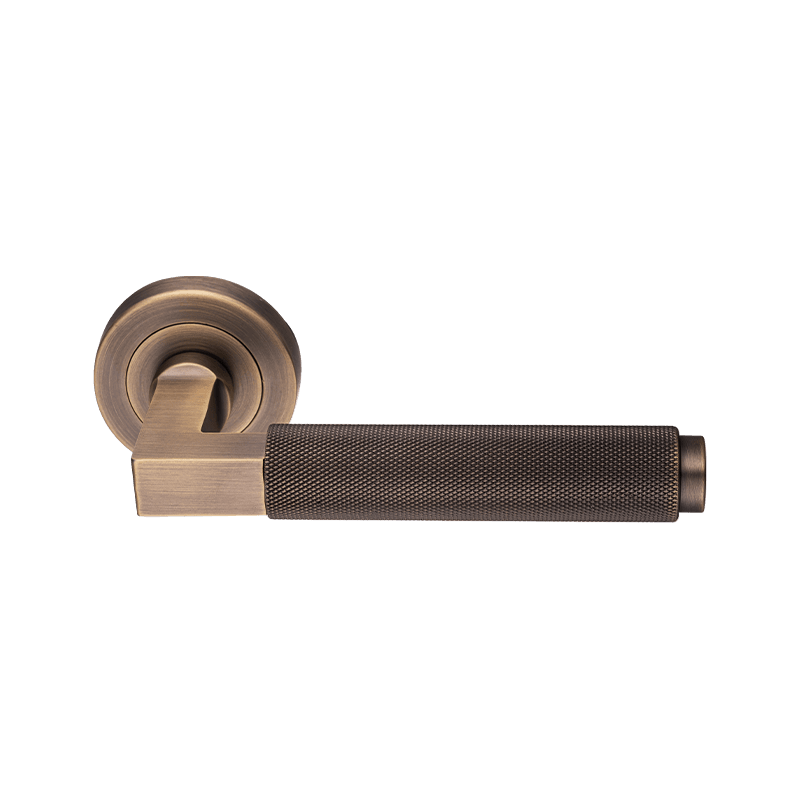
The lever (or knob) is the most visible part of any door handle — it is the component the hand contacts to operate the latch. Levers are the dominant handle style in modern commercial and residential buildings because they are accessible to people with limited grip strength and comply with accessibility regulations such as the Americans with Disabilities Act (ADA) in the US and Part M of the Building Regulations in the UK. Knobs, which require a twisting motion, have fallen out of favour for accessible design but remain common in period or heritage properties.
Levers are typically 100–130 mm in length from the centre of the spindle hole to the tip, and are manufactured from solid brass, zinc alloy (zamak), stainless steel, aluminium, or moulded nylon. Solid brass levers are the heaviest and most durable, typically weighing 150–300 g per pair, while zamak die-cast levers offer an affordable alternative at 80–150 g per pair.
2. The Rose or Backplate — The Mounting and Cover Plate
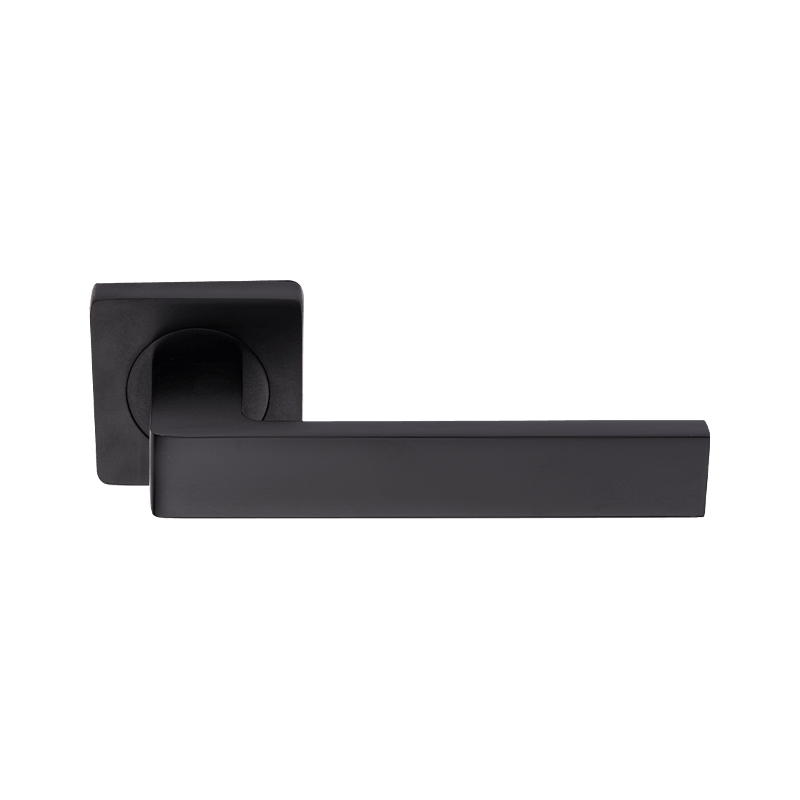
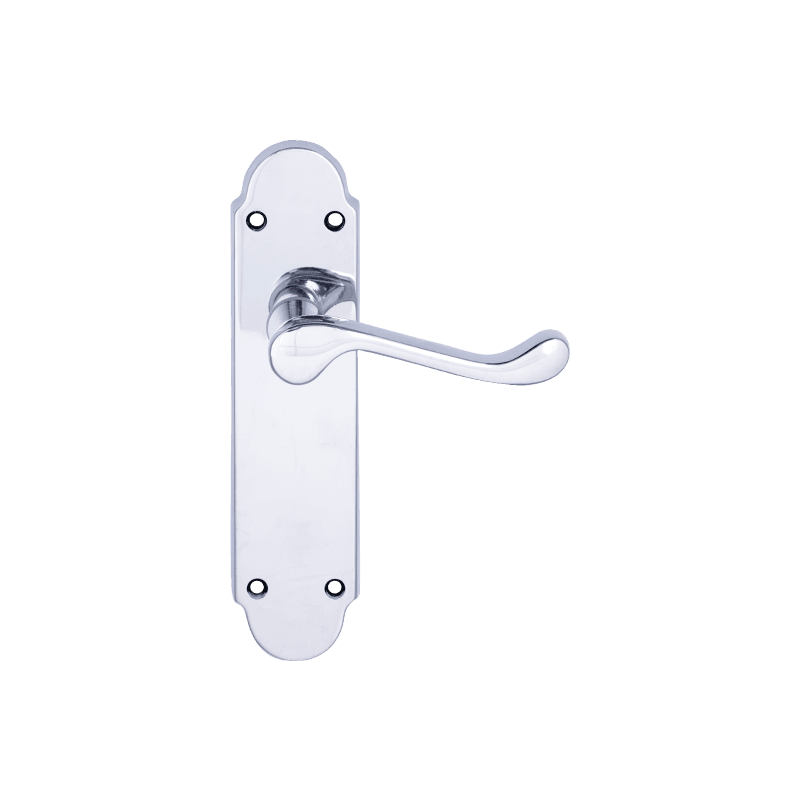
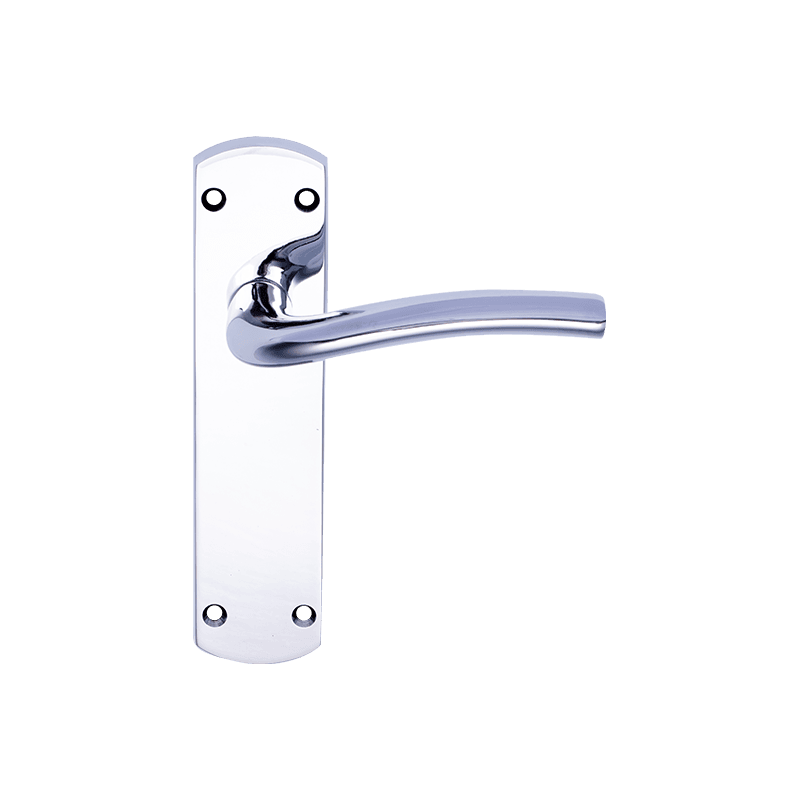
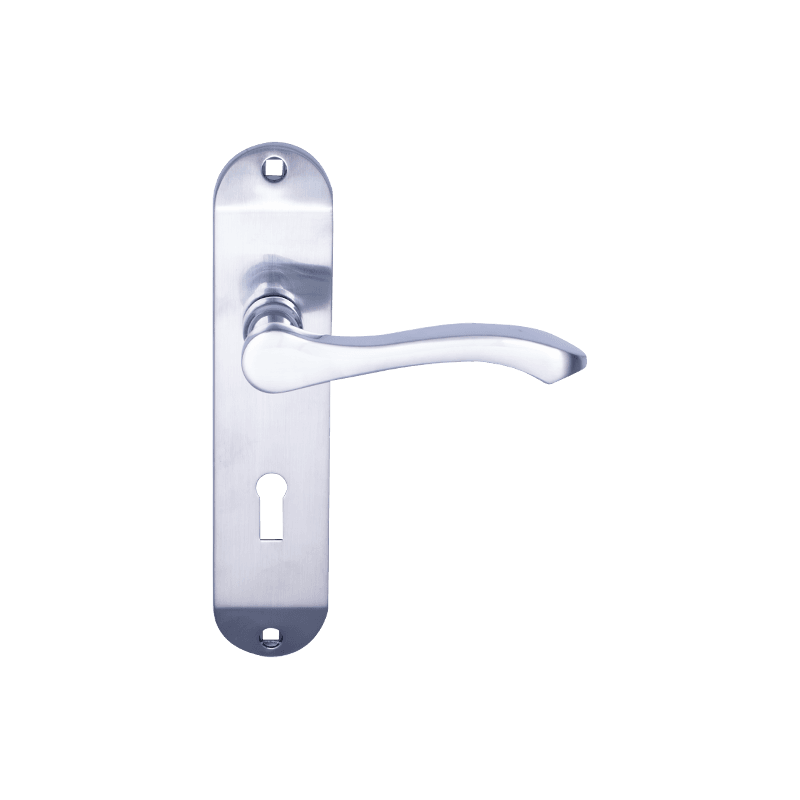
The rose (also called a rosette) is a circular plate, typically 50–60 mm in diameter, that sits between the lever hub and the door face. It serves two purposes: it conceals the fixing screws and the bore hole drilled through the door, and it provides the structural mounting base for the lever. A backplate (or escutcheon plate) is the rectangular equivalent — typically 220–280 mm long and 40–55 mm wide — and may incorporate a keyhole or thumb turn in addition to the lever mounting point.
The distinction between a rose and a backplate is one of the most commonly confused points in door hardware. A rose-mounted handle uses two separate circular roses (one on each door face) with the lever attached centrally. A backplate handle uses one elongated plate per side that houses both the lever and any locking cylinder — a more formal aesthetic that suits period and traditional door styles.
3. The Spindle — The Connecting Shaft
The spindle is a square-section steel bar that passes through the door and through the latch body, connecting the lever on one face of the door to the lever on the other. When you press the lever down, the spindle rotates and retracts the latch bolt. Standard spindle sizes are 8 mm × 8 mm for most residential hardware, though heavier commercial fittings use 10 mm × 10 mm spindles. Spindle length must match the door thickness — a spindle that is too short will not reach both levers; one that is too long prevents the levers from sitting flush against the rose.
4. The Latch Bolt and Latch Body — The Closing Mechanism
The latch bolt is the spring-loaded, angled (bevelled) bolt that projects from the door edge and catches in the strike plate when the door closes. The bevel allows the door to close without pressing the lever — the angled face rides against the strike plate and is pushed back, then springs forward when aligned with the recess. The latch body (also called the latch case or tubular latch) is the cylindrical or rectangular housing mortised into the door edge that contains the spring and bolt mechanism.
Standard backset measurements — the distance from the door edge to the centre of the spindle hole — are 44 mm, 57 mm, and 65 mm (or 2½" in imperial sizing). It is critical to match the backset of the latch to the backset of the handle set; a mismatch means the spindle will not align with the latch hub, and the handle will not operate the bolt. Always measure existing door preparation before ordering replacement latches.
5. The Forend / Faceplate — The Edge-Mounted Trim
The forend (sometimes called the faceplate or latch faceplate) is the flat metal plate at the door edge through which the latch bolt protrudes. It is mortised flush with the door edge and screwed in place to prevent the latch body from rotating inside the door. Forend finishes — square corners, rounded corners, or radius corners — must match the mortise cut in the door edge; a square-ended forend cannot be fitted into a pre-cut rounded mortise without modification.
6. The Strike Plate — The Frame-Side Receiver
The strike plate (also called the striker or keep) is mortised into the door frame directly opposite the latch bolt. It has one or two rectangular apertures that receive the latch bolt (and deadbolt if present) as the door closes. The strike plate also bears the mechanical force of the door being pushed or pulled, protecting the timber frame from wear. A standard residential strike plate is 65–75 mm long; heavy-duty security strike plates (box strikes) are 150–300 mm long and are secured with longer screws — typically 75–100 mm wood screws — that reach the structural door frame stud rather than just the thin architrave timber.
7. The Escutcheon — The Keyhole Cover
The escutcheon (also spelled "escutcheon" or informally called a keyhole cover or keyhole plate) is a small decorative and protective plate that surrounds the keyhole on traditional lever-on-backplate or knob sets. On modern euro-cylinder doors, the escutcheon is integrated into the backplate design. On period-style doors with a traditional rim lock or mortise lock, the escutcheon is a separate swinging piece — a small pivoting cover that the key lifts aside before entry, keeping dust and draughts out of the keyhole.
How Do Door Handle Part Names Differ Between Lever, Knob, and Pull Handle Types?
The core internal components — spindle, latch, and strike plate — are shared across all handle types, but the external components and their names vary significantly between lever sets, knob sets, and pull handles.
| Component | Lever Handle Set | Knob Set | Pull Handle (non-latching) |
| Grip component | Lever arm | Round knob | Pull bar / D-handle |
| Mounting plate | Rose or backplate | Knob rose | Fixing plate / back plate |
| Spindle | Square spindle (8 or 10 mm) | Square spindle (8 mm typical) | None (no latch operation) |
| Latch | Tubular or mortise latch | Tubular latch | Separate latch or none |
| Fixing method | Through-bolt screws + grub screw | Through-bolt screws + locking collar | Through-bolts or surface screws |
| Accessibility compliance | Yes (ADA / Part M compliant) | Generally not compliant | Yes (if D-bar or bar pull) |
Table 2: Comparison of door handle part names and configurations across lever, knob, and pull handle styles.
Which Materials Are Used for Door Handle Parts and How Do They Compare?
The material choice for door handle parts determines durability, finish longevity, weight, and cost — and varies significantly between budget, mid-range, and premium product tiers.
| Material | Common Parts | Durability | Best For | Relative Cost |
| Solid Brass | Lever, rose, backplate, strike plate | Excellent (50+ year lifespan) | Period, heritage, high-end residential | High |
| Stainless Steel (304 / 316) | Lever, rose, backplate, spindle | Excellent (corrosion-resistant) | Commercial, coastal, exterior doors | Medium–High |
| Zinc Alloy (Zamak) | Lever, rose, knob | Moderate (finish may degrade in 5–10 yrs) | Budget residential, internal doors | Low–Medium |
| Aluminium | Lever, pull handle, rose | Good (lightweight, anodised finish) | Contemporary design, commercial interiors | Medium |
| Nylon / Plastic | Lever, knob (budget range) | Low (UV-degrades outdoors; brittle over time) | Temporary, low-traffic interior only | Very Low |
| Steel (latch body, spindle, strike plate) | Latch body, spindle, forend, strike plate | Good–Excellent (steel or zinc-plated) | All handle types (internal components) | Low–Medium |
Table 3: Material comparison for door handle parts, including durability, suitable applications, and relative cost.
How Do Door Handle Parts Differ Between Tubular Latch and Mortise Lock Assemblies?
A tubular latch assembly and a mortise lock assembly share the same external handle parts but differ fundamentally in the internal mechanism housed within the door — and this difference determines the security level, the fitting complexity, and the range of available functions.
- Tubular latch: A cylindrical body (64–76 mm long, 57 mm diameter) inserted into a single circular hole bored in the door edge. It contains only a spring latch bolt — no deadbolt. Simple to fit, suitable for internal passage doors, bathroom doors (with a turn-and-release snib), and low-security applications.
- Mortise latch: A rectangular body (typically 76–89 mm high × 16 mm wide) that slides into a rectangular mortise cut into the door edge. Contains both a latch bolt and a deadbolt in a single body. Used on external doors and security-sensitive internal doors.
- Mortise lock (full case): A larger version of the mortise latch, incorporating the cylinder lock mechanism within the case itself. The mortise lock case is an additional named component — a pressed steel or cast iron box approximately 155–165 mm tall × 70–76 mm wide × 16–19 mm thick — that houses the levers (not the handle levers, but the internal lock levers), springs, and bolt works.
What Measurements Do You Need When Replacing Door Handle Parts?
Before ordering any replacement door handle parts, five key measurements must be confirmed to guarantee compatibility — incorrect measurements are the primary reason replacement hardware does not fit.
- Backset: Distance from the door edge to the centre of the spindle hole. Standard values are 44 mm or 57 mm. Measure from the edge of the door (where the latch protrudes) to the centre of the existing spindle hole.
- Door thickness: Measure the full door thickness to determine the correct spindle length. Standard interior door thicknesses are 35 mm and 44 mm; external doors are typically 44 mm or 54 mm.
- Spindle size: Most handles use an 8 mm square spindle. Heavy-duty commercial fittings use 10 mm. Confirm by measuring the existing spindle with a calliper.
- Centres (PZ distance): On handles with a keyhole, this is the distance between the centre of the spindle and the centre of the keyhole. Common PZ values are 72 mm, 78 mm, and 92 mm.
- Rose diameter or backplate dimensions: Confirm the rose diameter (typically 50–65 mm) covers the existing bore hole and any surface marks left by the previous fitting.
FAQ: Door Handle Parts and Terminology
Q: What is the round plate behind a door handle called?
The round plate behind a door handle is called the rose or rosette. It conceals the bore hole drilled through the door and the fixing screws. Roses are typically 50–60 mm in diameter. If the plate is rectangular (and taller), it is called a backplate or escutcheon plate.
Q: What is the metal plate on the door frame called?
The metal plate mortised into the door frame that receives the latch bolt is called the strike plate (or striker plate, or keep). It is screwed into the door jamb and typically has one rectangular aperture for the latch bolt, or two apertures when paired with a deadbolt. A security upgrade called a box strike has a deeper recessed box behind the aperture to better contain the bolt.
Q: What is the part of a door handle that goes through the door called?
The square bar that passes through the door, connecting both levers (or knobs), is called the spindle. It fits into a square hole in the latch body and rotates when the lever is pressed, retracting the latch bolt. Standard residential spindles are 8 mm × 8 mm square in cross-section.
Q: What is the angled bolt at the edge of a door called?
The spring-loaded, angled bolt projecting from the door edge is called the latch bolt (or spring latch, or latch tongue). The angled (bevelled) face allows it to be pushed back automatically when the door closes against the strike plate, then spring forward to hold the door shut. It is housed inside the latch body, which is mortised into the door edge.
Q: What is the small screw under a door lever called?
The small screw recessed into the underside or side of the lever hub — used to lock the lever onto the spindle — is called a grub screw (or set screw). It is tightened with a 2.5 mm or 3 mm hex (Allen) key. A loose grub screw is one of the most common causes of a lever that spins freely or feels loose on the door.
Q: What is the difference between an escutcheon and a backplate?
The terms are often used interchangeably, but technically an escutcheon specifically refers to a plate (or cover) that surrounds and protects a keyhole, while a backplate is the full elongated plate behind a lever handle that may incorporate both the lever mount and the keyhole. In heritage hardware, a standalone keyhole escutcheon is a small separate fitting; in modern lever-on-backplate hardware, the escutcheon is integrated into the backplate design.
Conclusion: Using the Right Door Handle Part Names to Buy, Fit, and Maintain Correctly
Knowing what the parts of a door handle are called — from the lever and rose to the spindle, latch bolt, forend, and strike plate — transforms what can be a confusing hardware purchase into a straightforward specification task. Each component has a precise function, defined dimensions, and standard compatibility requirements that must be matched for a successful installation or replacement.
The three measurements that matter most in any replacement are the backset, the door thickness, and the spindle size. Get these right, confirm the finish and style of the rose or backplate, and virtually any standard door handle assembly can be fitted in under 30 minutes with basic tools. Whether you are sourcing a single replacement latch or specifying a complete hardware package for a new build, the terminology covered in this guide provides the vocabulary needed to communicate clearly with suppliers and achieve a result that is both functional and lasting.