English
 italiano


A door handle is made up of at least 8 distinct parts — including the lever or knob, rose plate, latch bolt, spindle, strike plate, escutcheon, backset, and cylinder — each serving a specific mechanical or aesthetic role. Understanding every part of a door handle helps you diagnose problems, order the correct replacement components, and choose hardware that fits both your door thickness and your security requirements.
Content
- Why Knowing the Parts of a Door Handle Actually Matters
- The 10 Core Parts of a Door Handle — Explained
- Quick Reference: All Door Handle Parts at a Glance
- Door Handle Types and Which Parts They Include
- Materials Used in Door Handle Parts: What Each Finish Actually Means
- How the Parts of a Door Handle Work Together: Step-by-Step Mechanism
- Which Door Handle Parts Fail Most Often — and How to Fix Them
- How to Measure Door Handle Parts for an Accurate Replacement
- Frequently Asked Questions About Parts of a Door Handle
- Summary: The Parts of a Door Handle You Need to Know
Why Knowing the Parts of a Door Handle Actually Matters
Most people never think about door handle parts until something breaks — and then they struggle to describe what they need to a hardware store clerk. Knowing the correct terminology saves time, prevents ordering errors, and can even save money: replacing a single worn spindle costs around $3–$8, while replacing an entire lockset costs $30–$300+.
Beyond repairs, understanding how the parts of a door handle work together is essential for anyone renovating a home, specifying commercial hardware, or evaluating a door's security level. A handle is not a single object — it is an engineered system of interlocking components, and each one matters.
The 10 Core Parts of a Door Handle — Explained
Whether you have a lever handle, a knob, or a pull handle, the internal and external components follow a consistent anatomy. Here is a detailed breakdown of every key part:
1. The Lever or Knob (Handle Body)
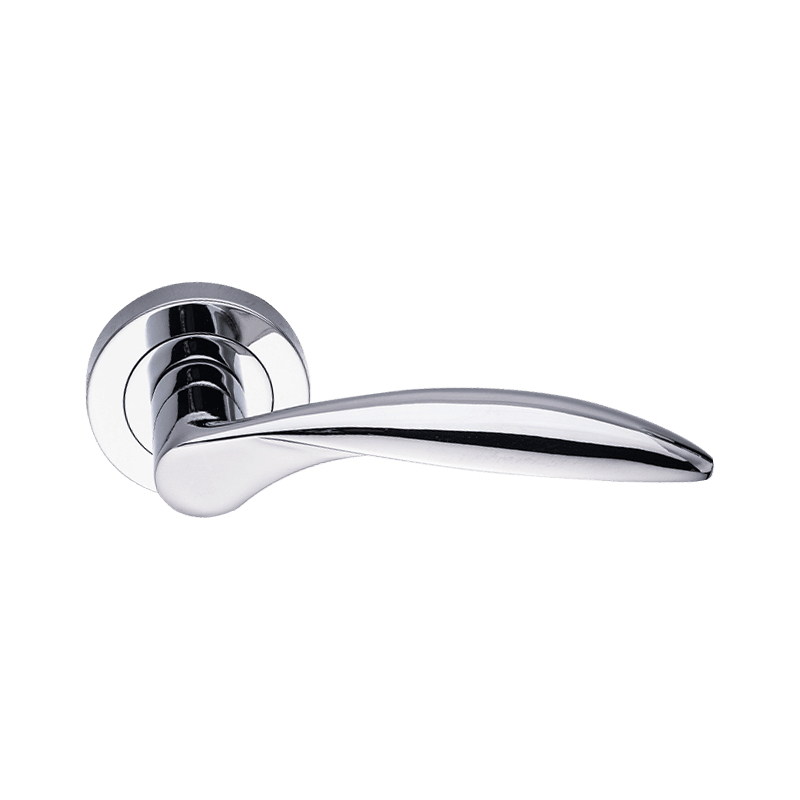
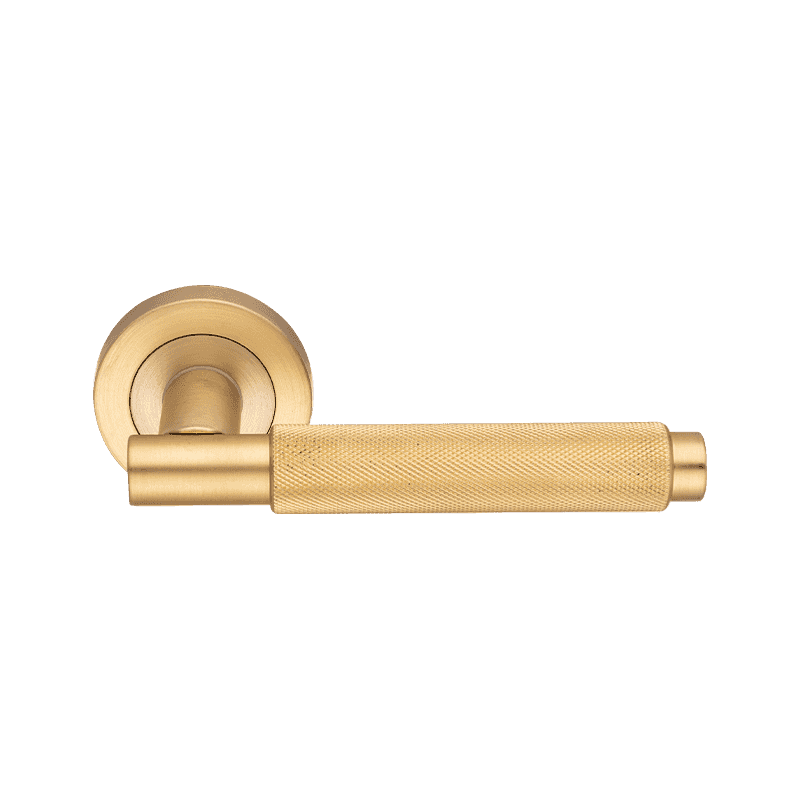
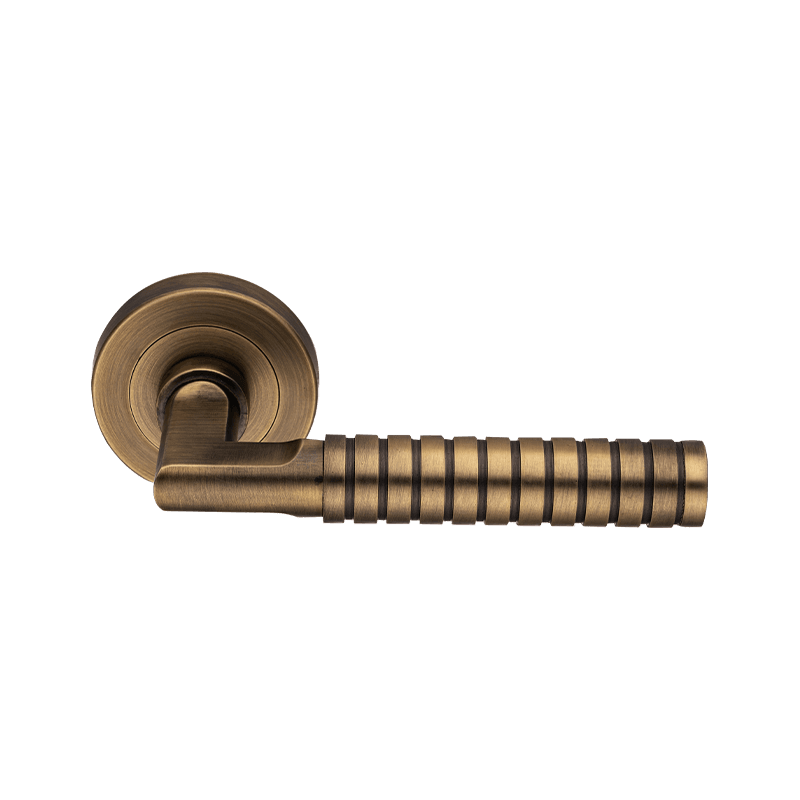
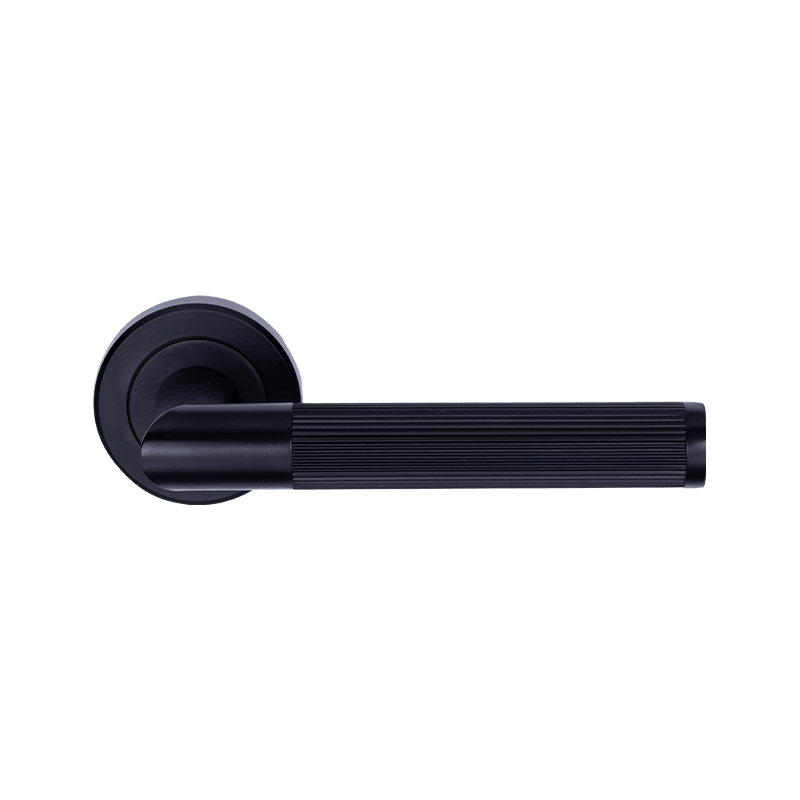
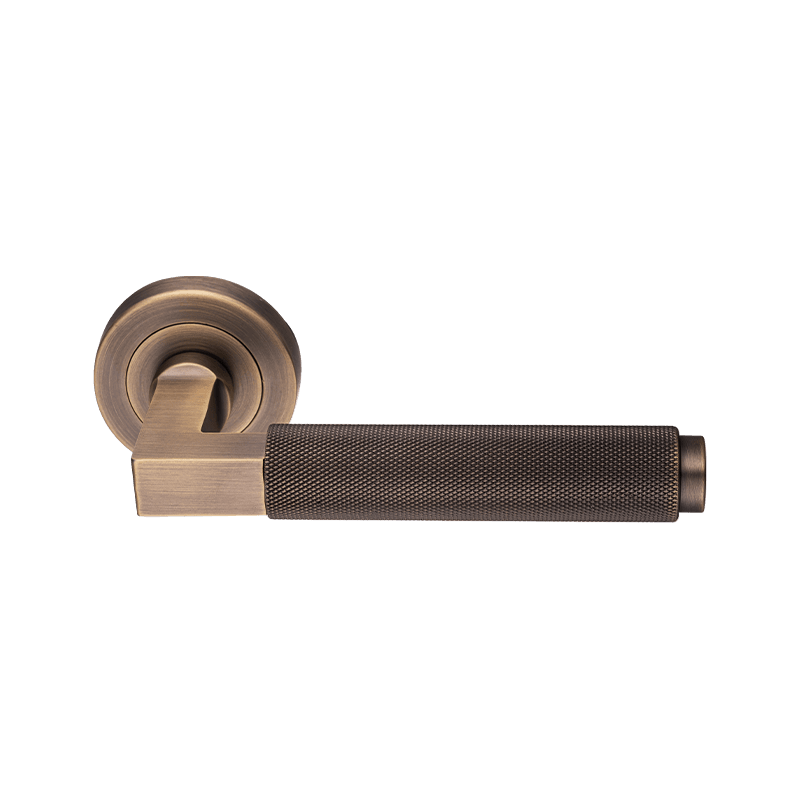
The lever or knob is the visible, hand-operated part of the assembly — the piece you actually grip to open a door. Levers are now the dominant format in both residential and commercial settings, accounting for roughly 70% of new door hardware sales in North America, largely because they comply with ADA accessibility requirements without requiring grasping or twisting. Knobs remain common in older homes and interior passage doors.
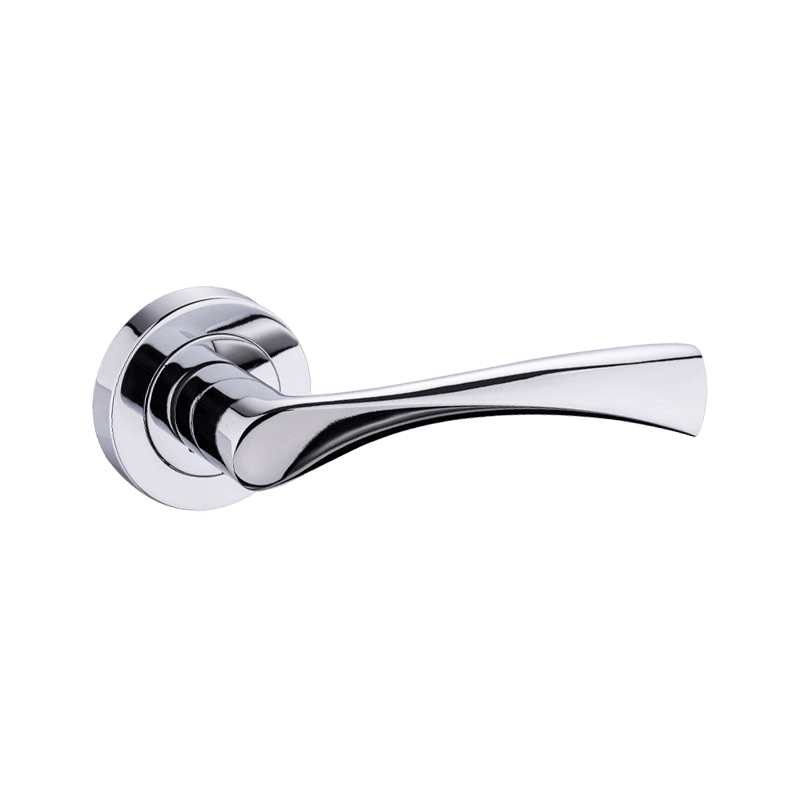
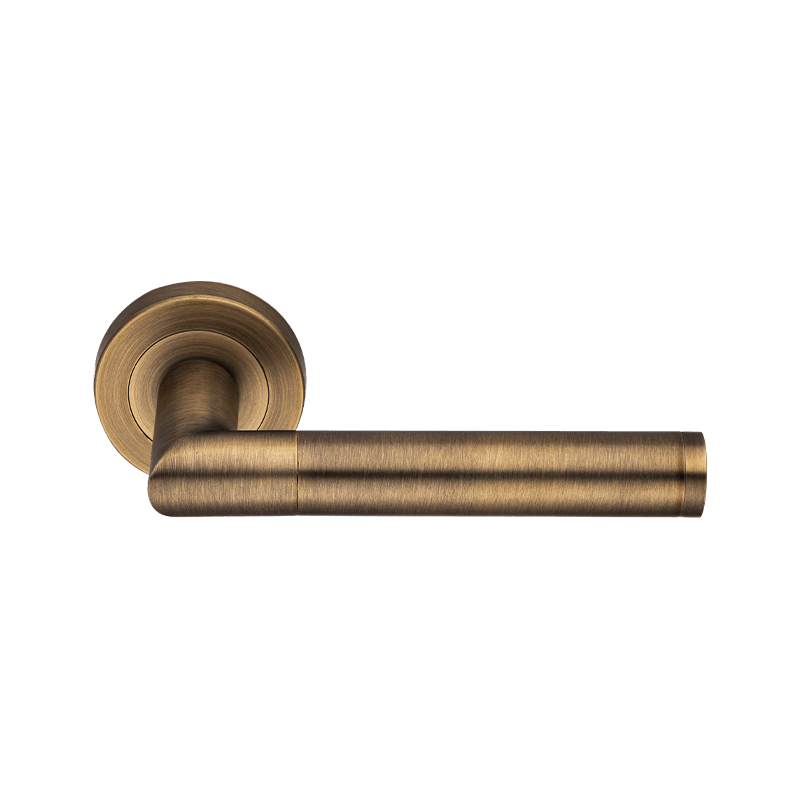
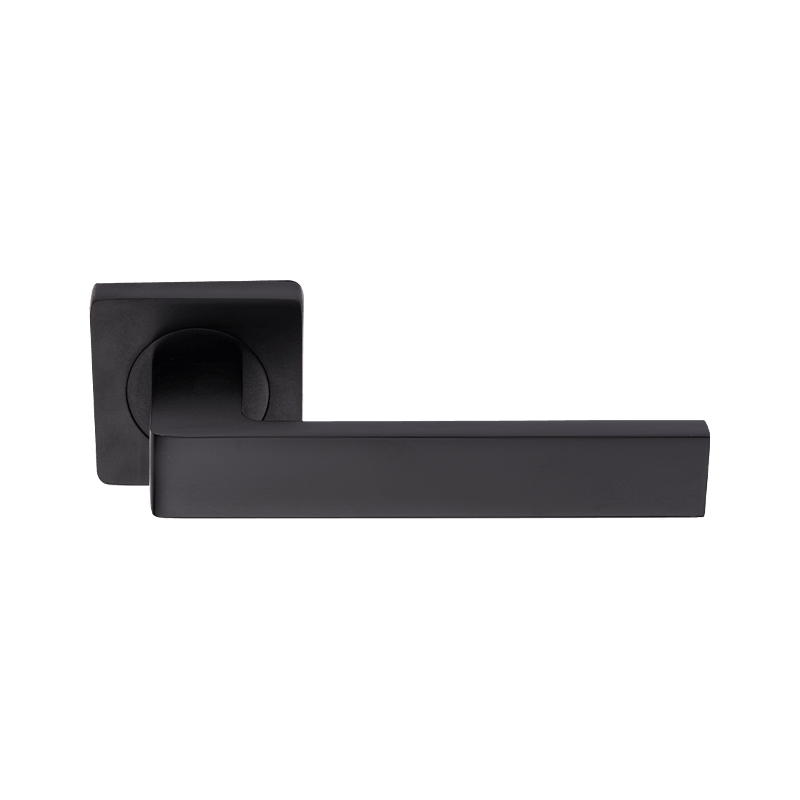
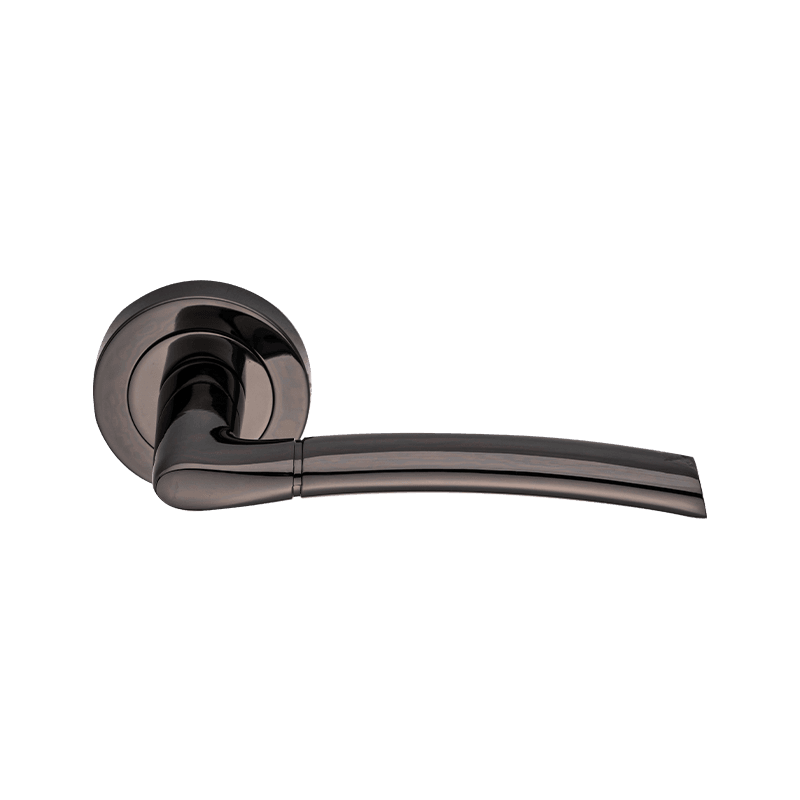
Levers are available in dozens of profiles — straight, curved, D-shaped, and arched — and are typically made from zinc alloy, solid brass, stainless steel, or aluminum. The lever attaches to the spindle via a square or round drive hole at its base, called the follower.
2. The Rose Plate (Base Plate)
The rose plate is the circular or square decorative disc that sits flush against the door face, covering the bore hole and mounting screws. It is one of the most style-defining parts of a door handle, available in diameters ranging from 50 mm to 70 mm. Roses are typically secured by concealed grub screws or a twist-lock mechanism to prevent tampering.
Some high-security roses incorporate an anti-drill plate — a hardened steel disc embedded beneath the surface — to resist attack. This feature is standard on Grade 1 commercial hardware.
3. The Spindle (Square Drive Bar)
The spindle is a square steel bar that passes through the door and through the latch mechanism, connecting both handle sides. When you push down on a lever, the spindle rotates and retracts the latch bolt. Standard spindle sizes are 8 mm × 8 mm for most European lever handles, and ¼ inch (6.35 mm) for many North American knob sets.
Spindle length must match door thickness. A standard interior door at 35 mm needs a shorter spindle than a fire door at 44 mm. Using the wrong spindle length is one of the most common installation errors.
4. The Latch Bolt (Sprung Latch)
The latch bolt is the spring-loaded, angled (beveled) bolt that protrudes from the edge of the door and clicks into the strike plate when the door closes. It is the primary door handle part responsible for keeping the door closed in an unlatched state. The angled face allows the door to close without turning the handle; the handle retracts it to open.
Latch bolts come in two standard backset sizes: 60 mm and 70 mm (measured from the door edge to the center of the spindle hole). Always confirm your backset before buying a replacement latch — an incorrect backset means the latch will not align with the existing bore hole.
5. The Deadbolt (Dead Latch)
On locksets and entry door hardware, a deadbolt is a separate, non-spring bolt that extends deeper into the door frame — typically 25 mm (1 inch) — and is operated only by a key or thumb turn. Unlike a latch bolt, a deadbolt cannot be slipped with a credit card. Many modern locksets combine both a latch bolt and a deadbolt in a single housing, known as a deadlocking latch.
6. The Strike Plate
The strike plate is a metal plate mortised into the door frame (jamb) with a hole or box that receives the latch bolt when the door is closed. A standard residential strike plate is held by two short screws — but this is one of the most exploitable weak points in a door. Replacing standard ¾-inch screws with 3-inch screws that reach the wall stud can increase kick-in resistance from roughly 150 lbs of force to over 800 lbs, according to security research from the Door and Hardware Institute.
7. The Escutcheon (Keyhole Plate)
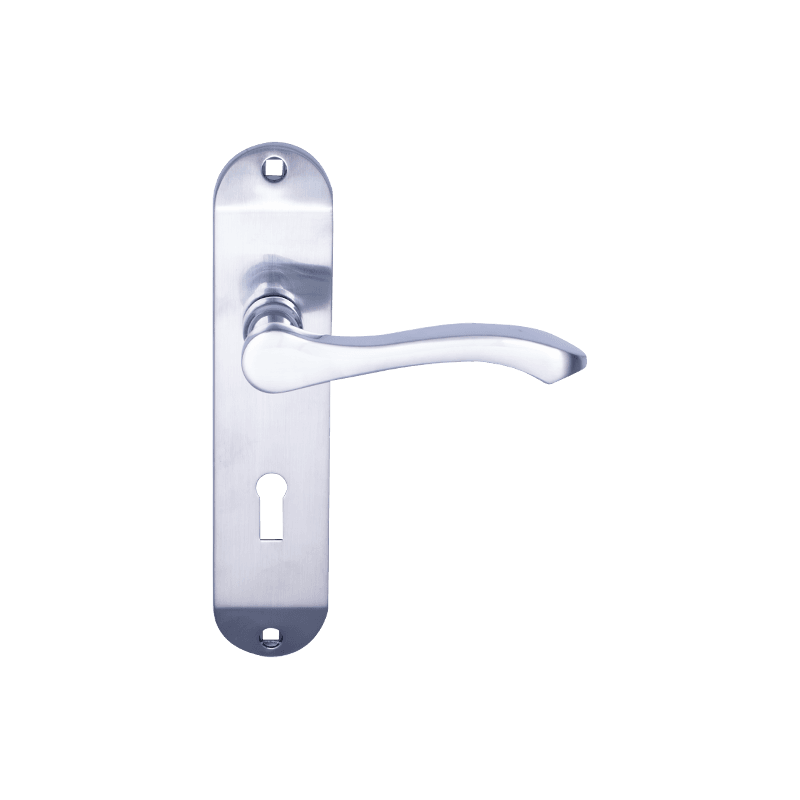
The escutcheon is the decorative and protective plate surrounding the keyhole or cylinder. On lever handle sets, this is often integrated into the rose plate as a combined unit. On older mortise locks, the escutcheon is a separate piece — sometimes with a pivoting cover (a key cover flap) to block drafts and dust. Escutcheons are primarily aesthetic but also protect the door face from key scratches.
8. The Cylinder (Lock Core)
The cylinder — also called the lock core or plug — is the barrel-shaped insert that houses the pin tumbler or disc detainer mechanism. When the correct key is inserted, the cylinder rotates and throws or retracts the bolt. The most common residential cylinder standard is the Euro profile cylinder (used in most mortise locksets) and the Schlage C keyway or KW1 keyway (common in North American tubular locks).
Cylinders are independently upgradeable, meaning you can replace a basic 5-pin cylinder with a high-security 6-pin, anti-pick, anti-bump cylinder without changing the rest of the handle hardware.
9. The Backplate (Long Plate)
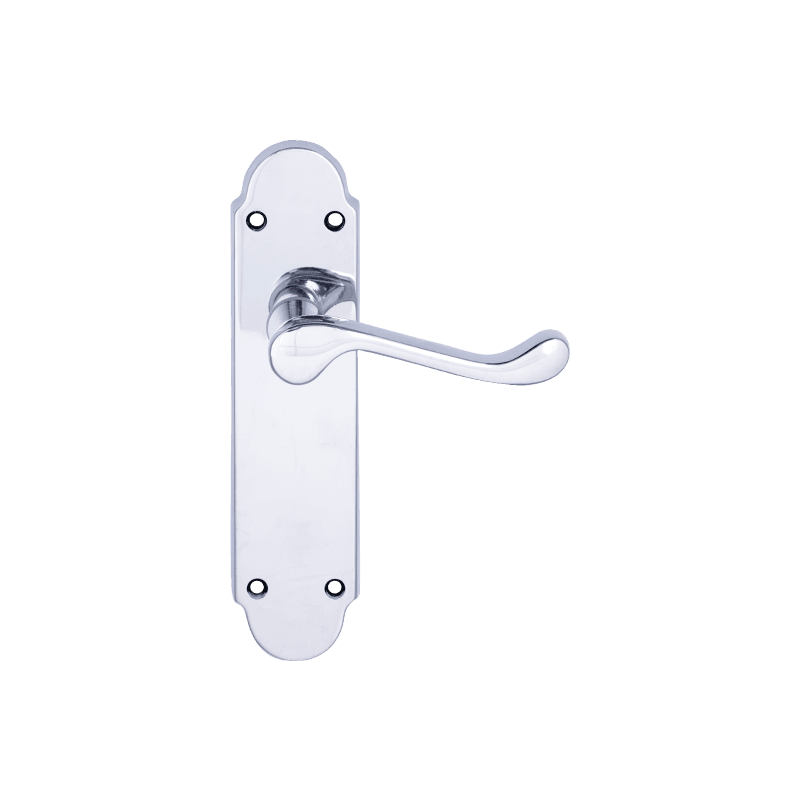
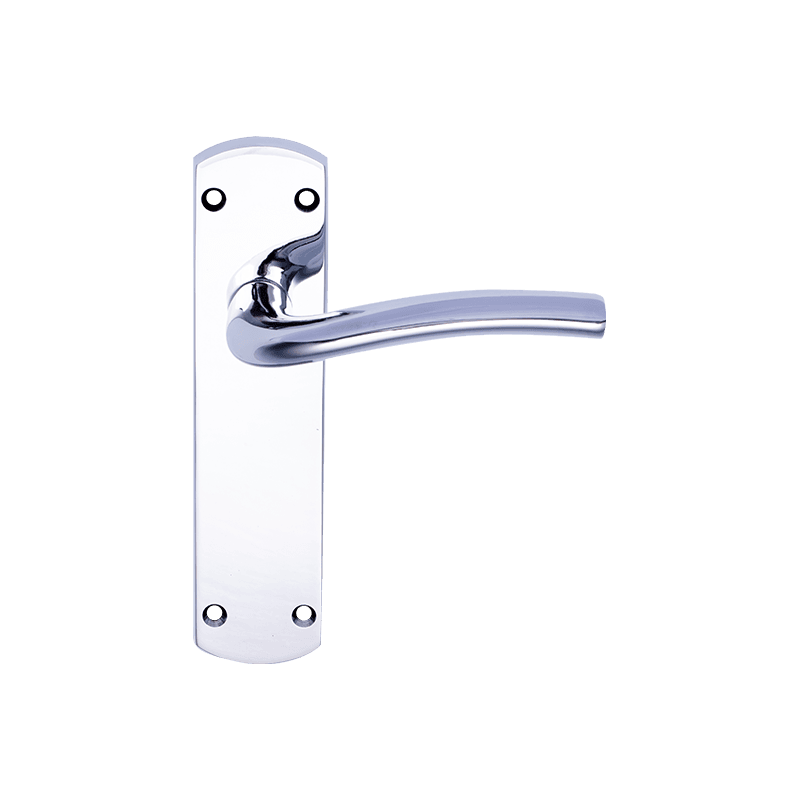
Some lever handles — particularly those used on timber or period-style doors — mount on a long backplate rather than a round rose. A backplate spans the full vertical distance from the lever to the keyhole, integrating both into a single decorative panel. Backplates are common in Victorian, Georgian, and industrial-style hardware and typically measure 220–300 mm in length.
10. The Thumb Turn and Snib
On bathroom and privacy locksets, the inside of the door features a thumb turn (also called a snib or privacy turn) — a small rotating component that manually engages an internal bolt or blocking mechanism without a key. This allows the occupant to lock the door from inside. On the exterior side, an emergency release slot (a small coin-operated turn) allows the door to be unlocked from outside in emergencies.
Quick Reference: All Door Handle Parts at a Glance
| Part Name | Location | Primary Function | Replaceable Alone? |
| Lever / Knob | Door face (both sides) | User grip / latch operation | Yes |
| Rose Plate | Door face, around bore hole | Covers hole, anchors lever | Yes |
| Spindle | Through door (internal) | Transfers lever motion to latch | Yes |
| Latch Bolt | Door edge | Holds door closed | Yes |
| Deadbolt | Door edge (above latch) | Security locking | Yes |
| Strike Plate | Door frame (jamb) | Receives latch bolt | Yes |
| Escutcheon | Around keyhole | Protects keyhole / decorative | Yes |
| Cylinder | Within lock body | Key-operated bolt control | Yes |
| Backplate | Door face (long plate) | Mounts lever + escutcheon | Yes |
| Thumb Turn / Snib | Interior door face | Manual privacy lock | Usually with lockset |
Table 1: Summary of all major parts of a door handle, their location on the door, primary function, and whether each component can be individually replaced without changing the full lockset.
Door Handle Types and Which Parts They Include
Different door handle configurations use different subsets of these components. Understanding which parts of a door handle are present in each type helps you buy the correct replacement hardware.
| Handle Type | Has Latch | Has Lock Cylinder | Has Thumb Turn | Typical Use |
| Passage Set | √ | × | × | Hallways, closets |
| Privacy Set | √ | × | √ | Bathrooms, bedrooms |
| Entry / Keyed Set | √ | √ | √ | Front/back exterior doors |
| Dummy Set | × | × | × | Fixed pull (wardrobe, French doors) |
| Mortise Lockset | √ | √ | √ | Heavy-duty commercial / period doors |
Table 2: Comparison of door handle types and the specific parts each configuration includes. Use this to identify which handle type you currently have and what components will be inside it.
Materials Used in Door Handle Parts: What Each Finish Actually Means
The material and finish of door handle parts directly affect durability, corrosion resistance, and maintenance requirements. Here is a breakdown of the most common materials:
- Solid Brass: The traditional premium material for door hardware. Brass is naturally antimicrobial, resistant to corrosion, and can be polished, brushed, or antiqued. Unlacquered brass develops a patina over time; lacquered brass maintains its original finish longer but can peel. Solid brass handles typically weigh 250–600 g.
- Stainless Steel (304 or 316 grade): The most durable material for exterior door handles exposed to weather. Grade 316 (marine-grade) contains molybdenum for superior salt-air resistance, making it the preferred choice for coastal properties. Stainless steel requires virtually no maintenance.
- Zinc Alloy (Zamak): The most widely used material in mid-range door hardware. Zinc alloy is cast into complex shapes easily and accepts electroplated finishes well. However, it is less durable than solid brass or steel — the plating can chip over time, especially in high-use applications.
- Aluminum: Lightweight and naturally corrosion-resistant. Common in modern architectural hardware. Anodized aluminum finishes are highly durable and available in a wide color range, including matte black, silver, and bronze.
- Iron (Cast or Wrought): Used in traditional and rustic-style hardware. Cast iron is brittle but takes paint and wax finishes well. Wrought iron is hand-forged and extremely durable. Both require periodic sealing to prevent rust.
How the Parts of a Door Handle Work Together: Step-by-Step Mechanism
Understanding the mechanical sequence helps diagnose failure points. Here is exactly what happens when you operate a lever handle:
- You push down the lever. The lever rotates around its pivot axis — typically 45 degrees downward from the horizontal resting position.
- The follower hole rotates the spindle. The square drive hole (follower) at the lever's base turns the spindle, which passes through the door and connects to the latch mechanism.
- The spindle actuates the latch cam. Inside the latch body, the spindle engages a cam or hub that compresses the spring and retracts the latch bolt approximately 8–12 mm into the door edge.
- The latch bolt clears the strike plate. With the bolt retracted, the door can swing open freely on its hinges.
- You release the lever. The spring inside the latch body pushes the bolt back out, and the return spring in the lever (or rose) returns the lever to horizontal.
- The door closes. The beveled nose of the latch bolt contacts the strike plate, compresses, and then snaps into the hole — the "click" sound of a door closing properly.
Which Door Handle Parts Fail Most Often — and How to Fix Them
The most commonly failing parts of a door handle are, in order of frequency: the return spring, the latch bolt, the spindle, and the cylinder. Here is a diagnostic guide:
| Symptom | Likely Failed Part | Repair or Replace? | Avg. Cost |
| Lever droops / won't return | Return spring | Replace latch unit | $8–$25 |
| Door won't latch / click | Latch bolt spring | Replace latch bolt | $5–$20 |
| Lever spins freely | Spindle (snapped) | Replace spindle | $3–$10 |
| Key difficult to turn | Cylinder (worn pins) | Lubricate or re-cylinder | $0–$60 |
| Door rattles when closed | Strike plate misaligned | Adjust or reposition | $0–$15 |
| Rose plate loose / wobbly | Grub screw / mounting | Tighten grub screw | $0 |
Table 3: Common door handle failure symptoms mapped to the likely failed component, recommended action, and typical repair cost. Use this before purchasing a full replacement set.
How to Measure Door Handle Parts for an Accurate Replacement
Buying the wrong-size replacement is the most common DIY mistake. Before ordering any door handle part, measure these four dimensions:
- Backset: From the door edge to the center of the spindle hole. Standard sizes are 60 mm and 70 mm. Measure with the door open and a tape measure flush against the door edge.
- Door Thickness: Most interior doors are 35 mm; fire doors are 44 mm; external doors range from 44–54 mm. Spindle length must match.
- Bore Hole Diameter: The large circular hole in the door face. Standard US bore holes are 2⅛ inches (54 mm); European doors use 52 mm. Your rose plate must cover this hole.
- Spindle Size: Remove the existing handle and measure the spindle's cross-section. Most European handles use 8 × 8 mm; some use 7 × 7 mm. A mismatch will cause the lever to slip.
Frequently Asked Questions About Parts of a Door Handle
Q: What is the round plate behind a door handle called?
It is called the rose plate (or simply "rose"). It is the circular or square disc that covers the bore hole in the door face and anchors the lever or knob. On some styles, this is replaced by a longer backplate that integrates the escutcheon as well.
Q: What is the metal piece on the door frame where the latch goes?
That is the strike plate. It is mortised (recessed) into the door jamb and has a hole or box that receives the latch bolt. Upgrading to a reinforced strike plate secured with 3-inch screws is one of the most effective and inexpensive home security upgrades available.
Q: What is the bar that connects both sides of a door handle called?
It is called the spindle (or square drive bar). It is a square steel rod that passes through the door and through the latch mechanism, transferring the rotational motion of one lever to retract the latch bolt. Standard size is 8 mm × 8 mm for most lever handles.
Q: Can I replace just one part of a door handle instead of the whole set?
Yes — in most cases. The latch bolt, spindle, rose plate, cylinder, and strike plate are all independently replaceable if you match the correct size. The only time a full set replacement is necessary is when the door body (bore hole) is damaged or when the overall style needs to change.
Q: What is a backset on a door handle?
The backset is the horizontal distance from the edge of the door to the center of the spindle (and bore) hole. The two standard sizes are 60 mm and 70 mm. Choosing a latch with the wrong backset means it will not align with the existing bore hole — the most common replacement error.
Q: What is a mortise lock, and how is it different from a tubular latch?
A mortise lock is a complete lock body — containing latch, deadbolt, and sometimes a bathroom function — that fits into a large rectangular pocket (mortise) cut into the door edge. It is more complex, more secure, and typically more expensive than a tubular latch, which simply slides into a cylindrical bore hole in the door and is operated entirely by the spindle from the handle.
Q: Why does my lever handle droop instead of staying horizontal?
A drooping lever is almost always caused by a failed return spring inside the latch body or rose. The spring is designed to return the lever to its horizontal resting position after use. When it breaks or loses tension, gravity pulls the lever down. Replacing the latch unit (which contains the spring) costs around $8–$25 and resolves the issue completely.
Summary: The Parts of a Door Handle You Need to Know
Every door handle — from the simplest passage lever to a complex commercial mortise lockset — relies on the same fundamental set of components working in sequence. The lever or knob is the user interface; the rose plate is the anchor and cover; the spindle is the mechanical link; the latch bolt holds the door closed; the strike plate receives it; the cylinder controls access; and the escutcheon and backplate complete the visual composition.
When something goes wrong, identifying the specific failed part — rather than replacing the entire lockset — saves both money and time. Use the measurements outlined above (backset, door thickness, bore diameter, spindle size) to ensure any replacement part fits your existing door without modification. And if you are choosing new hardware from scratch, match the handle type (passage, privacy, entry, or dummy) to the function of the door before considering style or finish.
Knowing the parts of a door handle by name is the single most useful piece of knowledge you can have before walking into a hardware store, calling a locksmith, or ordering a replacement online.