English
 italiano


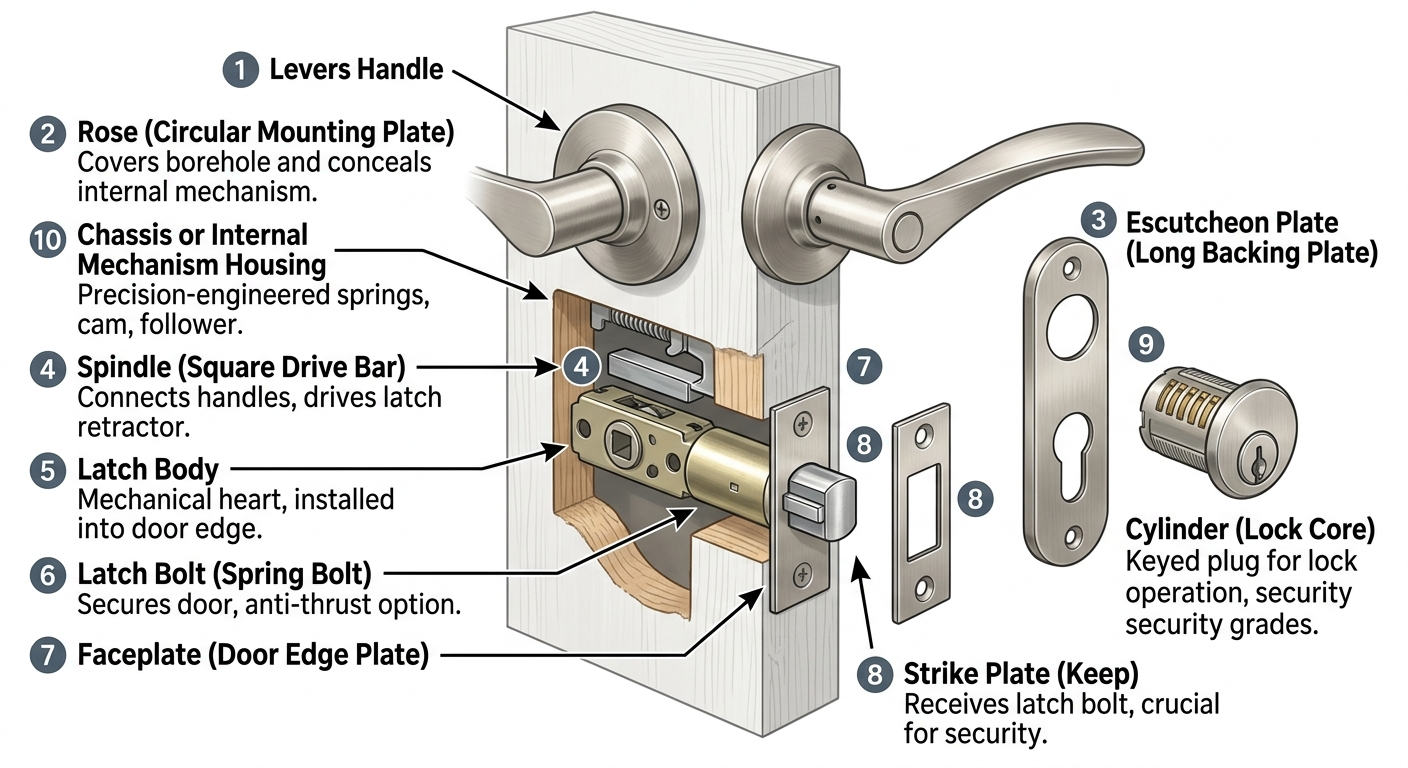
A door handle assembly is composed of several interdependent parts — including the handle or knob, rose or escutcheon plate, spindle, latch bolt, strike plate, and various internal mechanisms — each playing a specific role in operation, security, and aesthetics. Understanding every door handle part by name and function is essential for confident repairs, accurate replacement part ordering, successful DIY installation, and making informed purchasing decisions. This guide covers the complete anatomy of door handles across all major types, from simple passage sets to complex mortise locksets.
Content
- Why Understanding Door Handle Parts Matters
- The Core Door Handle Parts: A Full Anatomy Breakdown
- 1. The Handle or Knob (Grip Element)
- 2. The Rose (Circular Mounting Plate)
- 3. The Escutcheon Plate (Long Backing Plate)
- 4. The Spindle (Square Drive Bar)
- 5. The Latch Body (Tubular or Mortise)
- 6. The Latch Bolt (Spring Bolt)
- 7. The Faceplate (Latch Faceplate or Door Edge Plate)
- 8. The Strike Plate (Keep)
- 9. The Cylinder (Lock Core)
- 10. The Chassis or Internal Mechanism Housing
- Door Handle Parts by Handle Type: What Changes Between Designs
- Door Handle Parts Materials: How Material Choice Affects Durability and Finish
- Critical Measurements in Door Handle Parts: Getting the Dimensions Right
- Common Door Handle Part Failures and How to Diagnose Them
- Frequently Asked Questions About Door Handle Parts
- Q: What is the small plate around a door handle called?
- Q: How do I know if my door handle spindle needs replacing?
- Q: What is the difference between a mortise lock and a tubular latch?
- Q: Can I replace just the cylinder in a door handle without replacing the whole set?
- Q: Why do some door handles have two roses while others have an escutcheon plate?
- Q: What is a dummy door handle set and where are the parts different?
- Conclusion: Know Your Door Handle Parts for Smarter Decisions
Why Understanding Door Handle Parts Matters
Most door handle failures — stiff operation, loose fittings, latch misalignment, and lock malfunctions — can be diagnosed and resolved without professional help once you understand the role of each component in the assembly.
In the United States alone, the door hardware market is valued at over $3.8 billion annually, with homeowners and property managers replacing or repairing millions of door handles each year. Yet studies on home improvement returns show that the majority of door hardware replacements are mismatched or incorrectly installed — most often because buyers did not understand the anatomy of what they were replacing.
A door handle is never a single component. Even the simplest passage lever contains at least eight distinct door handle parts, each manufactured to precise tolerances. Knowing each part's name, location, material, and function transforms a confusing hardware aisle selection into a confident, informed choice.
The Core Door Handle Parts: A Full Anatomy Breakdown
Every door handle assembly — regardless of style, brand, or price point — shares a common set of fundamental components that work together to operate the latch and secure the door.
1. The Handle or Knob (Grip Element)
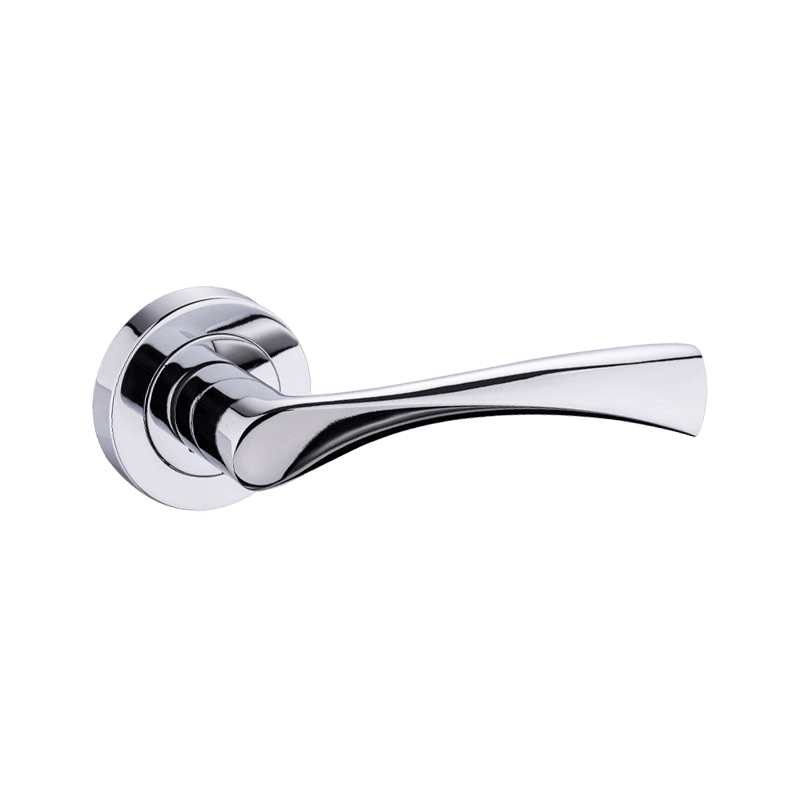
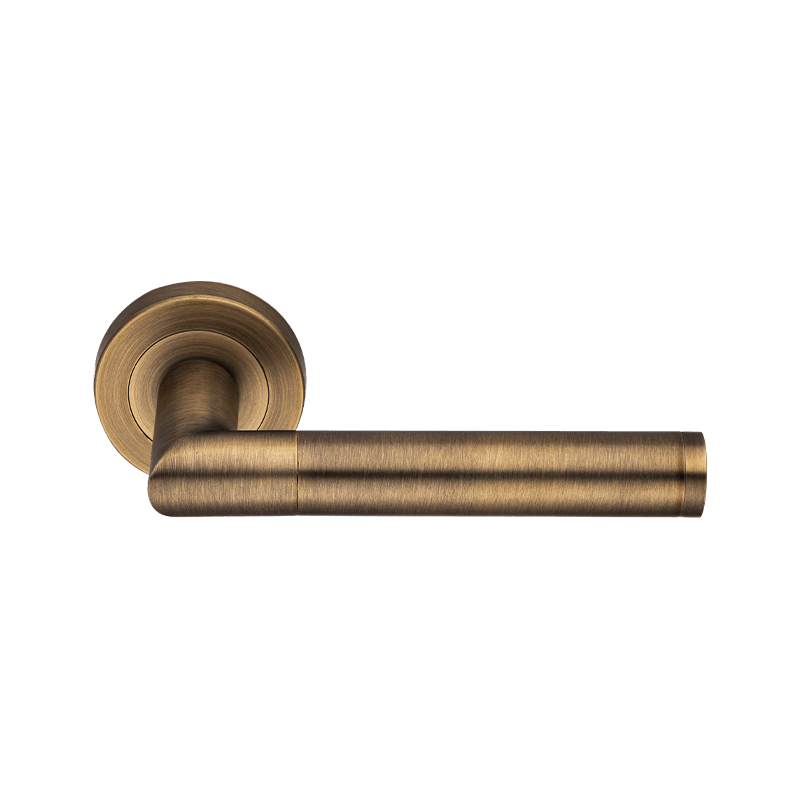
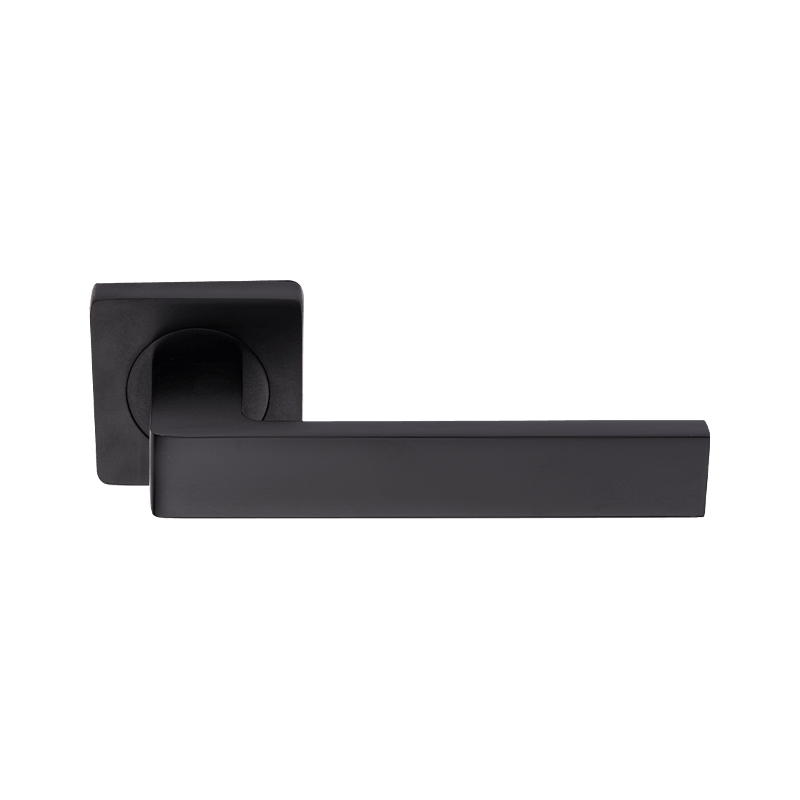
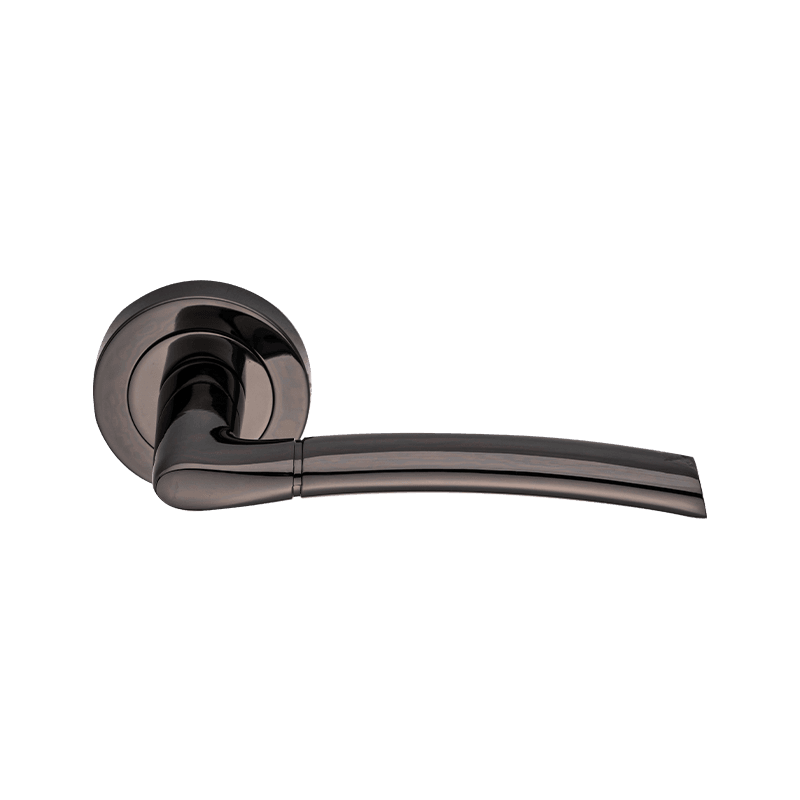
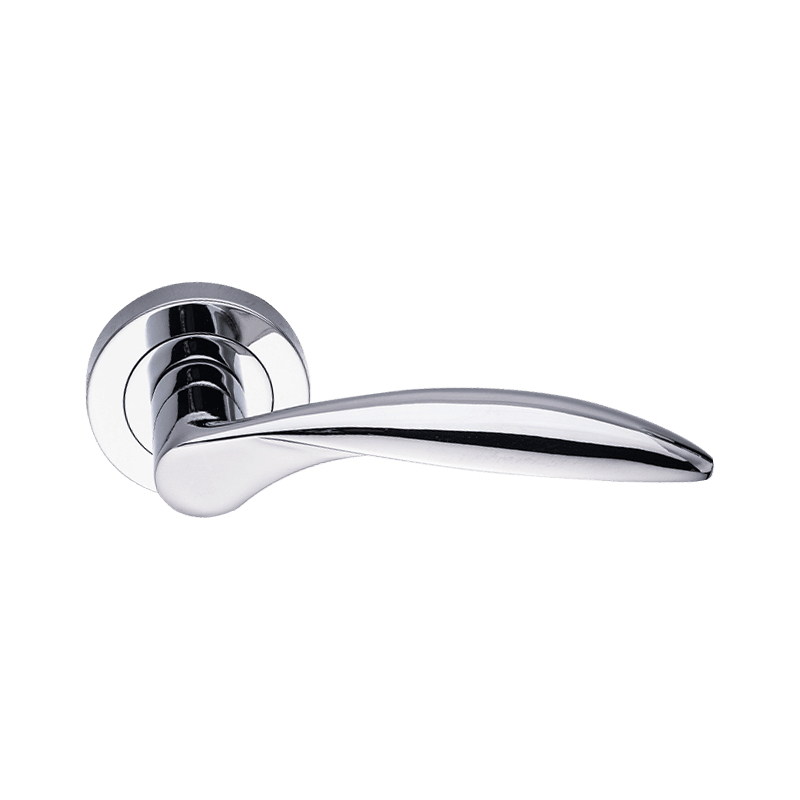
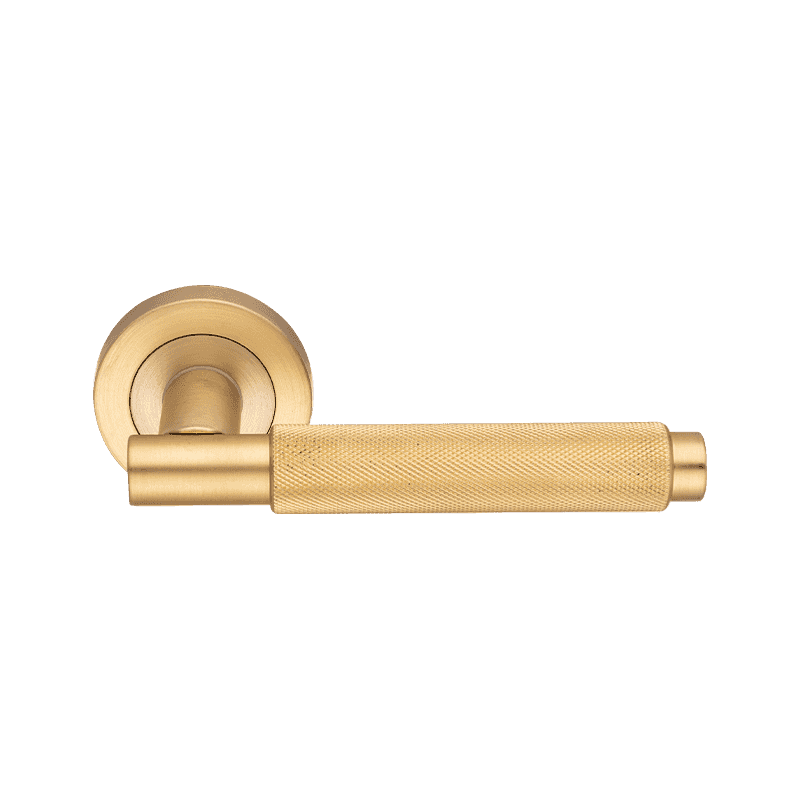
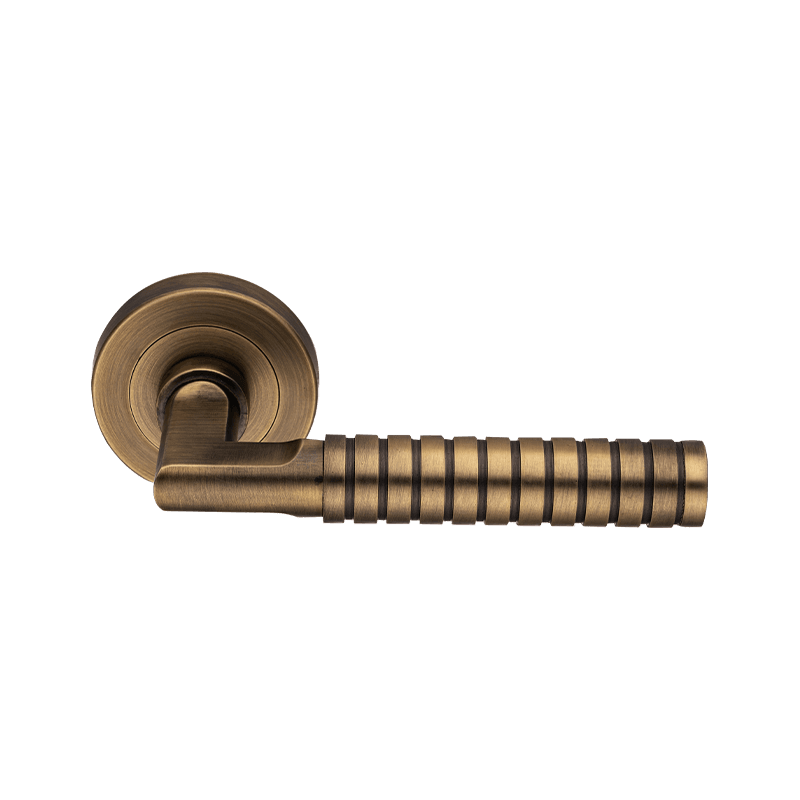
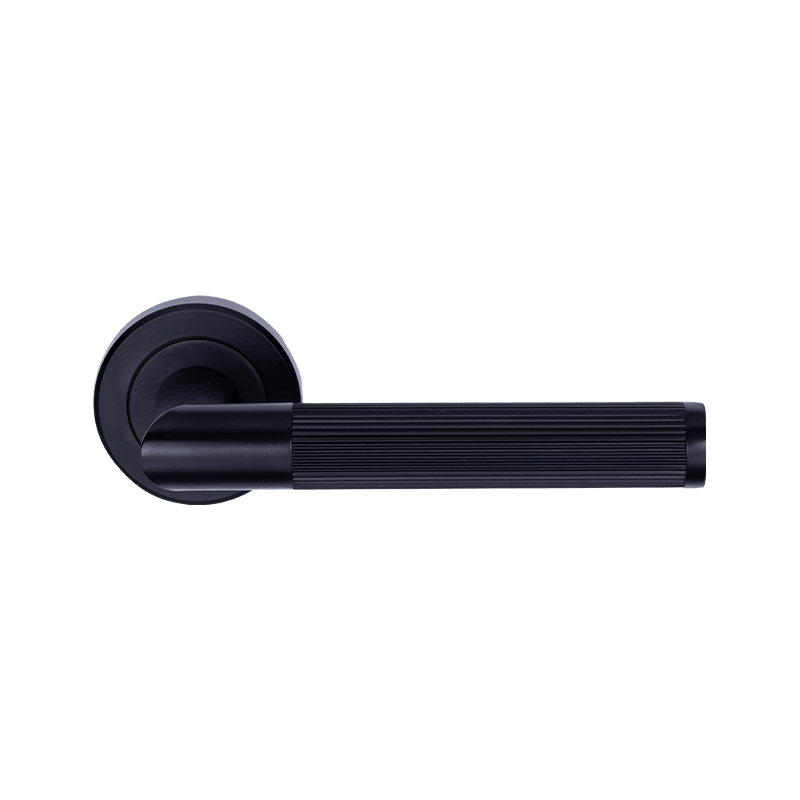
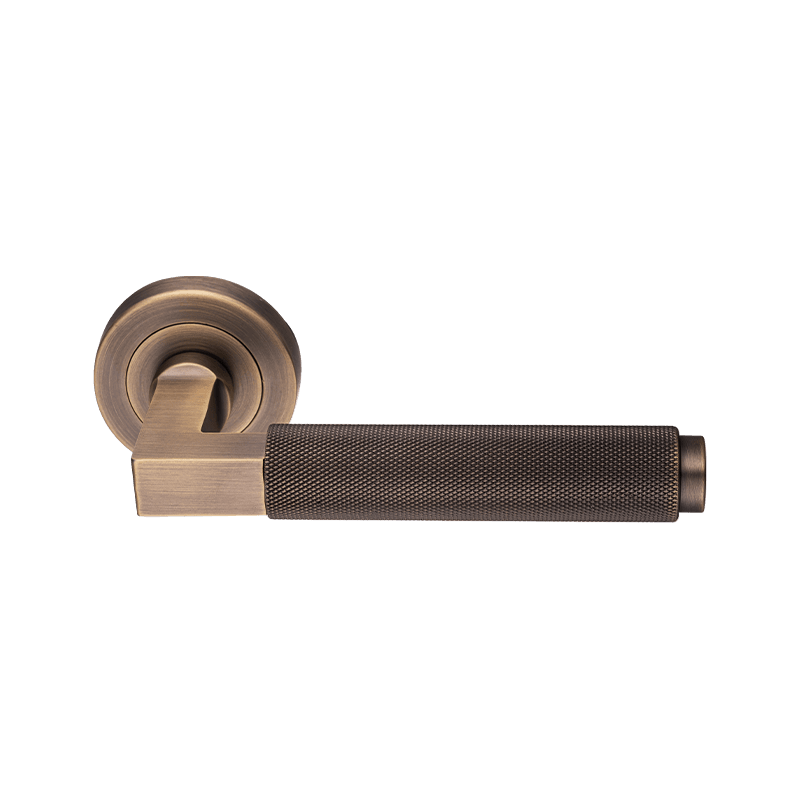
The handle or knob is the primary user-interface component — the part you grasp and operate. It is the most visible door handle part and typically the primary aesthetic choice. Lever handles are the dominant modern form, angled downward at rest and pressed down to retract the latch bolt. Knobs are spherical or cylindrical, requiring a gripping and rotating motion to operate. Door pulls are fixed, non-rotating handles used on doors operated by pushing.
Handle dimensions are standardized: most residential lever handles measure 4 to 5 inches in length from the spindle center to the tip, while commercial-grade lever handles may extend 5 to 6.5 inches to comply with ADA (Americans with Disabilities Act) accessibility requirements, which mandate a minimum 4-inch usable grip length. Material options include solid brass, zinc alloy (zamak), stainless steel, aluminum, and die-cast iron — each with distinct weight, durability, and finish characteristics.
2. The Rose (Circular Mounting Plate)
The rose is the circular or square decorative plate that sits between the lever handle and the door face. Its primary function is to cover the borehole in the door and conceal the internal mechanism chassis. Roses are typically 2.25 to 2.75 inches (57–70 mm) in diameter for residential hardware. They are secured to the door either by concealed through-bolts (the most common and secure method) or by a snap-fit ring that clips into a groove on the spindle housing.
The profile of the rose — flush, raised, or domed — affects both aesthetics and the handle's clearance from the door surface. A raised rose provides more finger clearance when operating the lever, which is especially important for doors with surface-applied molding or decorative panels adjacent to the handle location.
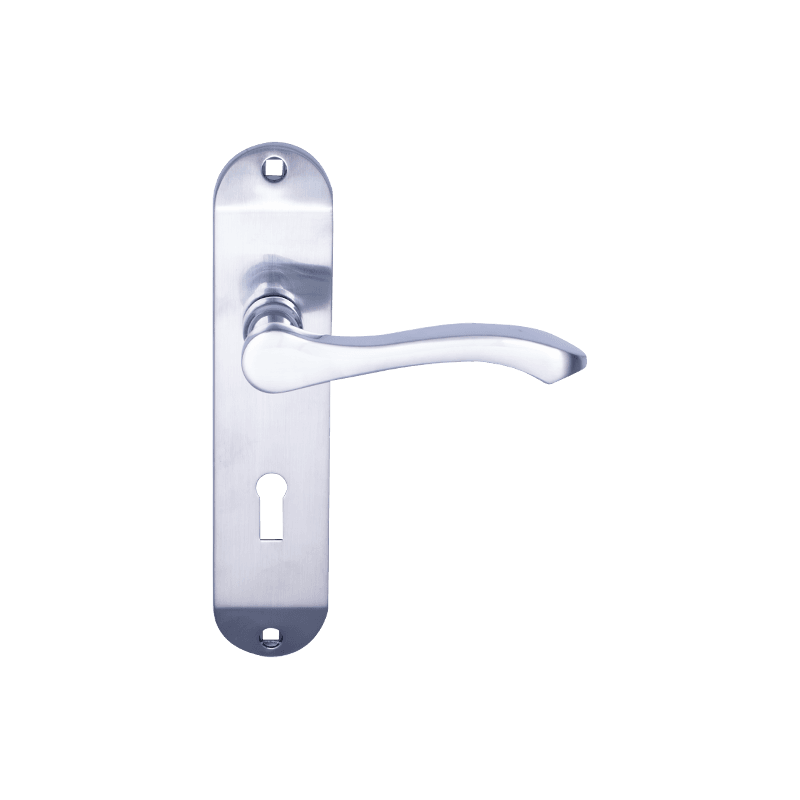
3. The Escutcheon Plate (Long Backing Plate)
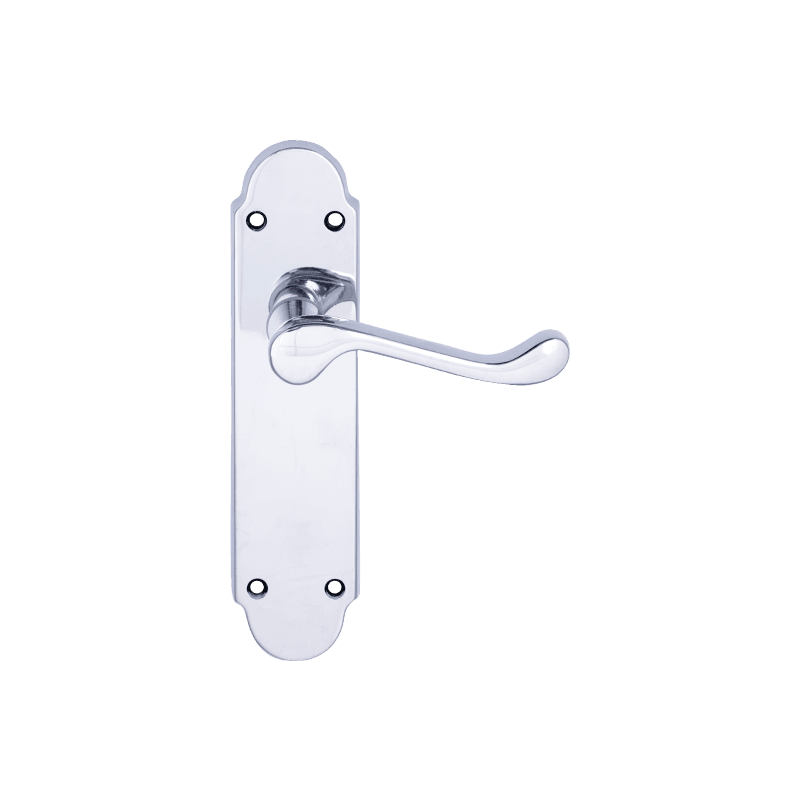
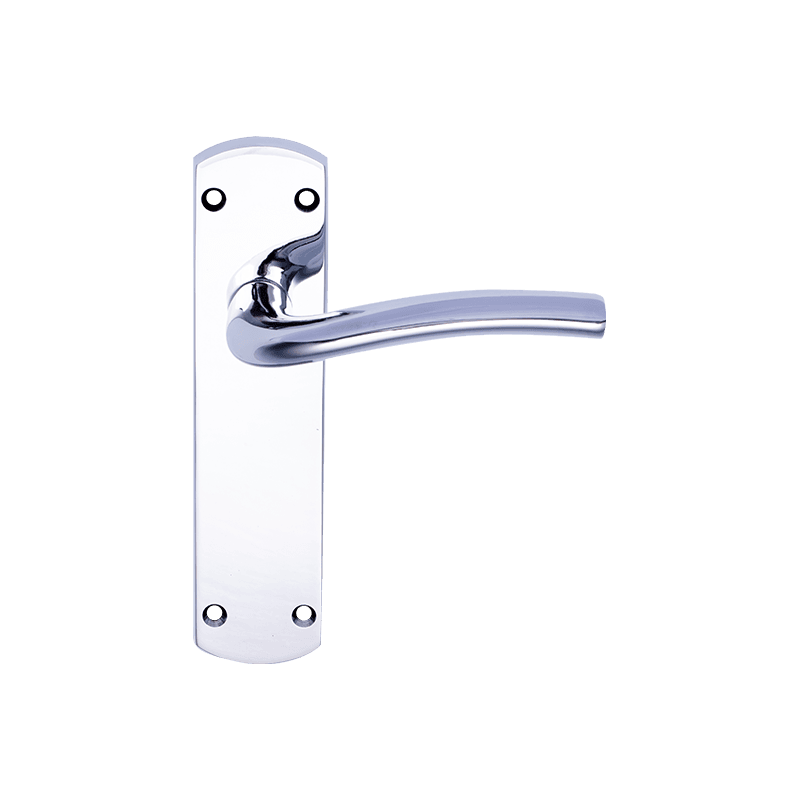
The escutcheon plate (also called a backplate or long plate) is an elongated version of the rose that houses both the lever handle mechanism and a keyhole or lock cylinder in a single unified plate. Rather than two separate rose plates, an escutcheon presents a single integrated visual element — covering the latch borehole at the lower position and the lock cylinder at the upper position. Escutcheons are standard in mortise lock assemblies and are commonly found on period-style and architectural-grade hardware. Standard escutcheon plates measure approximately 7 to 9 inches tall by 2.5 to 3 inches wide.
4. The Spindle (Square Drive Bar)
The spindle is the square-section metal bar that passes through the center of the door (through the latch mechanism) and connects the handle on one side to the handle on the other. When the handle is operated, the spindle rotates and drives the latch retractor inside the latch body. Spindle dimensions are critical for compatibility: the standard residential spindle size is 8 mm × 8 mm square in Europe and many international markets, while the US market uses spindle sizes that vary by manufacturer (commonly 5/16" square or 3/8" square). Spindle length must also match the door thickness — standard doors at 35–45 mm are served by a 70 mm spindle, while thicker doors require extended or adjustable-length spindles.
5. The Latch Body (Tubular or Mortise)
The latch body is the mechanical heart of the door handle assembly, installed into the door edge and containing the latch bolt and its retraction mechanism. It is available in two primary configurations that define the entire handle system architecture:
- Tubular latch: A cylindrical unit installed through a single circular borehole drilled from the door face, with a separate smaller hole drilled from the door edge. The most common format in residential construction. Tube diameter is standardized at 57 mm (2¼") in most markets. The internal retractor is driven directly by the spindle.
- Mortise latch/lock: A larger rectangular case installed into a mortise (pocket) chiseled or routed into the door edge. Contains the latch bolt, and typically also the deadbolt, in a single integrated unit. Mortise cases measure approximately 65 mm wide × 130–165 mm tall in residential grades, and significantly larger in commercial heavy-duty versions.
6. The Latch Bolt (Spring Bolt)
The latch bolt is the spring-loaded triangular or rectangular bolt that protrudes from the door edge and engages the strike plate to hold the door closed. Its angled leading face (the "ramp") allows the door to close by camming the bolt inward against the strike plate lip, after which the spring snaps it forward into the strike hole. Latch bolts are available in standard and security configurations: a standard residential latch bolt protrudes approximately 12–14 mm, while an anti-thrust latch bolt is reinforced to resist credit-card shimming attacks, with a hardened anti-pick face and a deeper throw of 14–18 mm.
7. The Faceplate (Latch Faceplate or Door Edge Plate)
The faceplate is the flat metal plate on the door edge through which the latch bolt protrudes. It is screwed to the door edge and provides a clean, finished appearance while protecting the edge of the latch borehole. Standard faceplates are either flat (for square-edge doors) or curved/radius (for radius-edge doors). The faceplate also determines the forend dimensions that must match the strike plate for proper alignment. Stainless steel and brass faceplates are standard; fire-rated latch assemblies use steel faceplates with intumescent strips that expand in fire conditions to seal the door gap.
8. The Strike Plate (Keep)
The strike plate is the reinforcing metal plate mounted to the door frame jamb that receives the latch bolt (and deadbolt on locksets). It has a recessed pocket or box that the latch bolt enters when the door is closed. The strike plate is one of the most security-critical door handle parts — a standard builder-grade strike plate secured with ½-inch screws provides minimal resistance to kick-in attacks, whereas a heavy-duty security strike plate with 3-inch (75 mm) screws that reach into the structural framing can increase door kick-in resistance by a factor of 3–5×, according to testing by security organizations. Box strikes (with a deeper pocket) are preferred over flat strikes for latch durability and noise reduction.
9. The Cylinder (Lock Core)
In locking door handle sets, the cylinder is the keyed plug that translates the correct key profile into rotational motion to operate the lock mechanism. Common cylinder formats include: pin tumbler cylinders (the most widespread residential type, using spring-loaded driver and key pins), disc detainer cylinders (higher security, used in quality mortise locks), and cam locks (used in cabinet and sliding door hardware). Cylinder security is rated by standards such as EN 1303 in Europe (Grades 1–6) and ANSI/BHMA A156.5 in the US. A Grade 6 EN 1303 cylinder withstands 150 kg of drill force, 150 Nm of torque attack, and 100 pick attempts in standardized testing.
10. The Chassis or Internal Mechanism Housing
Behind each rose plate is the internal chassis — a precision-engineered housing containing the springs, cam, follower, and return mechanism that converts handle movement into latch retraction and returns the handle to the horizontal rest position. The spring return mechanism is one of the most frequently worn components in high-use doors. Commercial-grade door handles are rated for a minimum of 250,000 operating cycles under ANSI/BHMA Grade 1 standards, while residential Grade 2 handles are rated for 400,000 cycles and premium Grade 1 for 1,000,000+ cycles.
Door Handle Parts by Handle Type: What Changes Between Designs
The specific parts present in a door handle assembly vary significantly depending on whether it is a passage set, privacy set, entry set, or mortise lock — understanding these differences prevents costly purchasing mistakes.
| Handle Type | Latch Bolt | Lock Cylinder | Privacy Button | Deadbolt | Typical Use |
|---|---|---|---|---|---|
| Passage set | yes | no | no | no | Hallways, closets |
| Privacy set | yes | Emergency pin only | yes | no | Bathrooms, bedrooms |
| Entry/keyed set | yes | (exterior) | Turn button (interior) | no (separate) | Front/back exterior doors |
| Dummy set | no | no | no | no | Fixed panel doors, wardrobe pulls |
| Mortise lockset | yes | yes | yes (integral) | yes(integral) | Commercial, architectural, premium residential |
Table 1: Door handle set types compared by component presence — latch bolt, lock cylinder, privacy button, and deadbolt — showing which door handle parts are included in each configuration and their typical applications.
Door Handle Parts Materials: How Material Choice Affects Durability and Finish
The material from which each door handle part is manufactured directly determines its mechanical durability, corrosion resistance, weight, finish quality retention, and long-term cost of ownership.
| Material | Common Parts | Durability | Corrosion Resistance | Weight | Finish Retention |
|---|---|---|---|---|---|
| Solid brass | Handle, rose, escutcheon | Excellent | Very good | Heavy | Excellent (living finish) |
| Zinc alloy (zamak) | Handle, rose, chassis | Moderate | Moderate (coating-dependent) | Medium | Good (PVD) / Poor (lacquer) |
| Stainless steel (304/316) | Handle, faceplate, strike plate | Excellent | Excellent (316 for coastal) | Medium–Heavy | Excellent |
| Aluminum | Handle, chassis | Good | Good | Light | Good (anodized) |
| Iron (cast / wrought) | Handle, escutcheon | Very good | Poor (requires coating) | Very heavy | Moderate (waxed) |
Table 2: Comparison of common door handle part materials by typical application, mechanical durability, corrosion resistance, weight, and long-term finish retention quality.
Critical Measurements in Door Handle Parts: Getting the Dimensions Right
Incorrect measurements are the single most common cause of incompatibility when replacing door handle parts — three dimensions must be verified before purchasing any replacement component.
Backset Distance
The backset is the horizontal distance from the door edge (where the latch faceplate sits) to the center of the borehole through the door face where the spindle passes. This measurement determines where the handle sits relative to the door edge. Standard residential backsets are 2⅜ inches (60 mm) and 2¾ inches (70 mm). Most tubular latches are adjustable to accommodate both, but mortise latches are fixed at manufacture. Using the wrong backset means the handle will either be too close to the door edge (creating a safety hazard) or too far from it (leaving an unsightly gap at the faceplate).
Bore Hole Diameter
The face borehole accepts the chassis or tubular latch mechanism. The North American standard bore diameter is 2⅛ inches (54 mm), while European doors commonly use a 72 mm borehole for tubular latches. The edge borehole (for the latch body) is standardized at 25–32 mm depending on the latch type. Before purchasing, always confirm that the handle set's chassis diameter matches your door's existing borehole — enlarging a borehole is straightforward, but reducing it requires a filler plate or new door section.
Centre-to-Centre Distance (PZ Measurement)
On mortise lock assemblies and escutcheon-plate handles, the PZ measurement (Pfeilzentrum, or "arrow centre") refers to the vertical distance between the spindle centre and the cylinder centre. This measurement is critical for replacement escutcheon plates and handles on mortise locks. Common PZ measurements are 72 mm, 92 mm, and 110 mm. An escutcheon purchased with the wrong PZ distance will leave either the spindle hole or the keyhole misaligned with the mortise case inside the door.
Common Door Handle Part Failures and How to Diagnose Them
Most door handle problems can be traced to one of five specific component failures — identifying which part has failed narrows the repair to a targeted replacement rather than a complete handle set replacement.
- Handle does not return to horizontal after operation: The return spring inside the chassis has fatigued or broken. This is the most common mechanical failure in high-use interior doors. The spring is a consumable component — on budget hardware, the entire chassis may need replacing; on quality hardware, replacement springs are available separately.
- Latch bolt does not retract when handle is operated: Either the spindle has worn oval (losing its square section from repeated torque), the square hole in the follower inside the chassis has rounded out, or the latch retractor spring has broken. Check by removing the handle and testing spindle engagement with the latch directly.
- Door does not latch closed / latch bounces back: The strike plate is misaligned — either vertically offset from the latch bolt trajectory, or recessed too shallowly to accept the full latch throw. Adjusting the strike plate position by 2–3 mm typically resolves this. Alternatively, the latch bolt spring has weakened and can no longer project the bolt sufficiently.
- Handle or rose feels loose: The through-bolts securing the rose to the door have loosened over time. This is common where the bolts thread directly into plastic anchors rather than a threaded metal chassis. Tightening the through-bolts (usually accessed by removing the rose cover) typically resolves the issue; replace plastic anchors with metal threaded inserts for a permanent fix.
- Key turns but lock does not engage: The cam on the lock cylinder has disconnected from the deadbolt actuator inside the mortise case, or the tailpiece (connecting pin between cylinder cam and lock mechanism) has sheared. This requires either cylinder replacement or, in mortise cases, replacement of the entire lock body.
Frequently Asked Questions About Door Handle Parts
Q: What is the small plate around a door handle called?
The small circular plate directly behind a lever handle or knob is called the rose (also rose plate or rose cover). When this plate is elongated to cover both the handle mechanism and a keyhole in a single decorative plate, it is called an escutcheon or backplate. Both serve the same primary function: concealing the fixing hardware and the borehole in the door face while providing a finished decorative transition between the handle and the door surface.
Q: How do I know if my door handle spindle needs replacing?
A spindle needs replacing when its square cross-section has worn to a rounded or oval profile from years of torque cycling. To check: remove the handle and examine the spindle ends. If the corners are visibly rounded rather than sharp 90° angles, or if the spindle wobbles excessively in the latch follower hole, replacement is needed. A worn spindle is the most efficient replacement — it costs very little (typically $1–5 for a standard replacement spindle) compared to replacing the entire latch or handle set, and will restore full mechanical function if the latch body itself is undamaged.
Q: What is the difference between a mortise lock and a tubular latch?
A tubular latch is a simple cylindrical unit containing only a spring-loaded latch bolt, installed through a single round borehole in the door face. It operates the latch only — security locking is provided by a separate deadbolt if required. A mortise lock is a larger, rectangular case installed into a chiseled pocket in the door edge, containing the latch bolt, deadbolt, and often a privacy snib all in one integrated unit. Mortise locks are significantly more secure and durable, but require more complex installation and are more expensive — typically 3–8× the cost of equivalent tubular latch hardware.
Q: Can I replace just the cylinder in a door handle without replacing the whole set?
Yes, in most cases. Lock cylinders in entry door handle sets and mortise locks are designed to be removable and replaceable independently of the handle hardware — this is called a re-cylinder operation. To replace the cylinder, you typically remove the rose or escutcheon, loosen the cylinder retaining screw accessible from the door edge, and withdraw the cylinder. The replacement cylinder must match the existing cylinder format (euro profile, oval, or knob cylinder) and have the correct cam length to engage the lock mechanism. Re-cylindering is a standard security upgrade that costs significantly less than full hardware replacement.
Q: Why do some door handles have two roses while others have an escutcheon plate?
The choice between two separate roses versus a single escutcheon plate is primarily aesthetic but also reflects the underlying lock mechanism. Two separate roses are used on passage sets, privacy sets, and entry sets with tubular latch mechanisms — each rose covers one side of the borehole independently. A single escutcheon plate covers both the handle mechanism and the lock cylinder in one integrated visual element, and is architecturally associated with mortise locksets, period-style hardware, and premium contemporary designs. Escutcheon plates allow for more dramatic decorative impact and are often found on architectural-grade projects where the door hardware is a design statement.
Q: What is a dummy door handle set and where are the parts different?
A dummy door handle set contains only the visible exterior parts — the handle and rose — with no latch body, spindle, or internal mechanism. The handle is fixed (non-rotating) and is secured directly to the door surface with screws concealed behind the rose. Dummy sets are used on doors that do not require a latch — such as bi-fold door panels, wardrobe doors, and the fixed leaf of a French door pair. They provide the visual continuity of a matched handle set throughout a home without the cost or installation complexity of a functional latch mechanism where none is needed.
Conclusion: Know Your Door Handle Parts for Smarter Decisions
Understanding the complete anatomy of door handle parts — from the grip element and rose through the spindle, latch body, faceplate, strike plate, cylinder, and internal chassis — gives homeowners, builders, and specifiers the knowledge to make precise repair decisions, accurate replacement purchases, and confident installation choices.
Every component in a door handle assembly has a specific function, standardized dimensions, and defined performance characteristics. The strike plate determines security against forced entry. The latch bolt determines how reliably the door stays closed. The cylinder determines resistance to picking and drilling. The handle material and finish determine longevity and aesthetics. None of these decisions should be made in isolation — each part must be matched to the others and to the door construction for the complete assembly to perform as intended.
Whether you are replacing a worn spindle, upgrading a builder-grade strike plate to a security model, sourcing a matching escutcheon for an architectural project, or simply diagnosing why a handle feels loose, the anatomy knowledge in this guide provides the foundation for getting it right the first time.