English
 italiano


Replacing a front door handle takes 20 to 45 minutes for most homeowners using only a screwdriver and a tape measure, and requires no specialist skills -- you remove the old handle by unscrewing the interior rose plate or escutcheon, slide out the latch mechanism, fit the new latch, align the new handle spindle, and secure everything with the provided screws. Whether your existing handle is broken, loose, outdated, or you are upgrading for security reasons, this guide walks through every step of the process with practical measurements, tool lists, and troubleshooting advice.
Learning how to replace a front door handle correctly the first time prevents gaps in your home's security, avoids damaged door edges from misaligned latches, and saves the cost of a locksmith for what is fundamentally a straightforward DIY task.
Content
- What You Need Before Replacing a Front Door Handle
- How to Replace a Front Door Handle: Step-by-Step Instructions
- Front Door Handle Types Compared: Which Should You Buy?
- How to Replace a Front Door Handle on a uPVC Door
- Common Problems When Replacing a Front Door Handle and How to Fix Them
- How Long Does It Take to Replace a Front Door Handle?
- When to Call a Locksmith Instead of DIY
- FAQ: How to Replace a Front Door Handle
- Summary: Replacing a Front Door Handle Successfully
What You Need Before Replacing a Front Door Handle
Before touching a single screw, you need to measure three critical dimensions of your existing door hardware -- backset, cross bore diameter, and door thickness -- because buying a replacement handle set that does not match these measurements is the number one reason DIY door handle replacements fail.
Three Measurements You Must Take First
- Backset -- the distance from the edge of the door to the center of the latch hole (where the spindle passes through). Standard backsets are 60 mm (2-3/8 inch) and 70 mm (2-3/4 inch). Measure this before buying any replacement handle set, as most sets accommodate one backset only, and the two sizes are not interchangeable.
- Cross bore diameter -- the diameter of the large hole drilled through the face of the door for the handle body. Standard is 54 mm (2-1/8 inch) in the UK and 57 mm (2-1/4 inch) in the US. A replacement set must fit this hole or you will need to enlarge it with a hole saw.
- Door thickness -- most standard exterior doors are 44 mm (1-3/4 inch) thick. Thicker composite or timber doors may be 54 mm or 68 mm. Handle sets specify a door thickness range, typically 35 to 50 mm or 35 to 70 mm, so confirm your door falls within that range.
Tools Required
- Phillips head screwdriver (PH2 size covers most door hardware)
- Flat head screwdriver (for prying rose covers and releasing hidden fixings)
- Tape measure (for the three critical measurements above)
- Chisel and mallet (only if the new latch faceplate requires deepening the existing mortise recess)
- Pencil (for marking screw positions if you are patching and redrilling)
- Cordless drill with PH2 bit (optional but speeds up screw driving significantly)
- Wood filler or matchsticks and PVA glue (for filling stripped screw holes in timber doors)
What to Look for When Buying a Replacement Front Door Handle
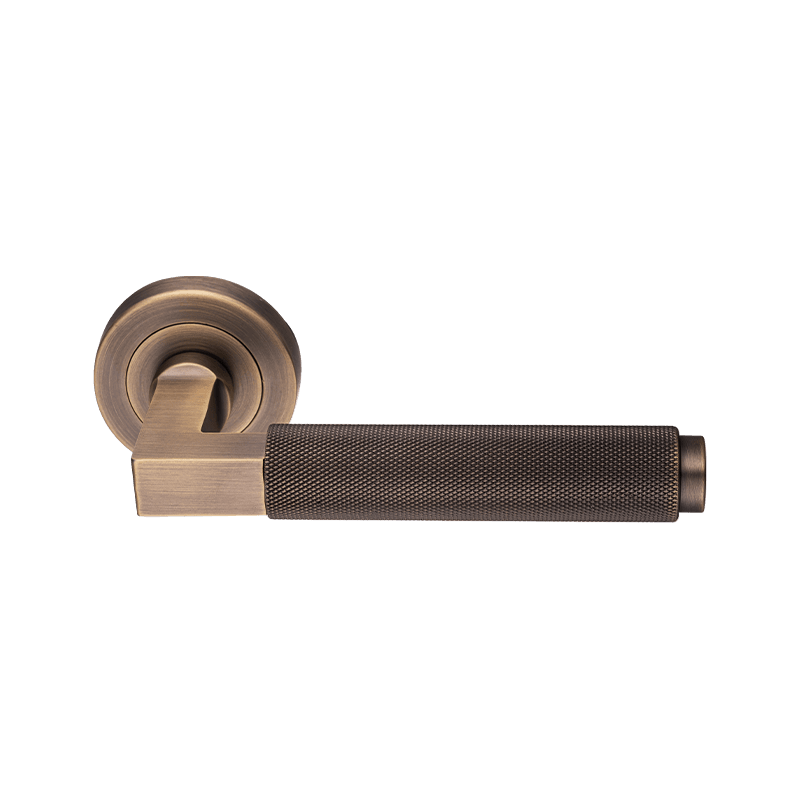
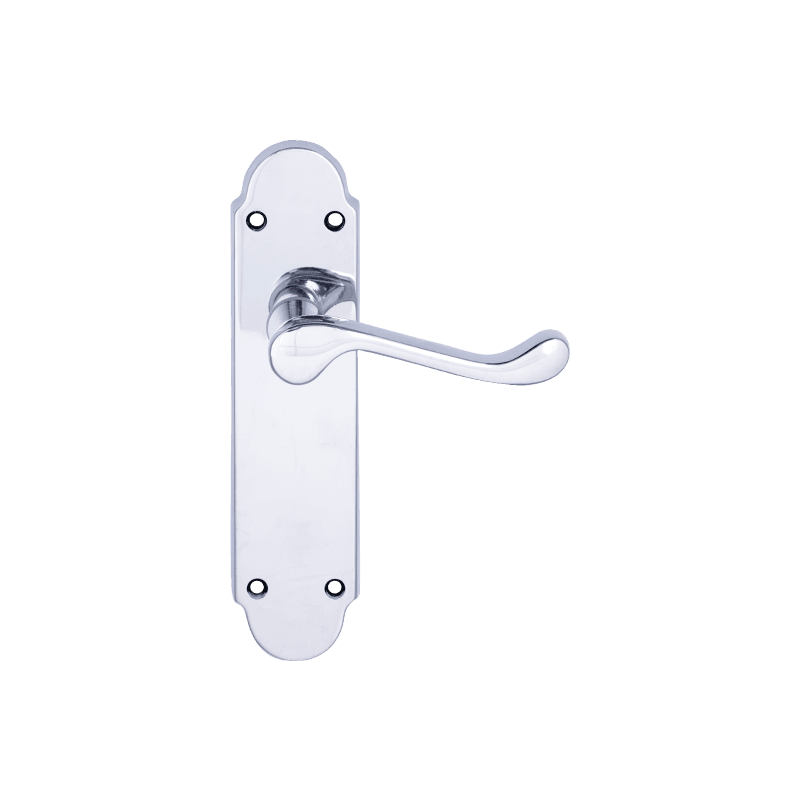
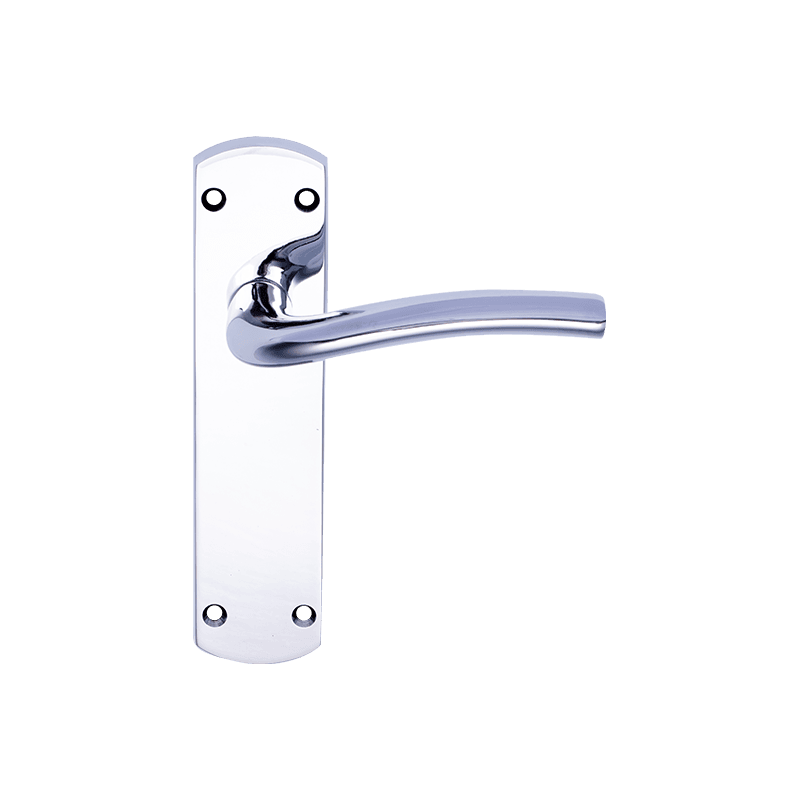
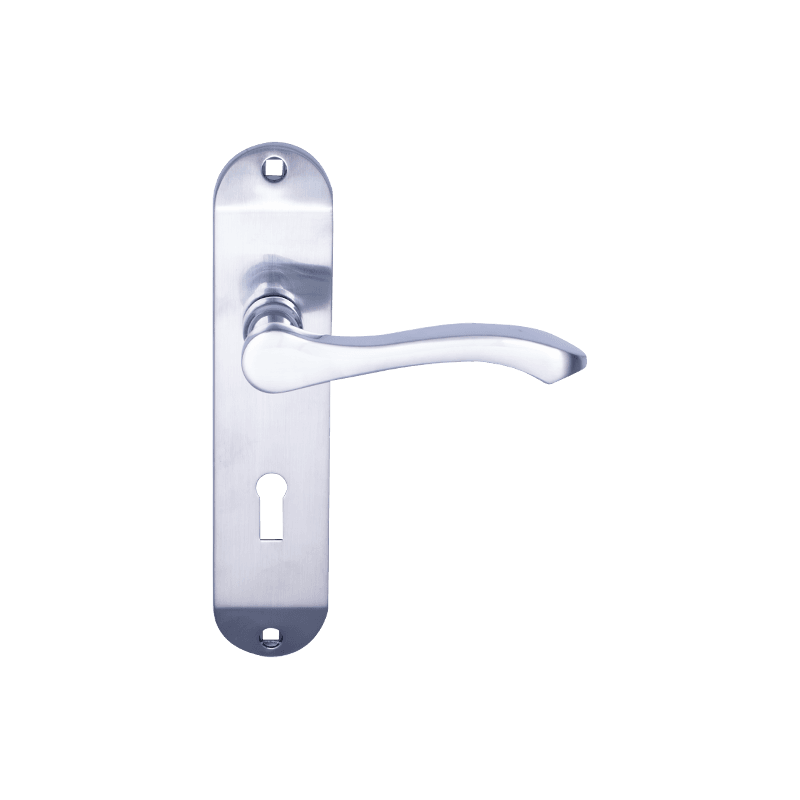
Replacement handle sets for front doors come in lever-on-rose, lever-on-backplate, and pull handle configurations. For an exterior front door, always specify a handle set rated for exterior use -- interior-grade handles lack the weather sealing, corrosion-resistant coating, and reinforced spindle needed for outdoor conditions. Exterior handle sets are also available with integrated lock cylinders (keyed entry) or as dummy handles (for push-pull doors without a latch function). Confirm which type your existing door uses before purchasing.
How to Replace a Front Door Handle: Step-by-Step Instructions
The replacement process follows six stages in sequence: remove the old handle, extract the latch, prepare the door if needed, fit the new latch, install the new handle, and test operation -- skipping or reversing any stage creates problems that are harder to fix than starting in the correct order.
Step 1 -- Remove the Interior Handle and Rose
Start on the interior side of the door. Most lever handles are secured in one of two ways: visible screws on the rose plate, or a concealed fixing hidden under a snap-off cap or a spring-loaded grub screw on the handle collar.
For visible screws: unscrew them fully and the rose plate will lift free, exposing the spindle connection and the long through-bolts that hold both sides of the handle set together.
For concealed fixings: look for a small slot or hole on the underside of the handle lever collar. Insert a flat head screwdriver or a small Allen key into this slot and push -- this releases a spring-loaded catch that allows the lever to slide off the spindle. The rose cover then unclips or unscrews.
Once the rose plate is free, you will see either two long machine screws passing through the door from the exterior handle, or separate fixing screws for the interior rose. Remove all visible screws completely and set them aside in case you need them as a reference for the replacement fixings' diameter and length.
Step 2 -- Remove the Exterior Handle
With the interior screws removed, the exterior handle assembly can be pulled free from the outside of the door. If it feels stuck, the spindle may be slightly swollen from weather exposure or the cylinder lock may still be engaged -- ensure the door is unlocked before pulling. Pull the exterior handle firmly away from the door face; the spindle will slide out through the cross bore. Some exterior handles have a separate cylinder lock that stays in the door once the handle is removed -- if you are replacing only the handle and not the lock cylinder, leave the cylinder in place.
Step 3 -- Remove the Old Latch
The latch mechanism sits in a rectangular mortise cut into the edge of the door. It is secured by one or two screws through the latch faceplate into the door edge. Remove these screws and the latch body will slide out of the mortise toward you. Note the orientation of the latch bolt as it comes out -- the tapered face of the bolt must face in the direction the door closes (toward the door frame), not away from it.
Inspect the latch mortise once the old latch is out. If the mortise is filled with paint or debris, clean it out with a chisel so the new latch faceplate will sit flush against the door edge. A faceplate that sits even 1 mm proud of the door edge will prevent the door from closing correctly.
Step 4 -- Fit the New Latch
Slide the new latch body into the mortise with the latch bolt tapered face pointing toward the door frame. If the new latch faceplate is a slightly different size to the old one, hold the faceplate flush against the door edge and mark around it with a pencil. Use a sharp chisel to deepen or widen the recess by the amount needed -- remove material gradually in thin passes and test-fit after each pass to avoid over-cutting.
Once the latch body is fully seated and the faceplate sits flush with the door edge, drive the fixing screws through the faceplate into the door edge. Do not overtighten -- the screws secure the latch against rotation, they are not load-bearing, and overtightening in timber splits the wood around the screw holes.
Step 5 -- Install the New Handle Set
With the new latch in place, install the exterior handle first. Insert the handle spindle through the cross bore in the door face so it passes through the square hole in the latch body inside the door. The spindle turns the latch cam -- if the spindle does not engage the cam cleanly, the handle will not retract the latch bolt when operated.
Many replacement handle sets include a spindle that is longer than needed and must be cut to length. Measure the door thickness, add the depth of both handle bodies, and subtract that total from the spindle length -- the spindle should be flush with or 1 to 2 mm recessed behind the interior rose face when both handles are fitted. Cut the spindle with a hacksaw and deburr the cut end with a file so it slides smoothly into the handle.
Align the exterior handle on the door face and thread the long through-bolts or fixing screws from the interior side. Hand-tighten to hold the handle in position, then fit the interior rose plate and handle. Fully tighten the fixing screws alternately (interior and exterior) so both handles pull up evenly against the door face without rocking.
Step 6 -- Test the Handle and Adjust
With both handles fitted and screws tightened, test the handle action with the door open. The lever should depress smoothly, the latch bolt should fully retract when the handle is depressed, and the bolt should spring back fully to the extended position when the handle is released. A sluggish or incomplete return usually means the spindle is slightly too long (causing binding) or the fixings are overtightened. Loosen the fixings by a quarter turn, retest, and retighten when the action is smooth. Finally, close the door and confirm the latch bolt engages the strike plate cleanly -- if it does not align, the strike plate may need adjustment (see troubleshooting section below).
Front Door Handle Types Compared: Which Should You Buy?
The four main front door handle configurations -- lever on rose, lever on backplate, pull handle with separate latch, and multipoint locking handle -- each suit different door types and security requirements, and choosing the wrong type for your door will either require additional drilling or leave a security gap.
| Handle Type | Best For | Security Level | DIY Difficulty | Approx. Cost |
| Lever on rose | Internal passage doors; light-use front doors | Low (latch only) | Easy | 15 to 60 USD |
| Lever on backplate (keyed entry) | Front and back exterior doors | Medium (integrated deadbolt) | Easy to Moderate | 40 to 150 USD |
| Pull handle with separate latch | Large timber and composite front doors | Medium (depends on lock used) | Moderate | 60 to 200 USD |
| Multipoint locking handle | uPVC and composite front doors with multipoint locks | High (3 or 5 point locking) | Moderate to Difficult | 50 to 250 USD |
Table 1: Comparison of common front door handle types by application, security level, installation difficulty, and approximate retail cost.
How to Replace a Front Door Handle on a uPVC Door
Replacing a front door handle on a uPVC door follows a slightly different process from timber or composite doors because uPVC doors almost always use a multipoint locking mechanism driven by a spindle connected to the handle -- and the handle must be matched to the lock's spindle size, gear mechanism, and fixing center distances to operate correctly.
Before ordering a replacement, identify these four uPVC-specific measurements:
- Fixings center distance (PZ distance) -- the distance between the two screws that hold the handle to the door. Standard PZ distances are 92 mm and 122 mm. Measure between the center of each screw hole on the existing handle before removing it.
- Spindle size -- uPVC door handles typically use a 7 mm square spindle. Confirm this with a vernier caliper after removing the old handle.
- Backset -- measure from the door edge to the center of the spindle hole, as for timber doors.
- Handle hand (left or right) -- uPVC door handles are handed (specific to left-opening or right-opening doors). Stand outside facing the door -- if the hinges are on the right, you need a right-handed handle.
To remove a uPVC handle, locate the fixing screws -- often behind a snap-off cover strip running along the handle backplate. Remove the screws, slide the handle off the spindle, and pull the spindle out. Fit the new spindle into the lock mechanism first, then push both sides of the new handle set onto the spindle from each side of the door simultaneously. Insert and tighten the fixing screws, then test by lifting the handle to engage the multipoint lock and turning the key to confirm all locking points engage and disengage cleanly.
Common Problems When Replacing a Front Door Handle and How to Fix Them
The four most common problems encountered when replacing a front door handle are: the latch bolt not aligning with the strike plate, the handle feeling stiff or not springing back, stripped screw holes making fixings insecure, and the latch faceplate sitting proud of the door edge -- all of which are fixable without buying new components.
| Problem | Likely Cause | Fix |
| Latch bolt misses strike plate | Strike plate position or new latch slightly different to old | File the strike plate opening larger in the direction needed; or reposition and plug-and-redrill the strike plate |
| Handle stiff or slow to return | Spindle too long; fixings overtightened; latch body binding | Trim spindle by 1 to 2 mm; loosen fixings slightly; check latch faceplate is fully flush |
| Screws will not tighten (stripped holes) | Old timber screw holes stripped from years of use | Fill holes with matchsticks and PVA glue; allow to cure 4 hours; redrive screws |
| Latch faceplate sits proud of door edge | New faceplate is thicker or wider than original | Deepen the mortise recess with a sharp chisel working in thin passes until faceplate sits flush |
| Handle rocks side to side when fitted | Cross bore slightly larger than handle body; loose spindle fit | Use rose plate cover with larger diameter; use spindle adaptor sleeve if supplied |
Table 2: Common front door handle replacement problems, their likely causes, and practical remedies.
How Long Does It Take to Replace a Front Door Handle?
A straightforward like-for-like front door handle replacement on a timber door takes 20 to 30 minutes for an experienced DIYer; allow 45 to 60 minutes if this is your first replacement or if the new handle requires adjusting the mortise recess.
| Scenario | Estimated Time | Key Variables |
| Like-for-like replacement, timber door | 20 to 30 minutes | Identical backset and faceplate dimensions |
| New handle, existing mortise compatible | 30 to 45 minutes | Minor spindle trimming or strike plate adjustment |
| uPVC door multipoint handle | 30 to 50 minutes | Confirming PZ distance and spindle size match |
| Handle upgrade requiring mortise adjustment | 60 to 90 minutes | Chiseling deeper recess; repositioning strike plate |
| Stripped holes requiring repair first | 90 minutes plus 4 hours cure time | PVA glue and matchstick repair; waiting for cure |
Table 3: Estimated time to replace a front door handle for different scenarios and complication levels.
When to Call a Locksmith Instead of DIY
You should call a locksmith rather than attempting a DIY front door handle replacement if the lock cylinder is damaged or seized, if the door has a multipoint lock that has failed internally, or if the mortise has been damaged by a break-in attempt -- because these conditions involve the lock mechanism itself rather than just the handle, and an incorrectly reassembled lock on a front door creates a genuine security vulnerability.
Signs that the job has moved beyond DIY handle replacement include:
- The key turns but the door does not unlock -- indicates a failed lock gear box or broken actuator, not a handle problem
- The latch bolt will not retract even with the door open and handle depressed -- suggests a seized or broken latch body that may also have damaged the mortise edges
- The door edge or mortise area is visibly splintered or deformed -- indicates a forced entry attempt that requires the lock mechanism and potentially the door edge itself to be assessed and repaired before a new handle is installed
- The cylinder lock shows signs of picking or drilling damage -- a damaged cylinder that is replaced with an equivalent insecure cylinder defeats the purpose of the exercise; a locksmith can advise on upgrading to a high-security cylinder at the same time
A locksmith call-out for a straightforward handle and cylinder replacement typically costs 80 to 150 USD including parts, which compares favorably to the cost of repairing a door that has been damaged by a poorly executed DIY lock replacement gone wrong.
FAQ: How to Replace a Front Door Handle
Q1: Can I replace just the handle without replacing the latch?
Yes, in most cases you can replace the handle without replacing the latch, provided the new handle's spindle is compatible with the existing latch mechanism. Remove one handle, check the spindle size and shape (usually 8 mm square for timber door latches), and confirm the new handle set uses the same spindle geometry. However, if the latch is more than 10 years old, worn, or showing signs of corrosion, it is worth replacing the latch at the same time since the door is already open and the additional cost of a new latch is typically only 8 to 20 USD.
Q2: Do I need to change the strike plate when I replace the front door handle?
You do not need to replace the strike plate when replacing a front door handle unless the old strike plate is visibly damaged, the new latch bolt is a different size, or you are upgrading to a longer latch bolt for improved security. If the new latch bolt is slightly misaligned with the existing strike plate opening, filing the strike plate opening by 2 to 3 mm in the required direction is almost always easier and faster than repositioning the entire strike plate.
Q3: My front door has a thumb latch on the outside -- how do I replace that type?
Thumb latch (or thumb turn) handles are common on traditional and heritage front doors. The thumb piece on the exterior connects to a bar that lifts the latch bar on the interior. To replace it, unscrew the interior latch bar mounting plate, remove the exterior thumb piece fixing screws, and withdraw both components. The replacement set must match the door thickness and the position of the existing mounting holes, or you will need to fill and redrill. Thumb latch handle sets are handed (left or right opening) -- always confirm the hand before purchasing.
Q4: How do I know if my front door handle needs replacing versus just tightening?
A handle that rocks, feels sloppy, or does not retract the latch bolt fully when depressed will often resolve with nothing more than tightening the fixing screws. Remove any decorative covers, locate the fixing screws, and tighten them firmly. If tightening does not resolve the problem after one or two attempts, the handle mechanism itself -- usually the return spring inside the handle body -- has worn out and the handle needs replacing. Handles with worn springs cannot be economically repaired; replacement is the correct solution.
Q5: Can I replace a front door handle without removing the door from its hinges?
Yes -- front door handles are designed to be replaced with the door in place on its hinges. You do not need to remove the door at any stage of a standard handle replacement. The door should be left open (propped open if needed) during the replacement so you can access both sides freely and so the lock is not accidentally engaged while the latch mechanism is disassembled. Only if the mortise requires significant deepening and you need to lay the door flat for chiseling would removing the door from its hinges be beneficial.
Q6: How do I replace a front door handle if I have lost the key and cannot unlock the door?
If you are locked out of the property with a damaged or broken front door handle, this is a locksmith situation rather than a DIY handle replacement task. Attempting to disassemble a locked handle set from the outside to gain entry risks damaging the door edge, the frame, or the lock mechanism in ways that are expensive to repair. A locksmith can non-destructively open most residential locks within 15 to 30 minutes and replace the lock and handle at the same visit. If you have access to the interior of the property but the handle is broken on the outside, you may be able to disengage the lock from inside and proceed with a standard DIY replacement from the interior side.
Summary: Replacing a Front Door Handle Successfully
Knowing how to replace a front door handle correctly comes down to measurement first, purchase second, and installation third -- in that order. Take the three critical measurements (backset, cross bore diameter, door thickness) before you buy anything, and confirm the replacement handle type matches your door construction (timber, uPVC, or composite) and your door's existing lock mechanism.
The installation itself is a six-step process that most homeowners can complete in under an hour with a screwdriver and a tape measure. The most common mistakes -- buying the wrong backset size, failing to check spindle length, or overtightening fixings -- are all avoidable with the preparation steps covered in this guide.
A properly fitted front door handle provides years of smooth, reliable operation, contributes to your home's security, and costs a fraction of a professional installation when completed as a DIY task. If at any point the handle removal reveals a damaged lock mechanism, broken latch body, or structural damage to the door edge, stop and call a locksmith -- the handle replacement itself is DIY territory, but the lock and door security it depends on are worth professional attention when they show signs of failure.