English
 italiano



A door handle is a matched set — lever or knob, spring cassette, spindle, rose or plate, escutcheon and fixing screws — and it only works when those parts line up with the latch, backset and door thickness already cut into the door. Most complaints blamed on "cheap handles" are really mismatch problems: a 45 mm backset set forced onto a 57 mm latch, a spindle cut for a 35 mm door then fitted to a 44 mm one, or a rose 2 mm smaller than the old screw holes.
So the practical answer is short: buy by specification first, style second. Confirm a handful of numbers, then pick the look. Below is what those numbers are, how materials and finishes behave in real use, and where the hidden costs sit when you order at volume.
Content
What a Door Handle Consists Of
A handle is a system of five or six interacting parts, and the weakest one sets the service life of the whole set — usually the spring cassette or the fixing, not the lever you can see.
| Part | What it does | What to check |
|---|---|---|
| Lever or knob | Transfers hand torque to the spindle | Free play under about 2 mm; no sharp edges at the grip |
| Spring cassette | Returns the lever and absorbs daily load | Cycle rating, 30–45 degree stop, treated spring |
| Spindle | Links the two handles through the door | 8 × 8 mm square, length matched to door thickness |
| Rose or plate | Covers fixings and spreads pressure | Diameter versus existing holes; screw spacing |
| Latch or lock body | Keeps the door closed or locked | Backset 45 or 57 mm, faceplate width, function |
| Fixings | Hold the set to the door leaf | Bolt-through sleeves on solid doors, wood screws on light ones |
Two details decide how a set feels in the hand. The spring cassette, not the latch, should carry the lever's return load; when a light latch does the work, the lever starts to droop within a year. And on hollow-core or thin panel doors, a bolt-through fixing with a sleeve spreads the load, while two short screws simply pull through.
The Numbers to Confirm Before You Order
Five measurements cancel more orders than any design disagreement: door thickness, backset, spindle size, centre distance and handing.
| Specification | Common values | Result if it is wrong |
|---|---|---|
| Door thickness | 35–44 mm interior, 44–55 mm exterior and fire doors | Spindle too short to engage, or handles that clamp the door |
| Backset | 45 mm or 57 mm tubular; 55–60 mm mortice | Handle sits off the latch, screws miss the case |
| Spindle | 8 × 8 mm, length roughly thickness + 8 to 12 mm | Lever wobbles or cannot be tightened |
| Centre distance (PZ) | 72 mm for most euro profile cylinders | Keyhole and handle no longer align |
| Handing | Left or right, where the design is curved | Curve points the wrong way, privacy turn fouls the frame |
One extra check saves returns: measure the screw hole spacing of the old set, not just the rose diameter. A 52 mm rose on 38 mm centres will not cover holes drilled for a 50 mm rose on 50 mm centres.
Matching the Handle to the Door Type and the Traffic
Traffic decides the mechanism; the finish only decides how it looks on the first day.
| Application | Recommended configuration | Why it works |
|---|---|---|
| Bedroom, study | Lever on rose 50–52 mm with tubular latch | Low cost, simple swap, clean line on flush doors |
| Hallway, entrance | Lever on plate, solid zinc or stainless, bolt-through | Plate hides old fixings and resists pulling |
| Hotel guestroom | Lever on rose, grade 3 spring, key-card escutcheon | High cycles, quiet return, consistent brand look |
| Office and commercial corridor | Heavy-duty solid lever, through-bolt, 19 mm rose | Survives carts, door stops and doors held open |
| Sliding and pocket door | Flush pull or sliding set with edge pull | No latch or spindle path to work with |
| Cabinet and wardrobe | Knob or bar pull, 64–160 mm centres | Single thin panel fixing, matched look across the room |
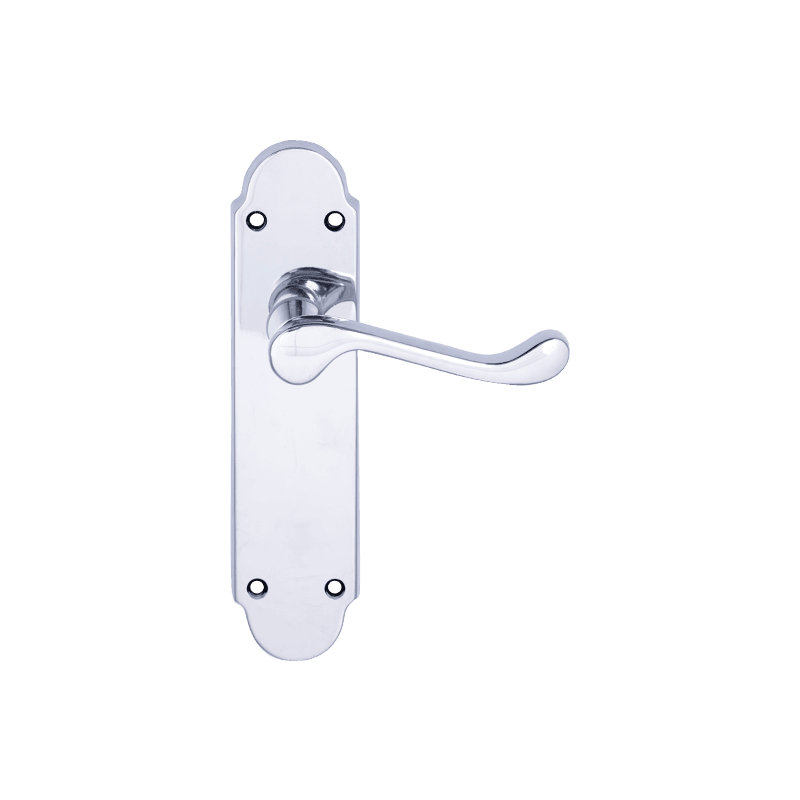
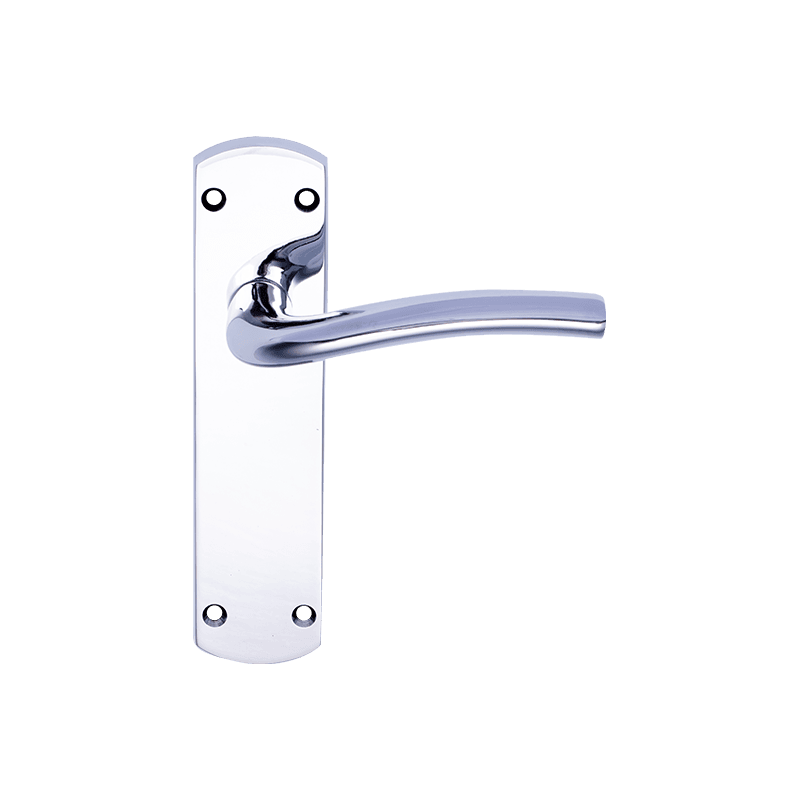
When you are replacing hardware rather than specifying new doors, the plate version is the forgiving choice: a 170 mm backplate covers old screw holes, so nobody has to fill and repaint. The rose version is the cleaner look and the current standard on interior doors in most of Europe.
 Knurled Lever Door Handle on Square BackplatePolished chrome knurled lever on a 50 x 175 mm square backplate, available in Lock, Latch, Euro and Bathroom versions for replacement or specification work.View Product →
Specifiers who need a defined starting point can review the lever door handle range, where sets are built around an 8 mm spindle and 45 or 57 mm backsets, then narrow down by rose or plate mounting.
Materials and Finishes That Survive Daily Use
Material grade and plating quality, not colour, decide whether a handle still looks right after three years in a busy hallway.
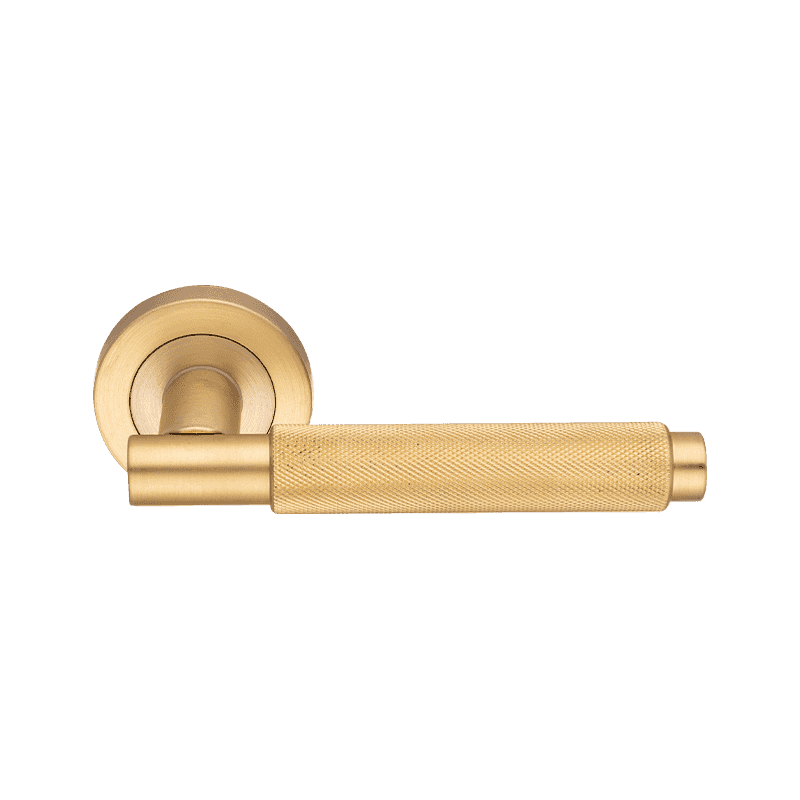
Zinc alloy is die-cast, so it holds fine detail and tight tolerances — good for knobs and decorative plates, provided wall thickness stays above roughly 2.5 mm at stress points. Aluminium is lighter and softer, well suited to interior doors and textured knurled grips, but its threads wear faster under repeated assembly. Stainless steel is the honest answer for exterior and coastal doors: a brushed finish hides scratches and there is no plating to chip. Brass delivers the warm antique look, lacquered for colour or left raw to age.
| Finish | Appearance | Durability and care |
|---|---|---|
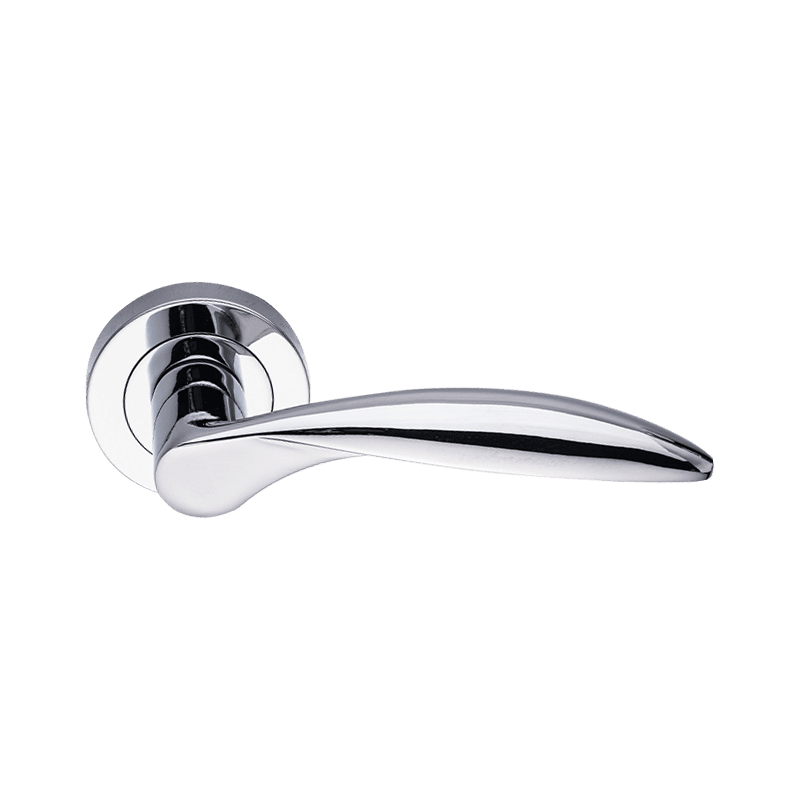
| Polished chrome | Mirror bright, strong contrast | Shows fingerprints; wipe with a damp cloth, never abrasive pads |
| Brushed or satin nickel | Muted sheen | Best mark-hiding option for high-traffic doors |
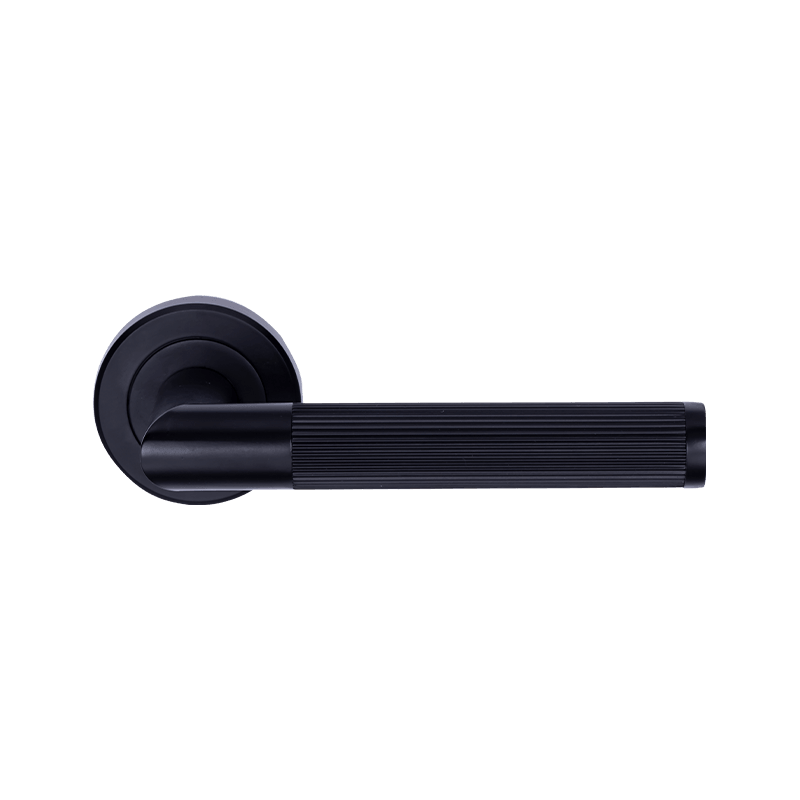
| Matt black | Modern, low reflection | Coating can wear at knurled tips; avoid scouring cleaners |
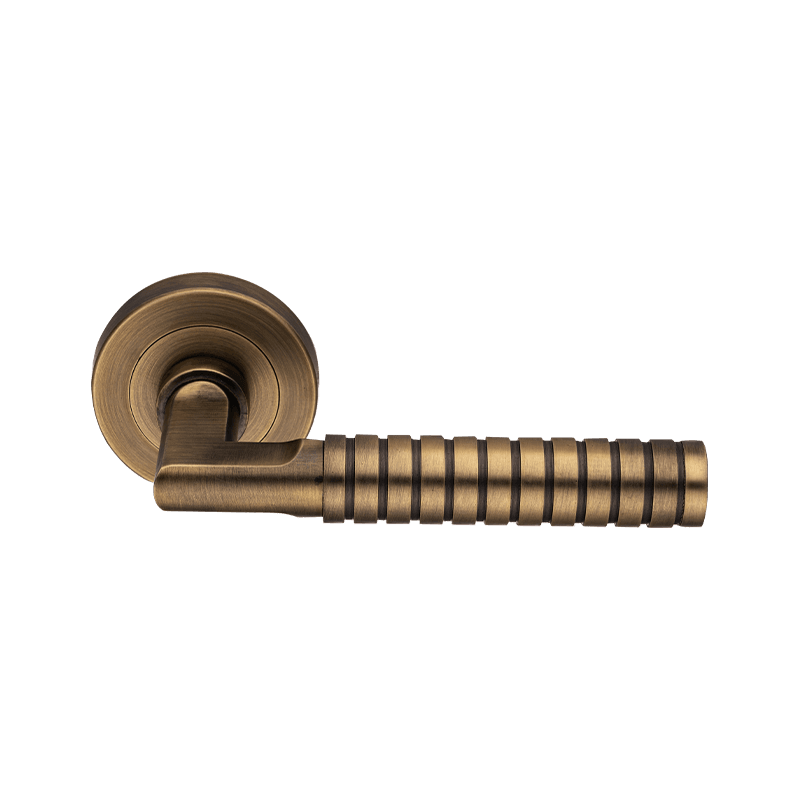
| Antique brass | Warm, traditional | Lacquer thins at touch points and patina develops unevenly |
| PVD | Colour-stable, uniform | Hard thin layer; specified where colour consistency matters |
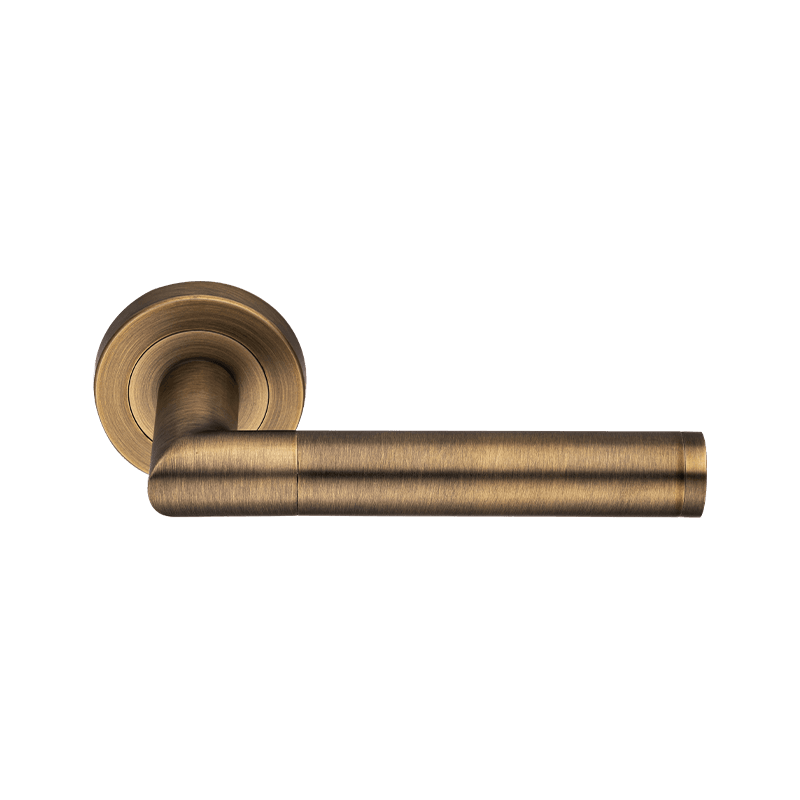
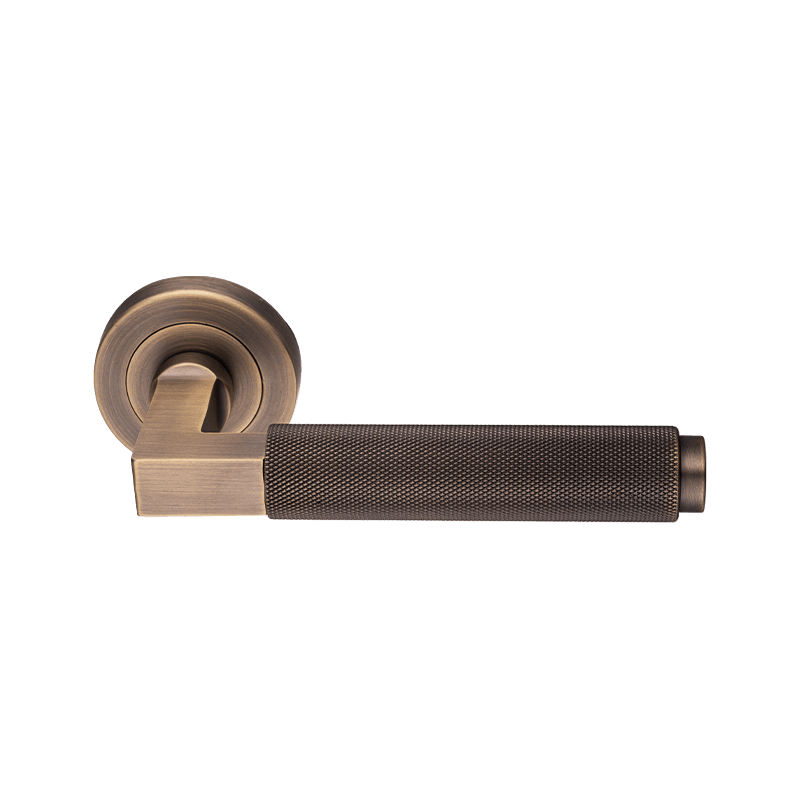
 Aluminium Knurled Lever Door Handle on Round RoseAntique brass knurled aluminium lever on a plain 52 mm zinc rose; 113 mm lever and square silhouette suit interiors mixing levers and knobs.View Product →
For interiors that mix levers and knobs, keep the finish family consistent: a knurled antique brass lever on the room door and a matching oval knob on the wardrobe read as one scheme rather than two purchases.
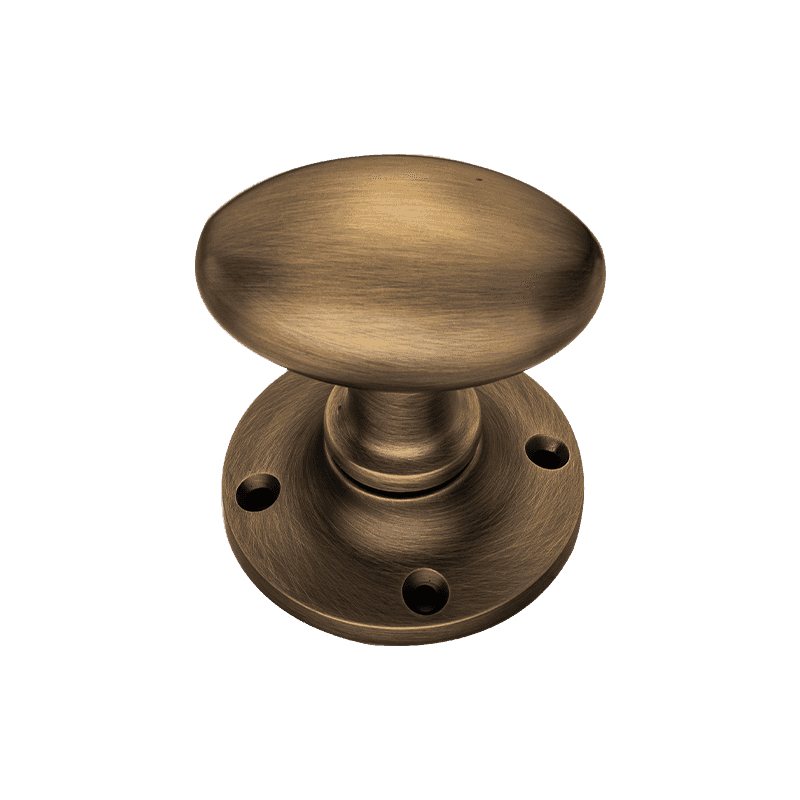 Oval Door Knob in Matt Antique BrassZinc oval door knob with 58 mm knob and 55 mm rose in matt antique brass, suited to matching lever-and-knob interior schemes.View Product →
Ask for a neutral salt spray result, not a photo. A 96-hour reading says more about plating adhesion than any catalogue image, and a 240-hour result is a reasonable expectation for exterior-grade sets.
Buying at Volume: Tolerances, Testing and Packing
At volume, the difference between a smooth project and a claim lies in documents and packing, not in the sample you approved by hand.
- Approve a physical golden sample under daylight, then keep it sealed as the reference for colour and feel.
- Write tolerances into the order: spindle hole ±0.2 mm, flatness of plate, thread depth for the grub screw.
- Ask for cycle test figures — 100,000 to 200,000 cycles is normal for commercial-grade spring cassettes — and salt spray hours per finish.
- Confirm the screw pack and spindle length per door thickness on the label; mixed cartons with one spindle length cause site delays.
- Agree spare parts at 2–3 percent for cassettes, screws and spindles, and state carton drop test and RoHS documents up front.
Buyers filling a mixed container usually combine models rather than ordering one SKU deep, so lead time should be quoted per finish, since plating lines, not assembly lines, set the schedule. Project quantities are handled through the wholesale door hardware programme, where model mixing, packing marks and finish codes are agreed before production.
FAQ
Can I replace a knob with a lever without changing the latch?
Yes, if the backset, spindle size and centre distance match the existing latch. Measure the old spindle and the distance from the door edge to the spindle centre before ordering; if those two figures match, the swap is usually a 15-minute job per door.
Lever on rose or lever on plate — which should I choose?
Rose for new doors and a clean modern line, plate for retrofit work where old screw holes or marks need covering. Plate sets also spread load better on soft or thin door leaves.
Do left-hand and right-hand doors need different handles?
Only where the lever is curved or the set includes a privacy turn or thumb-turn. Straight and symmetric levers are non-handed and fit either side.
Why does a handle feel loose after a few months?
Usually a slack grub screw on the rose, a cassette screw that was never tightened, or a spindle cut slightly too short. Check the grub screw first, then the cassette fixing, then the spindle length.
Which finish suits bathrooms and coastal sites?
Brushed or satin finishes on stainless steel hold up best against moisture and salt. Unlacquered brass will patina quickly in wet rooms, which is a design decision rather than a defect — but it should be a deliberate one.
A door handle is cheap to buy and expensive to get wrong. Confirm thickness, backset, spindle, centre distance and handing, match the mechanism to the traffic the door actually sees, then choose a finish whose maintenance you can live with. That order of decisions keeps a hardware schedule predictable — and keeps levers from drooping six months after handover.