English
 italiano


A door handle extension kit is a set of hardware components that lengthens the spindle, lock cylinder, or mounting plate of an existing door handle so it can work with doors thicker than standard. If you are fitting a door handle onto a security door, a composite entry door, or a door that has been thickened with extra insulation or trim, the handle shaft may not reach through the door properly. A door handle extension kit solves this problem without requiring you to replace the entire door or the complete hardware set.
Choosing the right extension kit depends on three measurements: your door thickness, the handle's spindle length, and the lock body backset. Getting these numbers right is the difference between a smooth installation and a handle that binds, wobbles, or fails to lock correctly.
Content
- What Is a Door Handle Extension Kit and When Do You Need One?
- Common Scenarios That Require a Door Handle Extension Kit
- Types of Door Handle Extension Kits and What They Solve
- How to Choose the Right Door Handle Extension Kit
- Installation Tips for Door Handle Extension Kits
- Frequently Asked Questions About Door Handle Extension Kits
What Is a Door Handle Extension Kit and When Do You Need One?
A door handle extension kit is required whenever the distance from the handle's exterior faceplate to the lock body is greater than standard residential hardware can span. In simpler terms, the kit adds the extra length needed for your handle's spindle and fixing screws to bridge a thicker door.
Standard interior doors in residential construction are typically 35 mm to 45 mm thick. However, many modern doors and upgrade materials exceed these dimensions. Security doors can reach 70 mm to 100 mm, while composite or insulated entry doors often range from 60 mm to 80 mm. If you install a standard handle on such a door, the spindle will be too short to engage the lock body, leaving the handle loose or non-functional. A door handle extension kit is the direct solution to this fitment mismatch.
- Spindle extension: Lengthens the square or spindle shaft that connects your handle to the lock mechanism.
- Lock cylinder extension: Adds length to the cylinder profile so it aligns correctly with both sides of a thick door.
- Mounting plate extension: Provides longer fixing screws and spacers to bridge the gap between handle rose and door surface.
Common Scenarios That Require a Door Handle Extension Kit
There are three primary situations where an extension kit becomes essential. Each involves a different challenge: door thickness, user accessibility, or the need for additional leverage on heavy doors.
Door Thickness and Heavy Duty Entry Systems
Security doors and high-performance entry doors are the most common reason why a door handle extension kit is needed. These doors often incorporate steel plates, insulation cores, or decorative panels that increase overall thickness beyond standard allowances.
For example, if you have a 70 mm thick security door, you will need a spindle extension that covers at least the difference between the standard 45 mm spindle and your actual door measurement. Some door handle models on the market, such as our tubular mortice latch options, are available in different backset lengths (45 mm and 57 mm), allowing you to choose one that matches your door structure. Before purchasing any extension kit, measure the backset distance from the edge of the door to the center of the lock cylinder.
Accessibility and Ergonomic Improvements
Door handle extension kits can play an important role in improving accessibility for elderly residents, people with arthritis, or users who depend on wheelchairs. By extending the handle away from the door surface, the kit reduces the force and dexterity required to operate the handle. This is especially useful for lever-style handles, which allow users to press down with their elbow or forearm if the handle protrudes far enough.
In a typical retrofit project, a handle extension of 15 mm to 25 mm can make a noticeable difference in usability. It also helps when replacing an older door handle on a door that has been repainted or covered with additional layers of protective material, which slightly increases the effective thickness.
Commercial and Industrial Doors
Commercial and industrial doors often face heavier usage than residential doors. Because they are frequently fitted with high-security locks and thick core materials, the factory-stock handle rarely matches the door profile. A door handle extension kit allows building managers to maintain existing hardware while still getting a secure, consistent grip. The handle must also be long enough to generate sufficient torque for the lock to engage smoothly. Longer spindles directly contribute to a reliable operation in a high-cycle environment.
Types of Door Handle Extension Kits and What They Solve
Understanding the different types of extension kits helps you select the correct components for your specific door. The table below shows each type, its main purpose, and the key fitting measurement to check.
| Type | Purpose | Key Measurement |
|---|---|---|
| Spindle Extension | Increases the length of the square shaft between handle and lock | Spindle length |
| Lock Cylinder Extension | Extends the cylinder so the key or thumb-turn aligns on both faces | Cylinder length |
| Mounting Plate Extension | Adds spacers and longer fixing screws for the handle rose | Door thickness |
| Backset Extension | Adjusts the lock tongue position relative to the door edge | Backset distance |
In practice, most door handle extension kits are tailored for the three most common backset sizes: 35 mm for residential interior doors, 45 mm for standard UK/EU interior doors, and 57 mm for thicker or more secure exterior doors. Choosing a kit that aligns with your existing lock body is essential. If you are also replacing the latch, consider a tubular mortice latch with the correct backset, because using a mismatched backset can cause the latch bolt to land inside the door frame rather than in the strike plate.
How to Choose the Right Door Handle Extension Kit
Selecting the right kit is straightforward once you know your door thickness, the handle's spindle size, and the lock backset. Follow these steps to narrow down your options.
Match the Spindle Length and Fixing Centers
Most interior lever handles use a 5 mm or 8 mm square spindle. When you install a standard handle on a thick door, the spindle must be long enough to reach the lock body. The required extension is simply the difference between your door thickness and the standard spindle span.
For tall or heavy doors, you should also check the fixing centers, which are the horizontal distances between the two fixing holes on the handle plate. Most lever handle plates have 38 mm center-to-center spacing, but some models may differ. The product specification will usually list this value 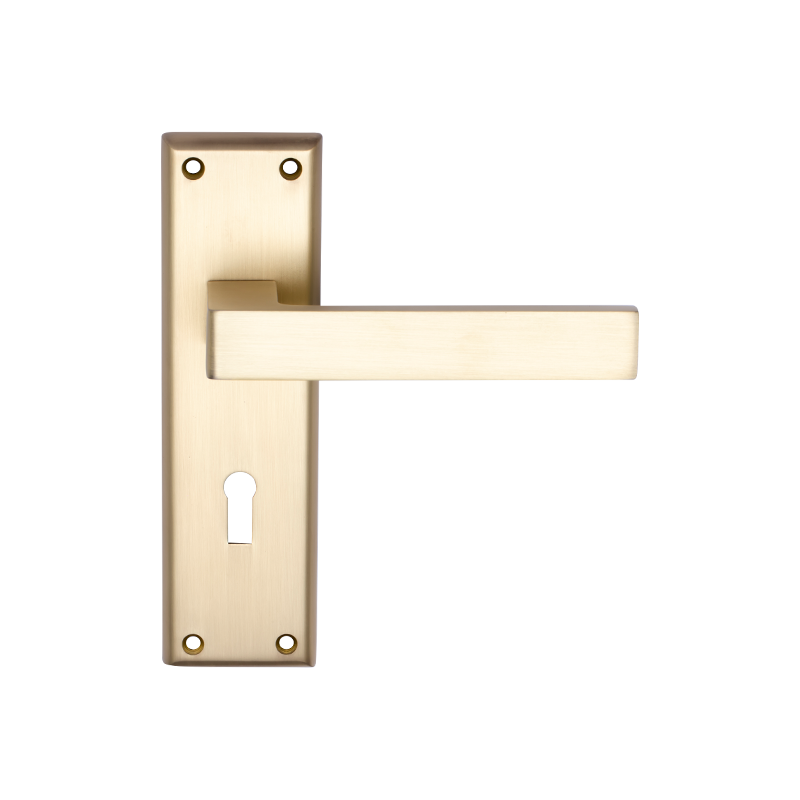 Square Flat Lever Door Handle on Plate in Satin ChromeThis handle features a square flat lever and matching backplate in satin chrome, with standard fixing centers for easy installation. Its aluminium lever and zinc backplate offer a balance of strength and corrosion resistance, suitable for most interior doors.View Product →. A reliable plate-mounted handle with standard fixing centers can simplify the extension process because spacers align with the existing screw holes.
Select a Material and Finish That Match Your Existing Hardware
Corrosion resistance is a practical consideration, especially for exterior doors and wet environments. A door handle extension kit is often made of zinc alloy, stainless steel, or aluminum. Zinc alloy offers a cost-effective balance between strength and corrosion resistance for indoor use. Stainless steel is preferable for coastal climates or locations with high humidity because it resists pitting and oxidation. Aluminum is lighter and is frequently used where weight is a concern, though it may not provide the same degree of strength as zinc or steel.
If you have chosen a decorative lever handle with a particular finish, look for extension components in the same finish family. Satin chrome, matte black, and antique brass are the most common finishes available for extension hardware. If a perfect match is unavailable, a neutral, concealed extension piece is the best choice because it will not be visible once the handle is mounted.
Installation Tips for Door Handle Extension Kits
Installing a door handle extension kit can be completed in about 30 minutes using only basic hand tools if you measure carefully. Here is a practical order of operations.
- Measure the door thickness at the handle location. Use a caliper or ruler to get the exact distance, including any extra trim or insulation layers.
- Remove the existing door handle by unscrewing the fixing screws and pulling the handle and rosette away from the door surface.
- Measure the backset distance from the door edge to the center of your lock cylinder. Record whether it is 45 mm or 57 mm.
- Select the extension components that bring your spindle length and cylinder length up to the measured door thickness. Use only parts specifically rated for your locking hardware type.
- Install the extension rod or cylinder first, then fit the handle onto the extended spindle. Verify that the handle's screw holes align with the extended spacers or thread adapters.
- Tighten the fixing screws to hold the handle firmly in place, and test the operation. The handle should move smoothly through its full range with no slipping or wobble.
After tightening, if you feel any resistance or a binding sensation, loosen the screws slightly and check alignment again. Common installation errors happen when the spindle is forced at an angle or when the wrong extension length is used for the thickness.
Frequently Asked Questions About Door Handle Extension Kits
Can I use a door handle extension kit on any door?
Most doors can be extended, but not all locking systems accept a standard kit. If you have a mortise lock or a euro profile lock, the extension options differ from a simple tubular latch application. Verify that your lock body can accommodate a longer spindle without affecting internal gears.
What is the difference between a door handle extension and a door handle shim?
A shim is typically a thin material used to fill a small gap, while a door handle extension kit is a structural component that lengthens the actual spindle or cylinder. Shims adjust alignment; extension kits solve the basic mechanical reach problem.
Do I need to replace the lock body when installing an extension kit?
Usually, no. The extension kit is designed to work with your existing lock body by extending the connection elements. However, if your backset is incorrect or the lock body is worn, replacing the lock body at the same time may be a better long-term solution. If you choose to upgrade to a lock body with a different backset, we offer tubular mortice latches in both 45 mm and 57 mm options.
Will a door handle extension kit weaken the handle?
No, if you select a kit made from a material matching your handle and install it with proper fasteners. The extension parts carry the same torque as the original spindle. The main risk of weakness comes from using a low-grade adapter or overtightening the screws, which could strip the thread.
Can I extend a door handle by more than 20 mm?
Yes, but the maximum practical extension varies by handle type and lock. If you add a significant amount of length, the fixing screws may need to be correspondingly longer as well. We recommend consulting the product specification for the maximum allowed spindle length before purchasing.
If you are facing a door thickness problem or you want to improve the usability of a handle for a family member, a door handle extension kit is a simple, cost-effective solution. Start by measuring your door, then match the extension kit to your handle style and lock backset. If your application is unusual, a custom hardware solution can provide the exact length and finish needed for your project. Visit our door lever handles collection to see how a modern handle can be combined with the correct extension hardware.
For professional-grade handling of thick doors and extended spindles, remember to review the lock body compatibility and choose a latch with the right backset. The effort you put into measurement and specification will result in a door handle that operates reliably for years.